Judges divided over issues sparked by Supreme Court case involving President Lee
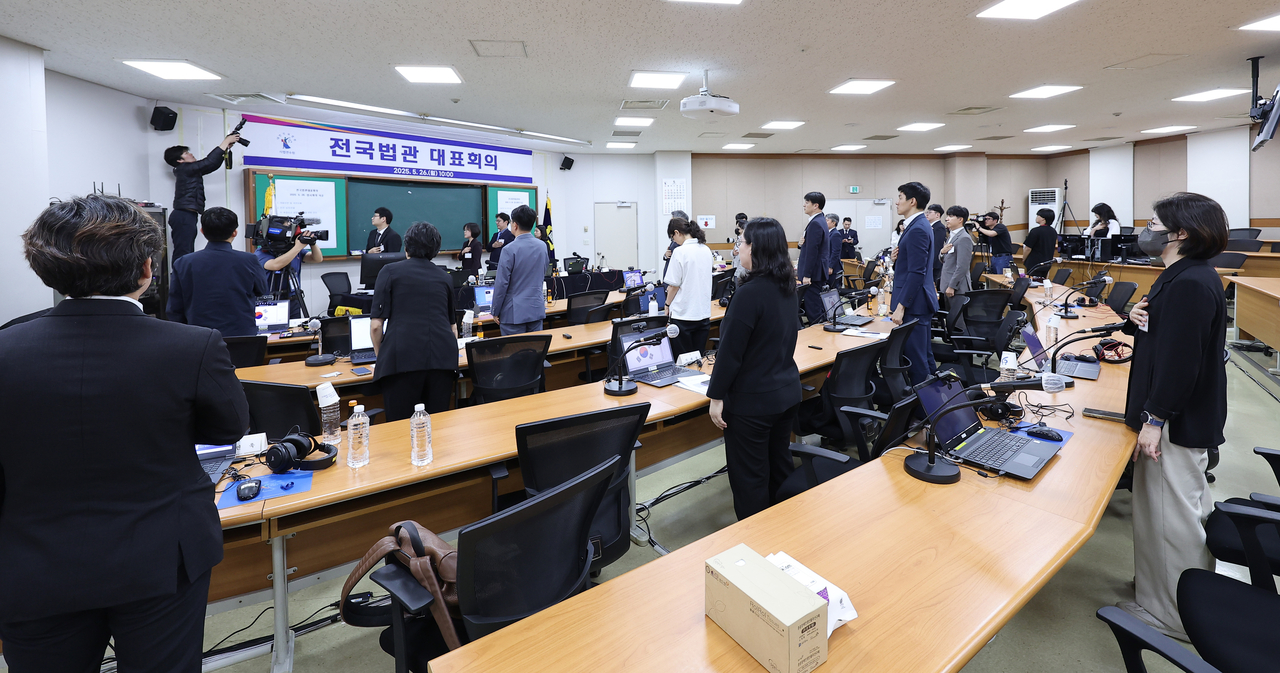
A national meeting of South Korean judges ended without agreement on Monday, as members remained divided over how to address issues sparked by the Supreme Court's decision to order the High Court to reconsider it's acquittal of President Lee Jae Myung's for election law violations.
Proposals related to key issues tabled at the meeting of the National Association of Judges such as judicial independence and public trust in the courts were largely opposed, and all five motions put to a vote were rejected.
The judges had previously decided not to pass a resolution, opting instead to continue discussions after the June 3 presidential election due to concerns that their decision could influence the election.
One of the key issues was the association’s commitment to ensuring fair trials by monitoring the legal procedures in Lee’s case, analyzing the causes of the controversy and discussing measures to resolve it.
Among the 90 judges who attended the Monday meeting, 56 expressed the view that the proceedings of Lee’s election law violation case were conducted legally, and so the association decided not to issue an additional statement on the matter.
Another item on the agenda was whether judicial independence was undermined by the Democratic Party of Korea’s lawmaker-led decision to summon and investigate Supreme Court Chief Justice Jo Hee-de after the ruling.
While 19 judges believed that the then main opposition party’s measure constituted a serious breach of judicial independence, 67 opposed the motion.
The remaining proposals were also voted down. These included proposals that would have addressed criticism directed at the Supreme Court’s unusually swift handling of Lee’s criminal case — including its expedited appeal trial and selective review of the lengthy case record — which had Lee supporters had used to question the court’s political neutrality.
Controversy surrounding the case has been growing since the Supreme Court moved to review it in a full bench session on April 22. It issued its verdict on May 1, despite the court having until June 22 to reach a decision within the legal deadline.
The top court’s justices held their first two hearings in the case within three days. And this was perceived as an unusually swift move for cases referred to the full court, which typically convenes only once a month.
When the Supreme Court ruled to overturn Lee’s acquittal and sent the case back to the Seoul High Court for retrial, citing legal errors in the lower court’s decision, some liberal lawmakers and judges insisted that Jo’s alleged misconduct had led to the unusually swift ruling and public distrust in the judiciary.
The Democratic Party publicly called for Jo’s resignation and attempted to make various legislative measures, such as expanding the number of Supreme Court justices and introducing retrial petitions in response to the controversy involving the top court.
These moves have raised concerns that judicial independence was being undermined.
The special meeting, held by judges from courts at all levels nationwide, is convened to express opinions or make recommendations on judicial administration and the independence of the judiciary.
sj_lee@heraldcorp.com