6 out of 10 suffer from mental scars from deaths of their families, among over 500 people killed in the Sampoong disaster.
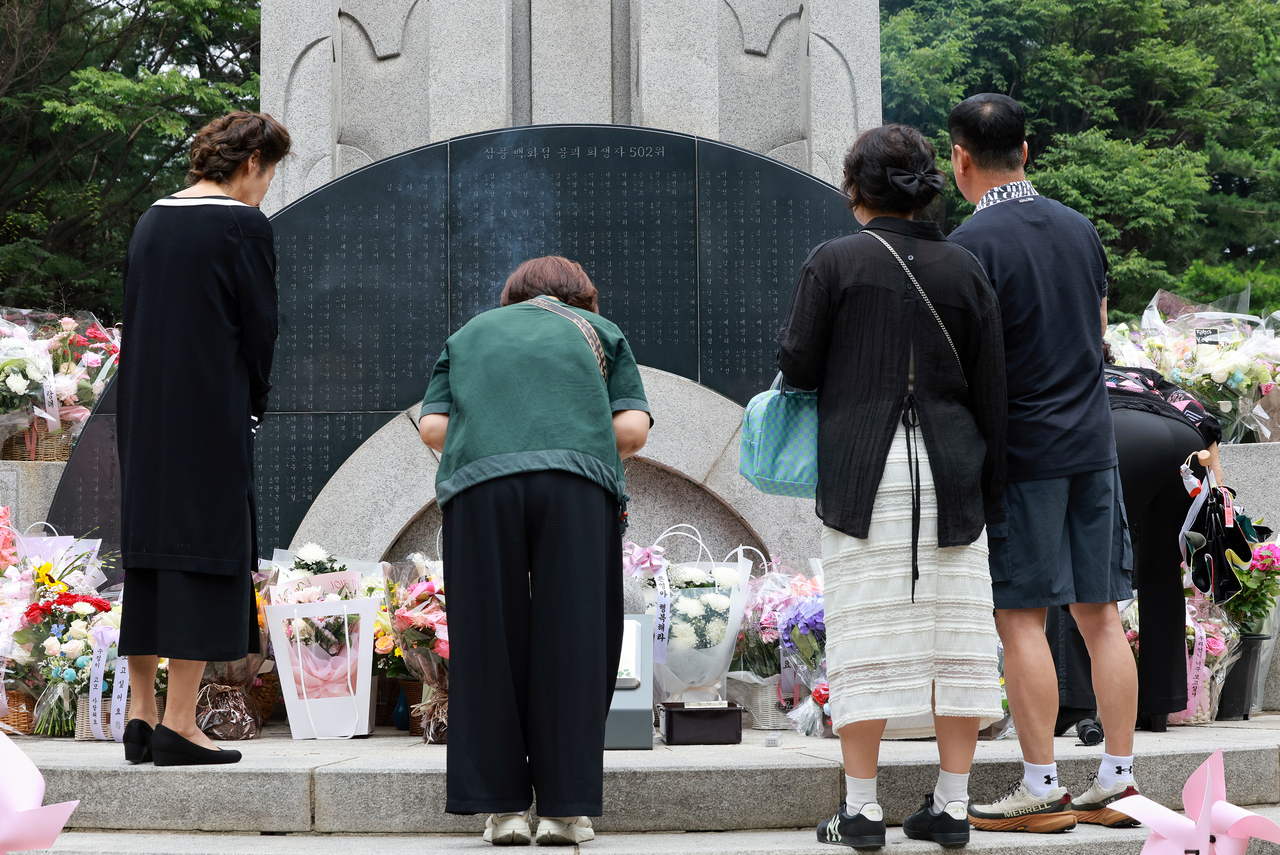
Many people whose family members died in the 1995 collapse of Sampoong Department Store are still suffering from mental wounds today, the bereaved families' group said Sunday in a memorial to commemorate the 30-year anniversary of the deadly collapse.
Bereaved families' group of the Sampoong disaster and nongovernment Disaster Victim's Rights Center conducted a survey on 30 people who lost family members in the incident via a mail survey. The results indicated that 19 of the respondents are suffering from symptoms that could be categorized as post-traumatic embitterment disorder, a pathological reaction to negative life events.
The collapse of Sampoong, which left 508 dead or missing while injuring close to 1,000 people, is one of the worst accidents in the country's modern history. It was caused by faulty design work and shoddy construction practices and maintenance. The results of the survey indicate that it left a lasting scar many of the people close to those who were killed.
Twenty-five respondents said they did not receive mental health treatment on a professional level. Despite well over half of them needing help, only 30 percent realized that they need it.
Fourteen said they experienced family issues after the disaster, while five of them said they lost their jobs due to indirect effects of the incident.
Many express discontent over government measures, media coverage
An overwhelming majority — three quarters — said they were greatly dissatisfied with the level of punishment handed to those responsible.
In the criminal trials that followed the disaster, Sampoong Chairman Lee Joon and his son and CEO Lee Han-sang each received a prison term of seven years and six months and seven years, respectively, for death by occupational gross negligence. It was the highest punishment for any of those convicted in relation to the incident.
Regarding the media coverage and the government support, 17 of the respondents expressed strong discontent.
Eight respondents said the government compensation helped, while 13 said it did not, though only 29 respondents answered this question. Those who were not satisfied cited insufficient input from the bereaved families, and the fact that the governmental aid only focused on the financial aspect.
The results were revealed in the memorial in front of the monument dedicated to the victims, located in the Maeheon Citizen's Forest in Seoul about five kilometers from the disaster site. But 22 percent of the surveyed families of the Sampoong victims said that there should be a new facility dedicated to the disaster, with 26 percent saying the collapse is not sufficiently remembered.
minsikyoon@heraldcorp.com