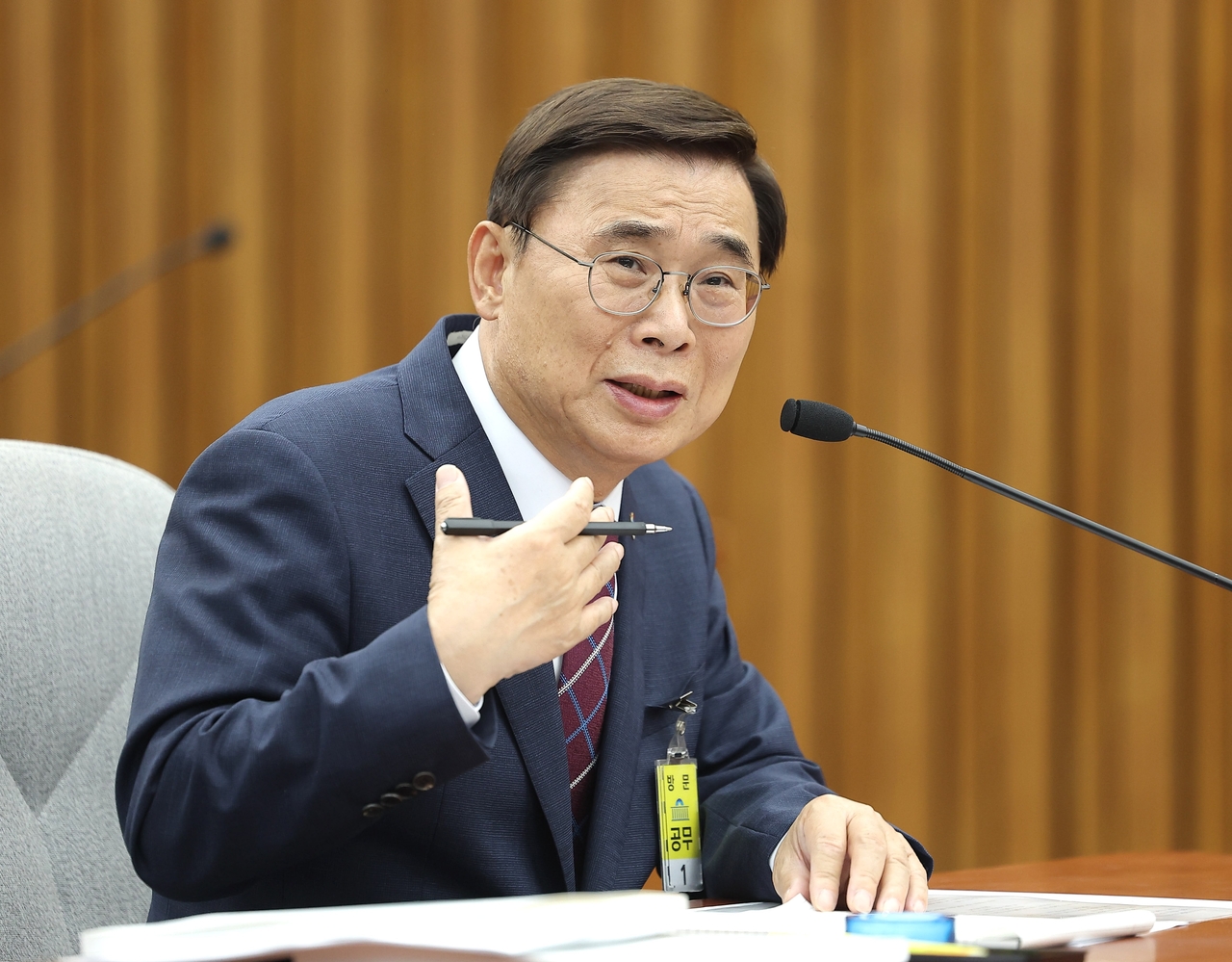
The new chief of South Korea's spy agency said Wednesday that the organization must reflect on its past and take full responsibility, if necessary, with regards to concerns over its political neutrality.
National Intelligence Service (NIS) Director Lee Jong-seok made the remarks during his inauguration ceremony, where he also pledged to build a more efficient agency dedicated to safeguarding national security and peace.
"The NIS should be solely committed to national security and advancing the national interest, but many people have raised concerns that some officials have, at times, acted in ways that cast doubt on their political neutrality, straying from the agency's core mission," Lee said.
"We must examine our past honestly and take full responsibility when necessary," he added, stressing the importance of "strict political neutrality and democratic transparency."
Lee also pledged to dedicate all efforts to building an "efficient and results-driven NIS," outlining two key missions of ensuring a "safe and peaceful" nation and supporting "pragmatic, national-interest-based diplomacy."
Speaking of inter-Korean relations, Lee assessed that tensions have escalated to a point where a military clash could occur at any time, and stressed the need for his agency to mobilize all of its intelligence capabilities on North Korea to bolster national security, reduce cross-border military tensions and help open channels for dialogue.
The new chief also called for accelerating the advancement of the NIS' scientific and technological intelligence capabilities, including a full transition of operations to artificial intelligence.
"We must actively engage in early-warning intelligence efforts and collect and analyze the cutting-edge information needed to shape the nation's future strategy, while providing timely support to relevant government agencies," Lee said. (Yonhap)










