The Pentagon said Thursday that South Korea and other Asian allies are also subject to the "global standard" of spending 5 percent of gross domestic product on defense, a proposal that US President Donald Trump has put forward for European allies
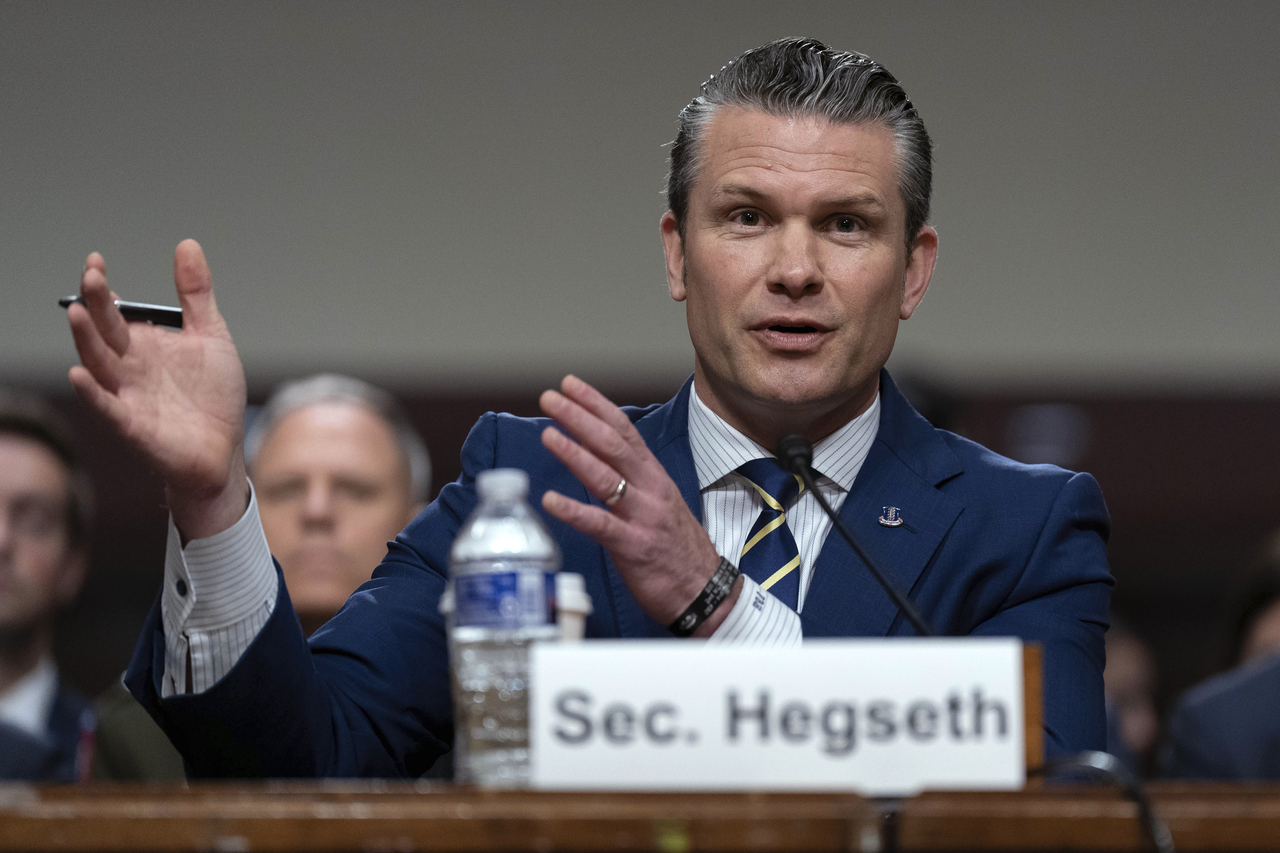
Chief Pentagon spokesperson Sean Parnell made the remarks, a day after Defense Secretary Pete Hegseth told a Senate Armed Services Committee hearing that there is now a "new standard for allied defense spending that all of our allies around the world, including in Asia, should move to."
South Korea's defense spending last year stood at around 2.8 percent of its GDP.
"As Secretary Hegseth said today and at Shangri-La, our European allies are now setting the global standard for our alliances, especially in Asia, which is 5 percent of GDP spending on defense," Parnell said in response to a question from Yonhap News Agency.
"Given the enormous military buildup of China as well as North Korea's ongoing nuclear and missile developments, it is only common sense for Asia-Pacific allies to move rapidly to match Europe's pace and level of defense spending."
He added, "It is common sense because it is in our Asia-Pacific allies' own security interests, and in that of the American people's to have more balanced and fairer alliance burden-sharing with our Asian allies. And common sense is what President Trump's approach is all about."
Asked to confirm if the global standard applies to South Korea as well, a Pentagon official said that he believes that interpretation was "correct."
During the Shangri-La Dialogue, an annual defense forum in Singapore last month, Hegseth made an emphatic call for Indo-Pacific allies to bolster their defense spending.
"It doesn't make sense for countries in Europe to do that, while key allies and partners in Asia spend less on defense in the face of an even more formidable threat, not to mention North Korea," he said during the forum.
The remarks came amid speculation that Trump might call for a rise in South Korea's defense expenditures or its share of the cost for stationing the 28,500-strong US Forces Korea.
The standard for the allies' defense spending comes as Hegseth has called for allies and partners to strengthen their own defense capabilities in the face of various challenges, including North Korea's nuclear program, while the Trump administration seeks to focus on countering the "pacing threat" from an assertive China.
Last month, Hegseth tasked Under Secretary of Defense Elbridge Colby to draw up the 2025 National Defense Strategy to prioritize increased "burden-sharing" with allies and efforts to deter Chinese threats in the Indo-Pacific.
The Pentagon chief directed that a final NDS draft be provided to him no later than Aug. 31. (Yonhap)










