Presidential office vows pan-governmental efforts to restore the country's global standing
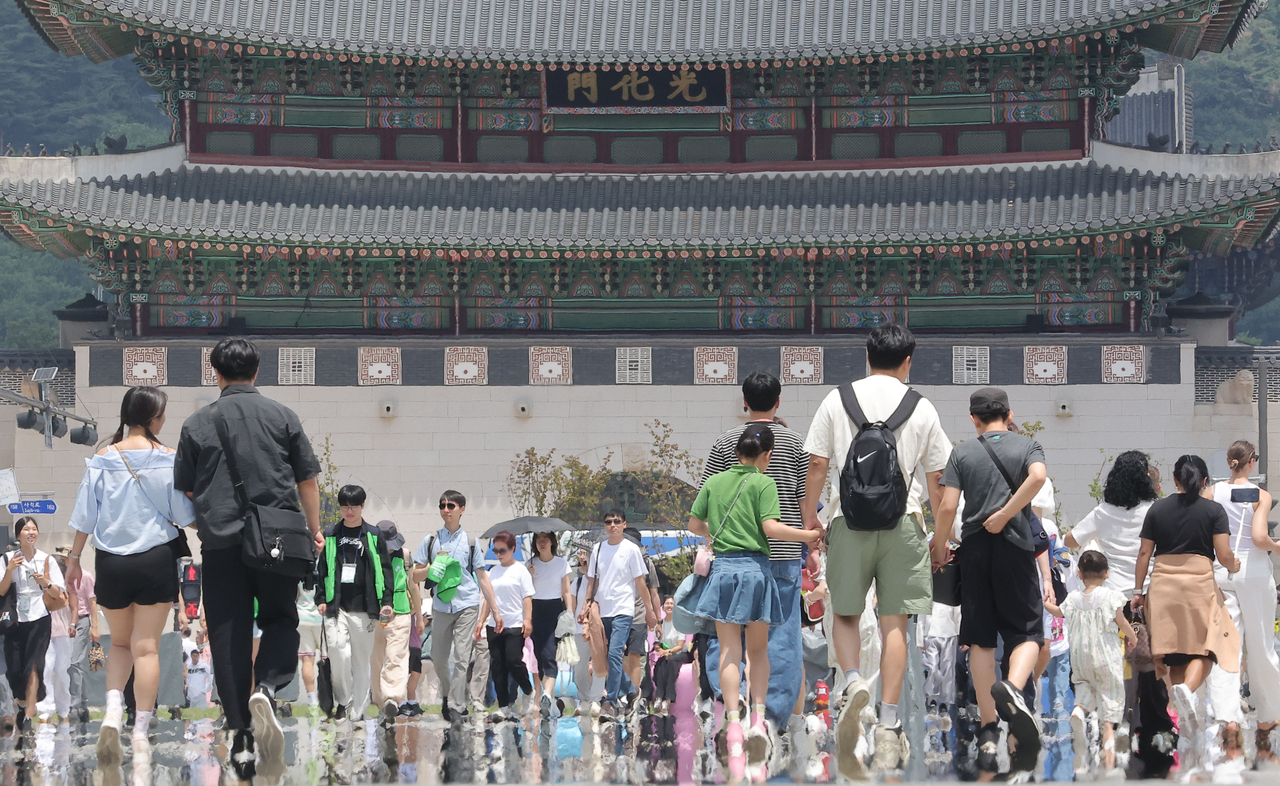
South Korea's global competitiveness ranking fell by seven notches this year, as corporate efficiency and infrastructure showed signs of decline, a report showed Tuesday.
According to the 2025 report by the International Institute for Management Development, Korea ranked 27th in terms of global competitiveness among 69 countries surveyed, sharply down from a record-high 20th place last year.
The Switzerland-based institution has released the annual report since 1989, evaluating the competitiveness of each nation based on four major criteria: economic performance, government efficiency, business efficiency, and infrastructure. Each criterion is further broken down into five sub-factors.
Its researchers compile the rankings using statistical data from national governments, international organizations, and other relevant institutions, as well as surveys of public officials and senior business executives in each nation.
As for the economic performance criteria, the nation's ranking rose to 11th this year from 16th. While two of its subcategories — domestic economy and employment — each slipped by one notch, there were sharp gains in others, jumping 13 spots in international trade, 14 in international investment, and 13 in consumer prices.
Government efficiency was another area of improvement, with the country moving up to 31st this year from 39th, mainly driven by a strong performance in the subcategory of public finance, which jumped 17 spots to 21st this year. Fiscal policy also improved, rising from 34th to 30th, while institutional framework advanced from 30th to 24th. In contrast, business legislation slipped from 47th to 50th, and societal framework fell from 29th to 36th.
It was corporate efficiency and infrastructure that dragged down the nation’s overall competitiveness.
In the area of business efficiency, where the nation’s ranking dropped to 44th from 23rd, all five subcategories declined. Management practices fell sharply from 28th to 55th, and attitudes and values slipped from 11th to 33rd. The labor market dropped from 31st to 53rd, productivity and efficiency declined from 33rd to 45th, and finance edged down slightly from 29th to 33rd.
The infrastructure category also showed a downward trend, falling from 11th to 21st overall. Technological infrastructure saw the steepest drop, plunging from 16th to 39th, followed by basic infrastructure (14th to 35th), education (19th to 27th), health and environment (30th to 32nd), and scientific infrastructure, which slipped slightly from 1st to 2nd.
In response to the slowdown in the nation's global competitiveness, the presidential office vowed "pan-governmental efforts" to address the issue.
"The recent drop in Korea’s competitiveness is closely tied to the political and economic uncertainty that followed last year’s unrest and instability," presidential spokesperson Kang Yoo-jung said in a statement.
"President Lee Jae-myung has consistently emphasized the importance of 'real growth' that enhances the country’s long-term potential. We will work to restore national competitiveness by shaping and implementing a clear vision."
cjh@heraldcorp.com