Korean biotech firms court global deals with ADC, organoids, Alzheimer’s focus
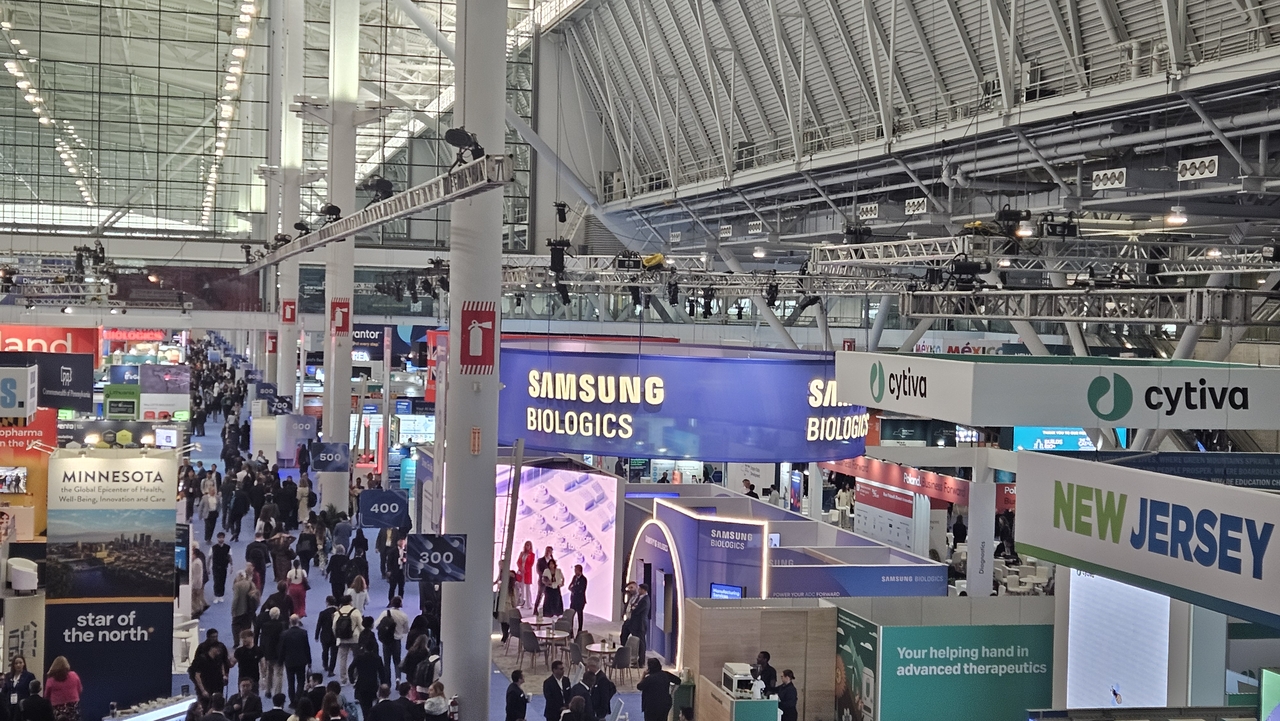
BOSTON — South Korean biotech companies are making a strong showing at the BIO International Convention 2025, which kicked off Monday in Boston for a four-day run.
Widely regarded as the world’s largest and most influential biotechnology exhibition, this year's convention is expected to host over 9,000 companies from more than 90 countries, with more than 20,000 attendees anticipated.
From Korea alone, over 100 companies are officially registered, and when including firms without booths that are attending for networking and business opportunities, the number of participating Korean firms is expected to reach around 400, reflecting the growing presence and ambition of K-bio on the global stage.
Among the major Korean participants is Samsung Biologics, which is attending for the 13th consecutive year with its own booth.
With a massive 167-square-meter booth at the center of the venue, Samsung plans to actively showcase its industry-leading biologics manufacturing capacity of 784,000 liters per year, as well as its newly launched ADC service, underlining its competitiveness as a CDMO.
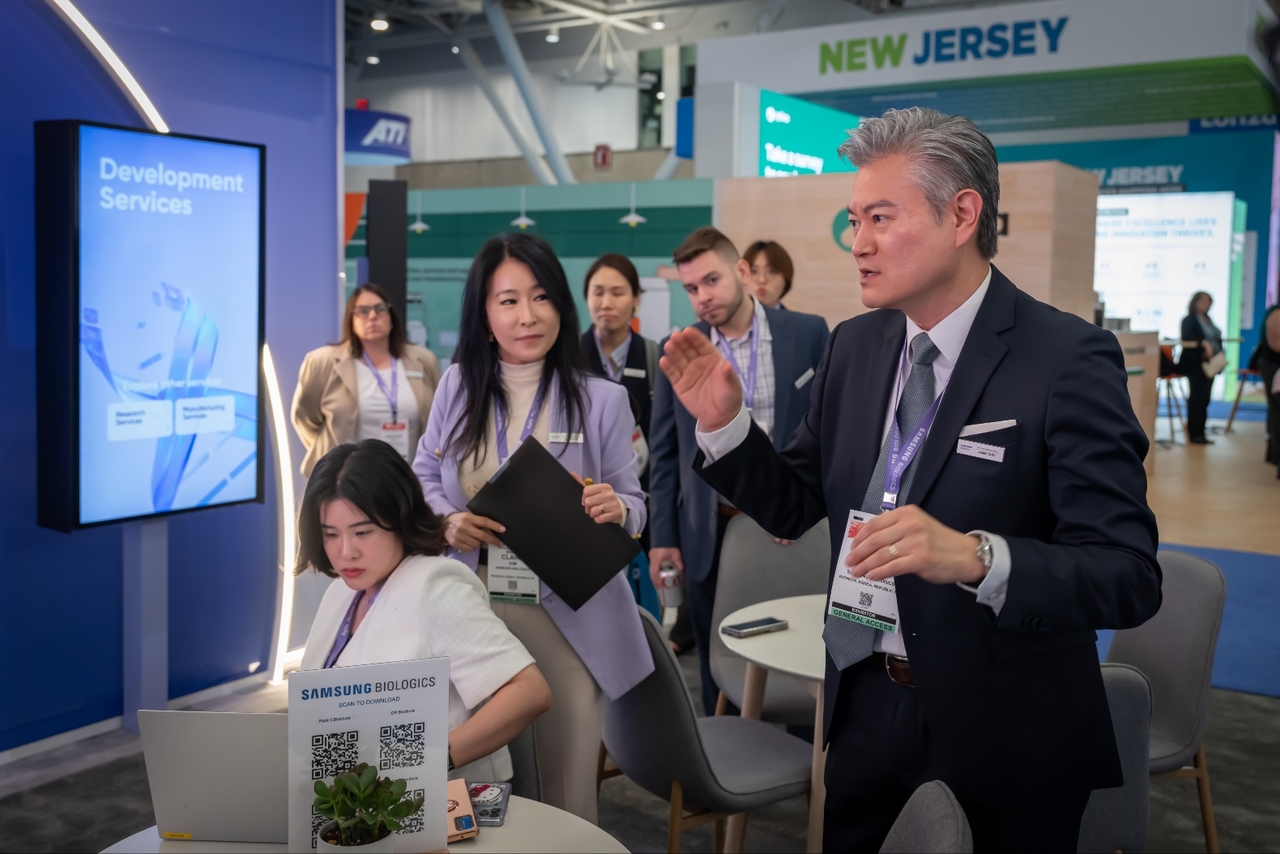
“This year, we’ve designed an interactive booth featuring curved LED screens and touchscreen displays that allow visitors to explore our range of services while highlighting our strengths in digitalization,” said James Choi, executive vice president at Samsung Biologics. “Through three touchscreen stations, we effectively present the core strengths and expertise of our research, development and manufacturing services.”
Meanwhile, Samsung Biologics announced the launch of its new organoid-based drug screening platform, Samsung Organoids, marking an expansion into clinical research organization services. The service focuses on screening anti-cancer drug candidates using cancer patient-derived organoids, aiming to replace traditional cell and animal models.

Celltrion, a Bio USA participant since 2010, is marking its 16th consecutive appearance with a 140-square-meter booth.
It has prepared both open and private meeting spaces for discussions with multiple global partners. In addition to its well-established biosimilars, the company aims to expand collaboration around the next-generation ADCs and innovative antibody drugs in its pipeline.
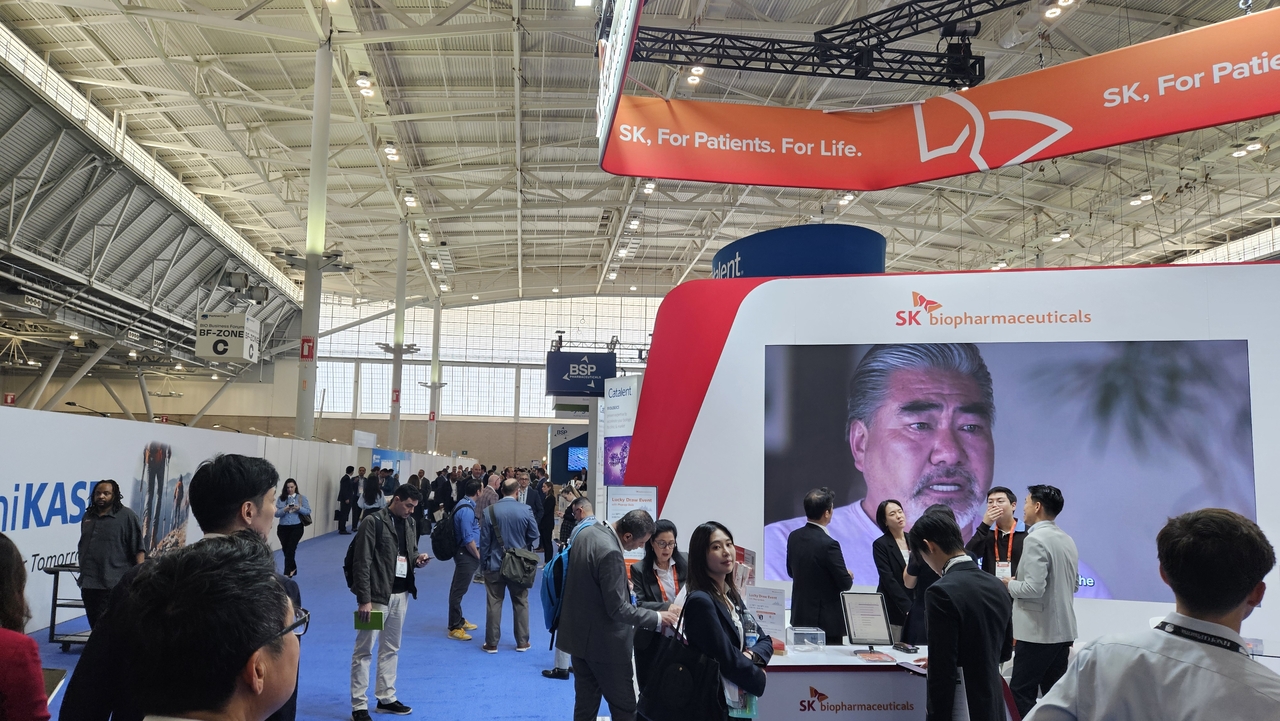
SK Biopharmaceuticals has set up its first-ever independent booth at the convention.
“This year, we have around 200 meetings scheduled, mostly related to licensing out and second-product discussions,” said an SK Biopharmaceuticals official. “We’re working to expand into oncology and other therapeutic areas and are especially focused on building partnerships in Europe.”
The booth features a compelling video testimonial from multiple patients using Xcopri, its anti-epileptic drug, displayed on the main stage. With a strong track record in the US market since Xcopri's launch in 2020, surpassing 170,000 cumulative patients as of the first half of this year, SK is using this momentum to enhance its brand image and attract new partners.
CHA Vaccine Institute, an affiliate of CHA Biotech, is exhibiting within the Korean pavilion, hosted by Korea Bio in partnership with KOTRA.
The company is highlighting two vaccine candidates: its herpes zoster vaccine CVI-VZV-001 and hepatitis B vaccine CVI-HBV-002, focusing on technology licensing and co-development opportunities.
“Leveraging our proprietary adjuvant technology, we’ve scheduled meetings with around 20 potential partners and investors, mainly from Europe, the Middle East and South America,” said a CHA Vaccine Institute official. “We’ll present our R&D direction and market entry strategies for our shingles vaccine during investor relations sessions, aiming to attract more investors as a listed company.”
Meanwhile, anticipation is high as Korea’s biotech sector is on the verge of reaching 10 trillion won ($7.7 billion) in annual technology exports for the first time in four years, with over 7 trillion won already recorded this year. With such result, promising Korean drug developers are actively seeking new business opportunities at Bio USA.
ABL Bio, known for its bispecific antibody technology — able to target two different antigens — aims to build on the momentum of its April deal with GSK worth up to 4.1 trillion won, centered on Grabody-B, a product that delivers drugs across the blood-brain barrier.
AriBio, currently conducting a global Phase 3 trial for its oral Alzheimer’s drug candidate AR1001, is also eyeing new partnerships. The company recently signed an 820-billion-won exclusive distribution agreement with Arcera, a subsidiary of UAE’s sovereign wealth fund ADQ.
hykim@heraldcorp.com