As geopolitical tensions drive demand, defense sector braces for stronger backing under next president
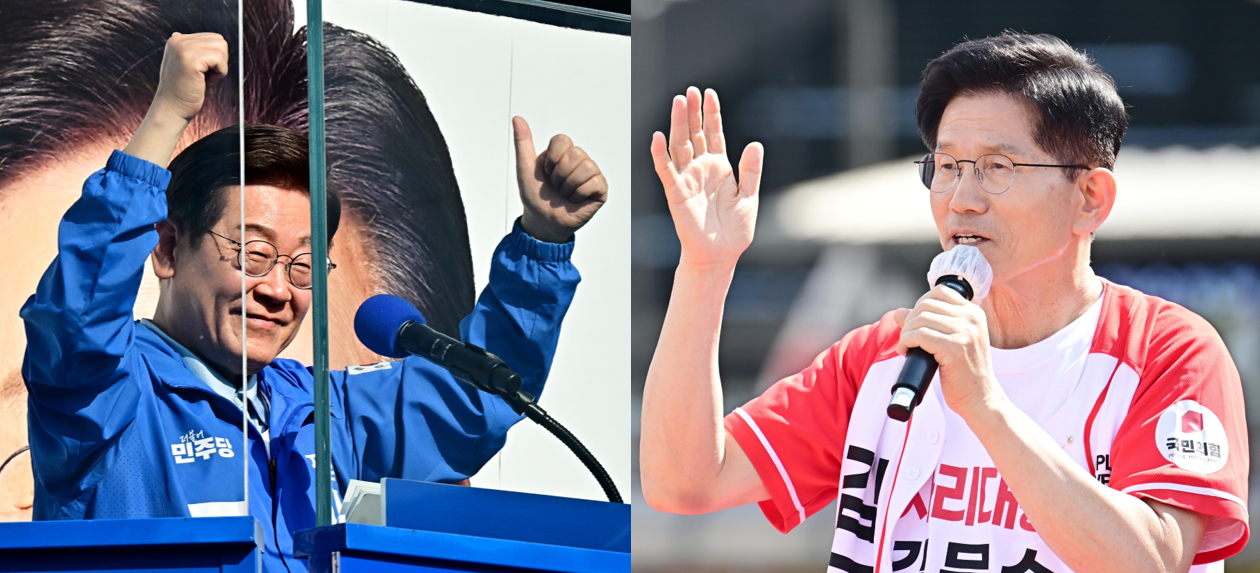
The two major contenders for South Korea’s upcoming presidential election — Lee Jae-myung of the Democratic Party and Kim Moon-soo of the People Power Party — have been voicing support for the country’s defense industry.
Lee has pledged a new coordinating body for arms exports and funding for defense sector R&D. Kim, meanwhile, has pledged to support the industry by boosting South Korea's own military, particularly with nuclear submarines. He also promised to focus on specific R&D targets, including AI-supported combat systems.
The nation’s defense industry has been booming, with the rise of demand for weapons systems since the war between Russia and Ukraine broke out in February 2022. The aggregate backlog order of the country’s four leading defense firms — Hanwha Aerospace, Hyundai Rotem, LIG Nex1 and Korea Aerospace Industries — has surpassed 100 trillion won ($73 billion), according to the companies’ earnings reports in the first quarter of this year.
Government-led defense exports: Lee
With the focus on developing a state-led defense sector, Lee has promised to establish a new control tower for expanding Korea’s defense exports and strengthen the capabilities of the Defense Acquisition Program Administration. Lee has also vowed to boost the state’s investment in research and development for defense artificial intelligence and offer tax credits for defense exporters’ R&D efforts.
“(Korea’s defense industry), armed with advanced AI technology on the basis of strong manufacturing is a new growth engine that will break through our economy’s crisis of low growth,” said Lee in a post on his Facebook account last month.
“Considering regional characteristics of Europe, the Middle East, Southeast Asia and India, the United States and Latin America, we need to establish a win-win cooperation strategy and mutual trust through defense technology transfer and education to actively expand defense partners.”
On top of that, Lee emphasized the importance of nurturing startups in the defense industry as well as defense professionals by offering more alternative military service for them. He pointed out the need to operate defense clusters in each region for balanced regional development and securing a lead in the global maintenance, repair and overhaul, or MRO, market.
National security first: Kim
Kim has put national security at the forefront of his campaign pledges for defense industry growth. He has promised to develop nuclear-powered submarines to counter North Korea’s ballistic missile submarines.
Underlining the goal to make Korea a top 4 defense exporter, Kim pledged to expand legal, systematic and financial support. He also vowed to create an advanced, strong military by designating 10 cutting-edge technologies for national defense and intensely developing them.
The conservative party’s candidate promised to strengthen security by introducing manned-unmanned complex combat systems based on AI to for low-cost, high-efficiency combat systems.
“We will set up a new control tower for Korea’s defense export strategies at the presidential office and strengthen the defense industry’s ecosystem and MRO sector so our country can take the leap to become a top four defense industry state in the world,” said Kim as he announced plans to raise a strong military at the Gyeryong barracks-experience center in Gyeryong, South Chungcheong Province, Sunday.
Support for R&D
Defense industry experts and officials said whoever wins the presidential race will have provide enough funding for research and development to secure technological superiority.
“The government cut the budget for defense R&D last year and its aftermath is lingering today,” said a former high-ranking official at the Defense Acquisition Program Administration.
“The R&D budget goes a long way and may bring tangible results in four to five years to let researchers grow and secure technological capabilities. As both candidates promised to provide financial support for the defense industry, we are asking them to keep their promises.”
Choi Gi-il, professor of military studies at Sangji University, noted that whichever side takes the presidential office, the outlook for the government to back up the defense industry is promising.
“Korean-made weapons are being sought after as the global geopolitical uncertainties loom and countries look to modernize their militaries,” said Choi.
“Many countries including ones in Europe are finding Korean weapons attractive as they are cost-competitive, well-performing and delivered on time.”
An official working at a leading defense firm said the industry needed help from the country’s next president and government to continue striving on the global stage.
“Weapons exports are (government-to-government) businesses in the end,” said the official. “In order for us to successfully sign deals with foreign governments, we are hoping that our government can position itself in a well-balanced manner to open up more markets and expand partnerships.”
hwkan@heraldcorp.com








