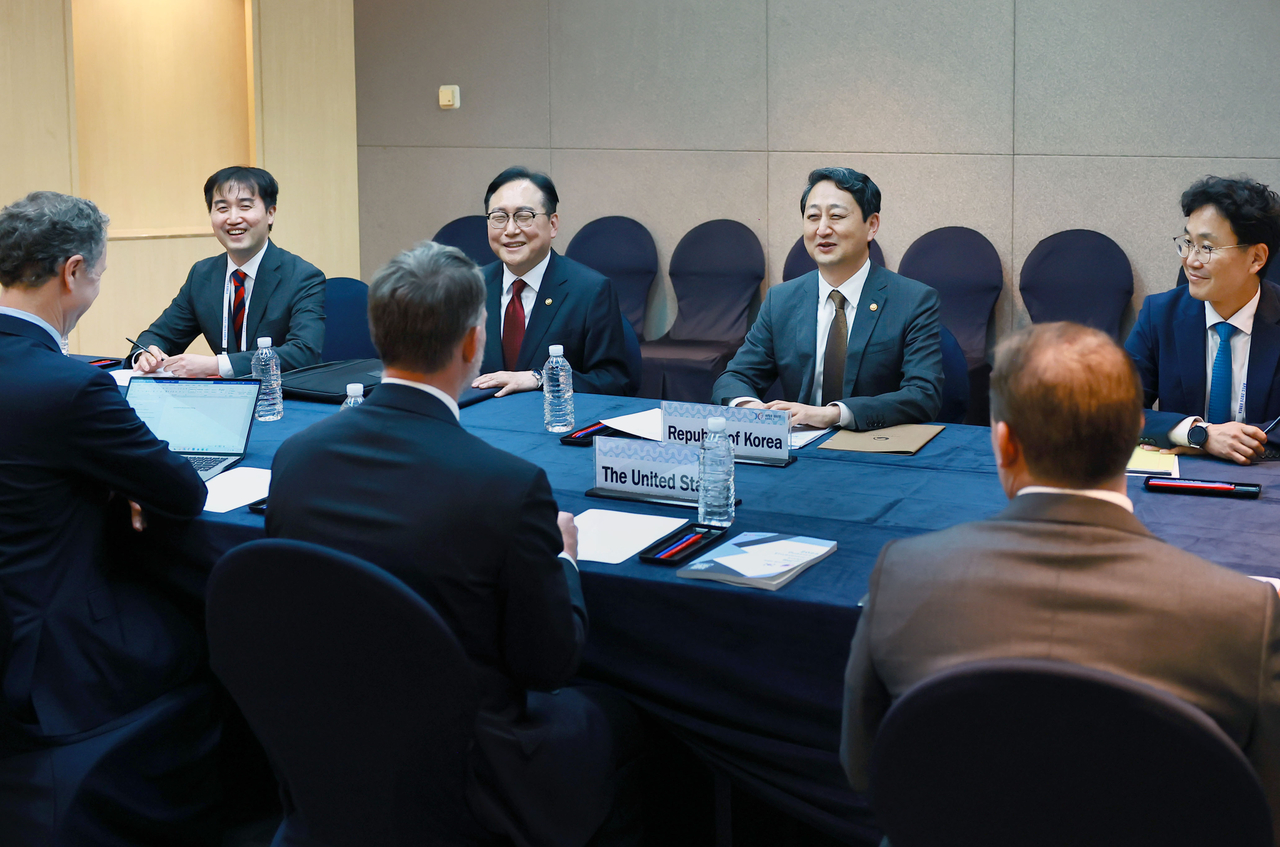
South Korea and the United States began a new round of working-level talks over US reciprocal tariffs and other economic and trade issues in Washington on Tuesday, as Seoul is seeking to minimize the impact of new levies rolled out by President Donald Trump's administration.
Chang Sung-gil, director-general for trade policy at the industry ministry, is leading the South Korean delegation to engage in the second round of "technical discussions" with officials from the Office of the US Trade Representative. The talks are set to conclude on Thursday.
The two sides are expected to have their discussions focus on six areas -- balanced trade, non-tariff measures, economic security, digital trade, the country of origin issue and commercial considerations as agreed on during a ministerial meeting on South Korea's southern island of Jeju on Friday.
Seoul has been striving to minimize the rates of the Trump administration's new duties, including 25 percent "reciprocal" tariffs on South Korea as well as sectoral tariffs that include 25 percent levies on automobiles, steel and aluminum.
South Korean officials are expected to make the case for reduced tariff rates or exemptions by highlighting the Asian country's intent to expand imports of US goods as well as the importance of strategic cooperation in the shipbuilding industry.
The Trump administration has been seeking to rebuild America's shipbuilding sector in cooperation with allies and partners, as China is known to have over 230 times the shipbuilding capacity of the US -- a gap that has gained urgency amid intensifying rivalry between the two superpowers.
The US side is expected to demand that Korea lower non-tariff barriers.
In a March report on foreign trade barriers, the USTR touched on a raft of Korea's non-tariff issues, including its import ban on American beef from cattle aged 30 months or older, South Korea's "offset" defense trade policy, emission-related regulations on imported cars and pricing policies for pharmaceuticals.
The report also raised concerns with Korea's consideration of rules to regulate dominant digital service platforms, which are aimed at ensuring fair competition.
Seoul has proposed crafting a "July package" agreement before July 8 when Trump's 90-day suspension of reciprocal tariffs ends. Its officials have said Korea will engage in the trade talks in a measured manner "without haste" as the country is set to pick a new president in the June 3 presidential election.
The two sides held the first round of technical discussions in Washington from April 30-May 1, where they outlined the broad contours of the talks. (Yonhap)










