April 4 event to mark UNESCO recognition of practice last year
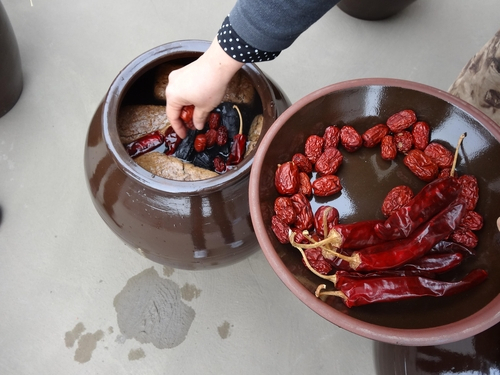
The traditional Korean ways of making fermented pastes and sauces, or “jang,” will be showcased at Gyeongbokgung, a Joseon-era (1392-1910) palace in Seoul.
On April 4, the palace will open to the public a space dedicated to jang-making, inviting visitors to look around the place and study the tools and ingredients used for jang-making.
At Saenggwabang, the palace kitchen where desserts and refreshments were prepared for the royals, visitors can sample jang made by jang artisans.
Those who want a guided tour to better understand the traditional practice can make online reservations on Naver.
The latest event celebrates UNESCO’s decision in December to add jang-making to its list of intangible cultural heritage. The UN body described the practice as an essential Korean culinary tradition, in addition to the usual staples of rice and kimchi.
What sets jang apart from similar condiments in China and Japan is the fact that the soybeans, the central ingredient, are fermented. These dried fermented soybeans, called “meju,” serve as the basis of different varieties of jang, such as doenjang (soybean paste), ganjang (soy sauce) and gochujang (chile paste).
Jang-making, Korea’s 23rd entry on the UNESCO list of intangible cultural heritage, is believed to have been practiced since as early as the Three Kingdoms era from 57 BCE to 668 CE, before the Silla Kingdom unified the Korean Peninsula.
siyoungchoi@heraldcorp.com