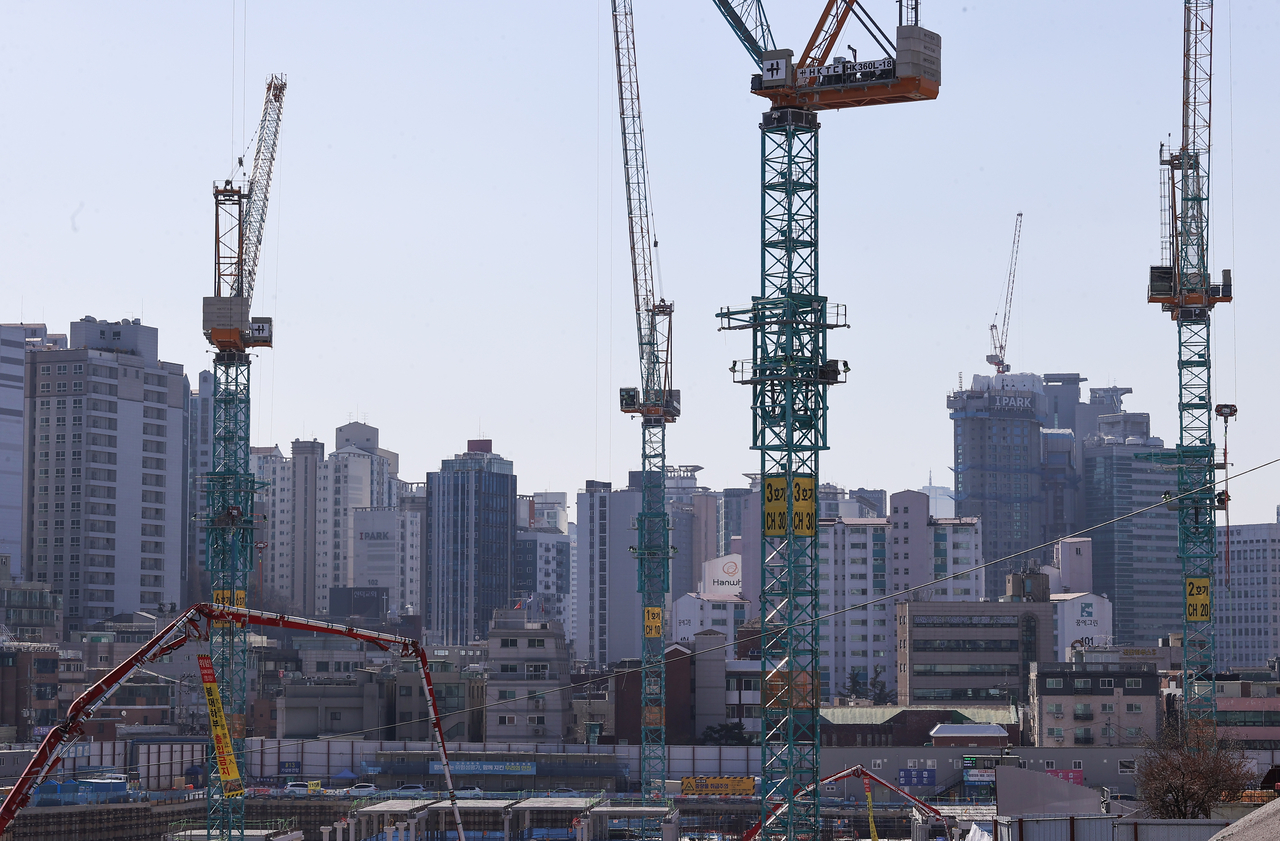
South Korea's economy is facing "increasing downward pressure" due to growing geopolitical uncertainties that have weakened export growth and the job market in construction and other key sectors, the finance ministry said Friday.
In its monthly economic report, the Green Book, the Ministry of Economy and Finance cited ongoing downward pressure for the fourth consecutive month, attributing it to domestic political instability and an escalating global trade war fueled by US tariff measures.
The latest assessment builds on the December report, in which the ministry first highlighted economic headwinds following President Yoon Suk Yeol's brief declaration of martial law on Dec. 3.
The ministry also flagged global geopolitical risks last month in light of US President Donald Trump's inauguration in January for his second term.
"The global economy is facing heightened geopolitical risks, while uncertainties in trade policies are increasing due to the imposition of tariffs by major economies," the latest report said.
In November, the ministry had already softened its economic outlook, shifting its assessment from "recovery" to "gradual recovery."
Compared with last month's report, the latest edition highlights persistent employment difficulties, particularly in the construction sector.
South Korea added 135,000 jobs in January, marking a turnaround from an on-year decline in the previous month, according to the report.
However, key sectors, including construction and manufacturing, continued to struggle. Employment in the construction sector fell by 167,000 from a year earlier in February, marking its 10th consecutive month of decline.
To counter these economic challenges, the government plans to mobilize all available resources to swiftly implement job creation measures, provide financial support for low-income households and assist small businesses within the first quarter, the report said.
Additionally, the government has pledged to take active measures to address trade uncertainties, including support for domestic companies affected by the latest Trump tariffs, it noted. (Yonhap)










