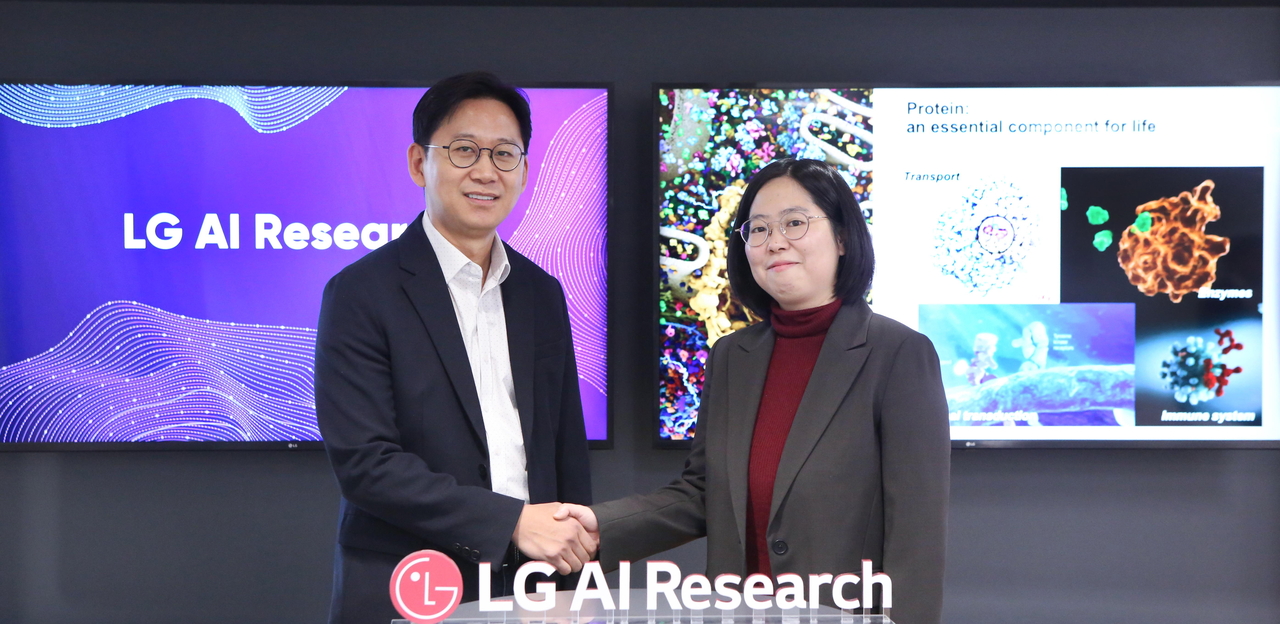
LG AI Research, the artificial intelligence arm of LG Group, is accelerating efforts in new drug discovery by partnering with a Seoul National University professor to develop AI for predicting protein structure.
LG said Thursday it signed a joint research agreement with Baek Min-kyung, professor of biological science at Seoul National University, at LG Science Park in Magok, western Seoul, a day earlier.
Predicting protein structures, which are critical to human biological processes, is essential for detecting the cause of diseases and developing new drugs.
Big technology firms are also enhancing AI-based protein prediction, but they are largely confined to predicting and designing single protein structures. Modeling multistate protein structures, which change depending on environmental and chemical conditions within the human body, remains a challenge.
LG, through collaboration with Baek’s team, seeks to develop next-generation AI capable of predicting multistate protein structures by the end of this year, which could potentially speed up drug development.
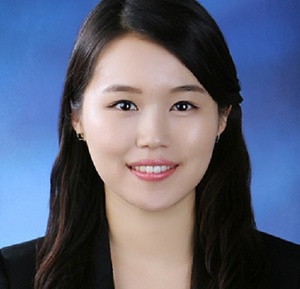
Baek is a leading researcher in this field. She co-developed RoseTTAFold, an AI-powered model predicting protein structure, alongside David Baker of the University of Washington, who won the 2024 Nobel Prize in chemistry for his work on computational protein design.
“AI is an important tool in predicting protein structures, but it has limitations in fully understanding the principles,” Baek said. “Through this partnership with LG AI Research, we aim to advance protein structure prediction to a new level of validation and experimentation.”
Lee Soon-young, head of the Bio Intelligence Lab at LG AI Research, noted that insights into incurable diseases such as Alzheimer’s lie within the protein structure. “By developing AI to predict multistate protein structures, it could help unlock the disease mechanisms and make groundbreaking progress in developing new treatments,” said Lee.
LG expects the partnership to speed up its ongoing research with the US biomedical research institution Jackson Laboratory to identify factors linked to Alzheimer’s and develop treatments.
LG has teamed up with JAX since early 2023 on AI models for diagnosing and treating Alzheimer’s and cancer.
The recent developments reflect LG Group’s focus on AI and biotechnology to drive future growth. LG Group Chairman Koo Kwang-mo, in his New Year’s address, stressed the firm’s commitment to biotech growth.
“By developing breakthrough drugs that treat incurable diseases, we aim to create a future where people will be able to spend more time with loved ones,” said Koo.
sahn@heraldcorp.com