Heritage agency to enhance protection of natural heritage in 2025
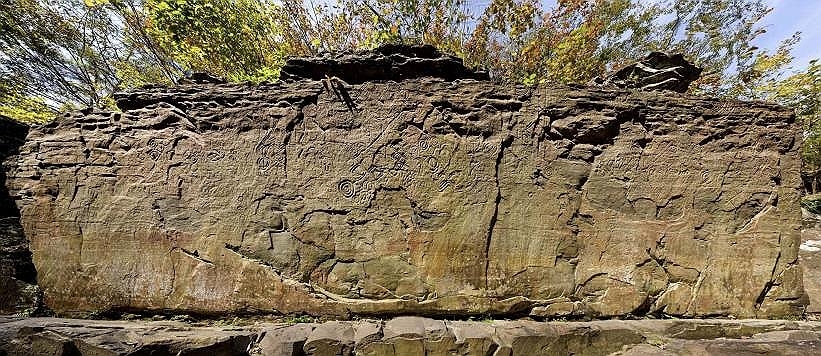
The Korean government is planning to host an annual UNESCO meeting on world heritage next year, the Korea Heritage Service said, announcing other major initiatives set to begin this year.
The Korea Heritage Service, the agency in charge of heritage management, believes that convening a meeting of the 21-member World Heritage Committee to discuss how best to manage artifacts around the world would boost the global profile of Korea, which has never held one of the annual meetings that began in 1977.
“We will launch a dedicated task force soon and pitch the 21 member countries ahead of their decision in July,” a KHS official said Wednesday, referring to a July committee meeting in Bulgaria, where Korea’s bid for next year’s session will be decided.
There, Korea will also learn whether it has won approval for its latest bid to add prehistoric carvings located at the Bangucheon Stream in Ulju-gun, Ulsan, to UNESCO’s list of World Heritage Sites.
The task force on next year’s UNESCO meeting will focus on shortlisting host cities, an interagency effort that will involve the Ministry of Economy and Finance, the KHS said, noting the government will put together a broader bid plan.
In addition to its bid to host a UNESCO meeting, the agency will launch a regular survey in 2025 of animals designated as National Monuments. The first survey of its kind will focus on compiling data on their demographics in an effort to better preserve wildlife increasingly threatened by climate change.
Another initiative the agency will focus on this year is plant conservation. The agency plans to introduce “plant doctors” -- experts who can be readily dispatched whenever their expertise is needed for preservation efforts.
Preservation efforts will be accompanied by initiatives to provide the public with greater access to well-maintained heritage sites, the KHS said.
The agency will scrap the first-come, first-serve policy of some of the programs operated at palaces in Seoul, like nighttime tours. Instead, it will accept all reservations, then offer admission at random, a policy it said is fairer.
The policy shift is partially a response to record-high attendance last year at the four Joseon-era (1392-1910) palaces in Seoul and royal tombs across the capital and the adjacent Gyeonggi and Gangwon provinces. The number for the first 11 months last year came close to 15 million, an on-year surge of 500,000.
Admissions of foreign nationals rose by 49 percent on-year, according to KHS data.
“How Koreans can make the most of their cultural heritage in everyday life will be the continuing theme of our mission,” said Cho Eung-chon, the Korea Heritage Service chief.
siyoungchoi@heraldcorp.com