Controversy erupts over conscripted soldiers mobilized to block Yoon‘s arrest
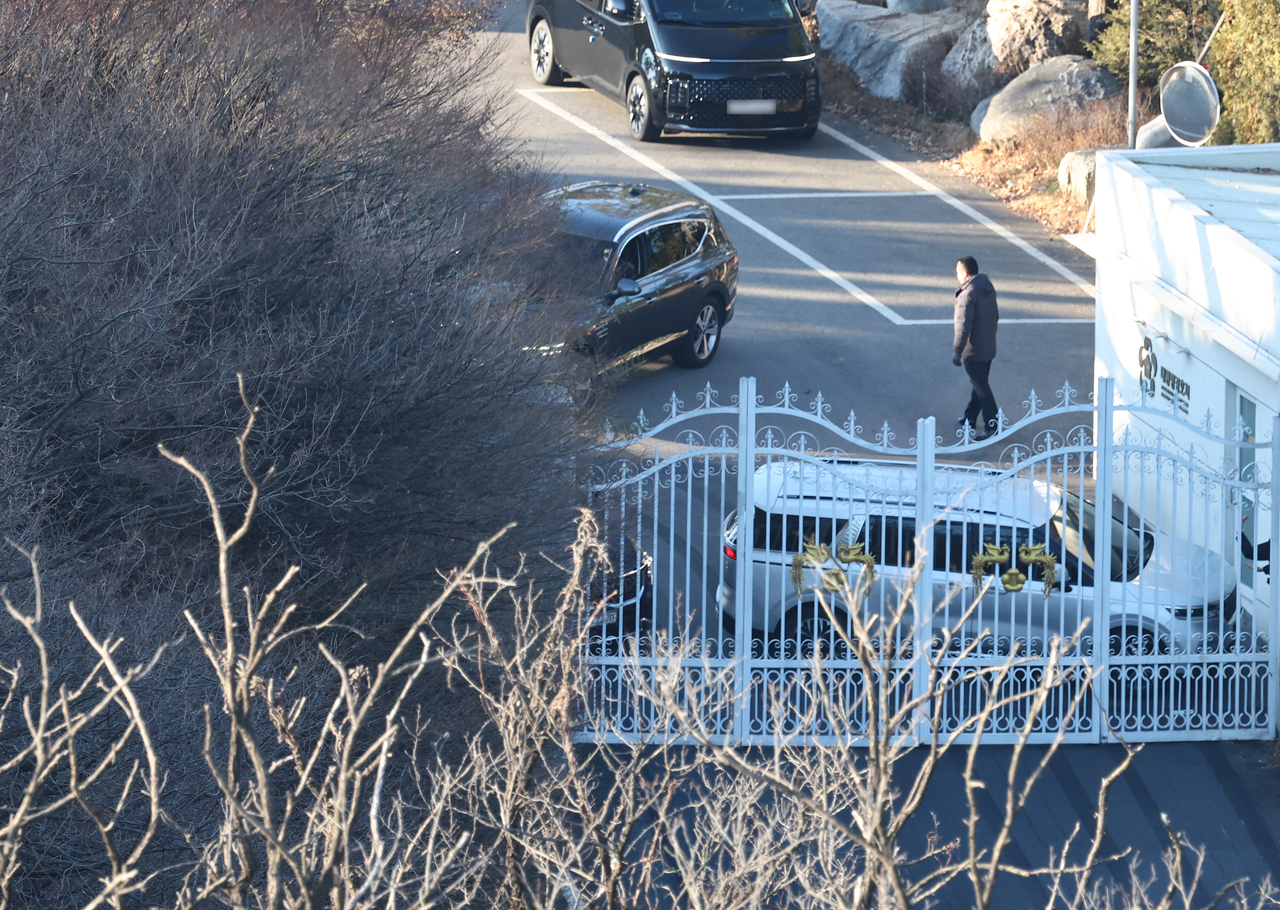
As high-ranking officials from the Presidential Security Team are being questioned for barricading suspended President Yoon Suk Yeol to block his court-ordered arrest, controversy has arisen over the fact that conscripted soldiers were found to have been ordered to block the attempt to arrest the impeached South Korean leader.
A group of parents of soldiers fulfilling their mandatory military service last week released a statement decrying president's bodyguards for their alleged deployment of conscripted soldiers during its Jan. 3 standoff with the Corruption Investigation Office for High-ranking Officials and police to thwart Yoon's arrest. Yoon is currently under criminal investigation for leading insurrection and committing abuse of power related to his Dec. 3 botched declaration of martial law and orders to his military commanders.
The group urged the PSS to stop what it called the presidential bodyguards' "disgraceful disturbance that gives our sons disgrace of being bodyguards of the person accused of insurrection."
This statement came after the police's National Office of Investigation confirmed in a briefing that the presidential bodyguards indeed deployed conscripted soldiers to block the arrest of Yoon, who is currently under criminal investigation for insurrection and power abuse for his Dec. 3-4 martial law declaration and related orders. The NOI said the soldiers were mobilized "to some extent," saying that they belong to the two Army brigades that work near the presidential residence.
Although it was not specified which military troops and how many were mobilized, conscripts of the 55th Security Brigade are alleged by the CIO to have been used to block officials from carrying out Yoon's arrest warrant. However, the PSS has been repeatedly denying that any conscripted soldiers were mobilized in the over five-hour standoff on Jan. 3.
The soldiers of the 55th Brigade belong to the Capital Defense Command, but can receive orders from the PSS as its duties are to guard the perimeter of the presidential residence. On the coattails of investigators' aborted first attempt to arrest Yoon, the Ministry of National Defense issued a statement that conscripted soldiers should not be deployed to block arrest.
South Korean soldiers are mandated to obey their superiors and to stay politically neutral. Unlike in other countries, until now there has been no legal clause stating soldiers' right or duty to refuse what is thought to be unjust or illegal orders by a superior.
Protecting the legal rights of soldiers is an even more crucial matter in South Korea, where the majority of its 477,470 military are serving against their will. South Korea mandates all able-bodied men to serve in the military for a minimum of 18 months, and most of the enlisted men serve their duties in the field as soldiers.
Within Korea, so far there have been no legal precedents that state the soldiers' right or duty to refuse unjust or illegal orders. However, recently there are signs of change.
Former Marine Corp chief investigator Col. Park Jung-hun last week was acquitted of insubordination charges for refusing to follow orders to whitewash an internal probe into the death of Marine corporal Chae Su-geun, 20, in a July 2023 flood, instead following what was required by law. But Park was unfairly dismissed and faced over a yearlong legal fight before he broke free of the charges.
Defense Ministry-issued guidelines for soldiers in 2018-2022 specified that following a superior's orders that are clearly illegal is a crime. But the clause was removed for in the same guidelines for 2023-2027 -- issued after Yoon took office, according to a 2023 revelation by Rep. Ki Dong-min of the main opposition Democratic Party of Korea.
Because of this guideline change, there are currently no measures to protect the rights of enlisted soldiers -- almost all of whom are serving against their will -- to disobey politically-charged or illegal orders handed down by their superiors.
A related tragedy occurred in case of Pvt. Park Yun-gwan, a member of the Capital Defense Command’s 33rd Military Police Brigade that participated in the 1979 military coup led by Chun Doo-hwan. Park was killed while following the orders of those responsible for the coup, but paradoxically, unlike other soldiers who died fighting the insurrection, he was not officially recognized for his sacrifice.
While no shots were fired during Yoon’s failed Dec. 3-4 imposition of martial law or during the joint investigation team's attempt to arrest the president, the group of parents of conscripted soldiers said they are extremely concerned and outraged over the possibility that their sons could be used to commit violence, in a situation that has nothing to do with the protecting the country.
minsikyoon@heraldcorp.com