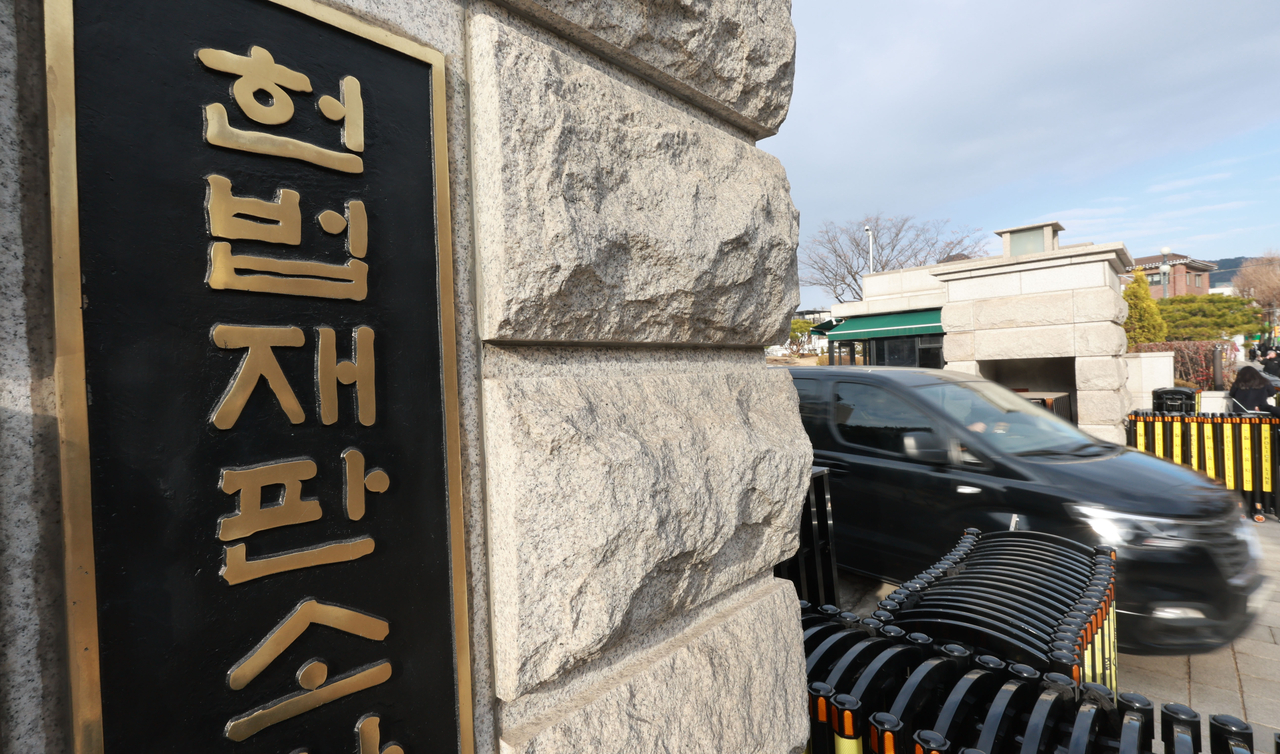
The Constitutional Court of Korea is ramping up preparations for the impeachment trial of President Yoon Suk Yeol, holding the first meeting of eight justices on Monday, about a week ahead of a formal hearing scheduled for Jan. 14.
The meeting was held after the court transitioned to an eight-member bench with new Justices Cho Han-chang and Jung Gye-seon beginning their six-year terms last week.
The court's press officer Cheon Jae-hyun told reporters that justices' decision to hold five hearings through Feb. 4 -- every Tuesday and Thursday starting Jan. 14 -- is based on the court law.
"(Fixing the hearing schedule) comes after considering the need to proceed arguments and evidence examinations smoothly, based on the Constitutional Court Act 30 clause 3, (not based on the Criminal Procedure Act)," Cheon said during Monday's briefing.
Regarding media reports that it was court's suggestion for National Assembly to drop criminal charges against Yoon, including insurrection, which were initially included in the impeachment resolution, Cheon said only that it was "not true."
During the second preparatory hearing held Friday, the National Assembly's legal team said that they would exclude the treason charge from the grounds for impeachment. The intent was to expedite the trial by focusing on constitutional violations, rather than delving into specific criminal offenses under the criminal law.
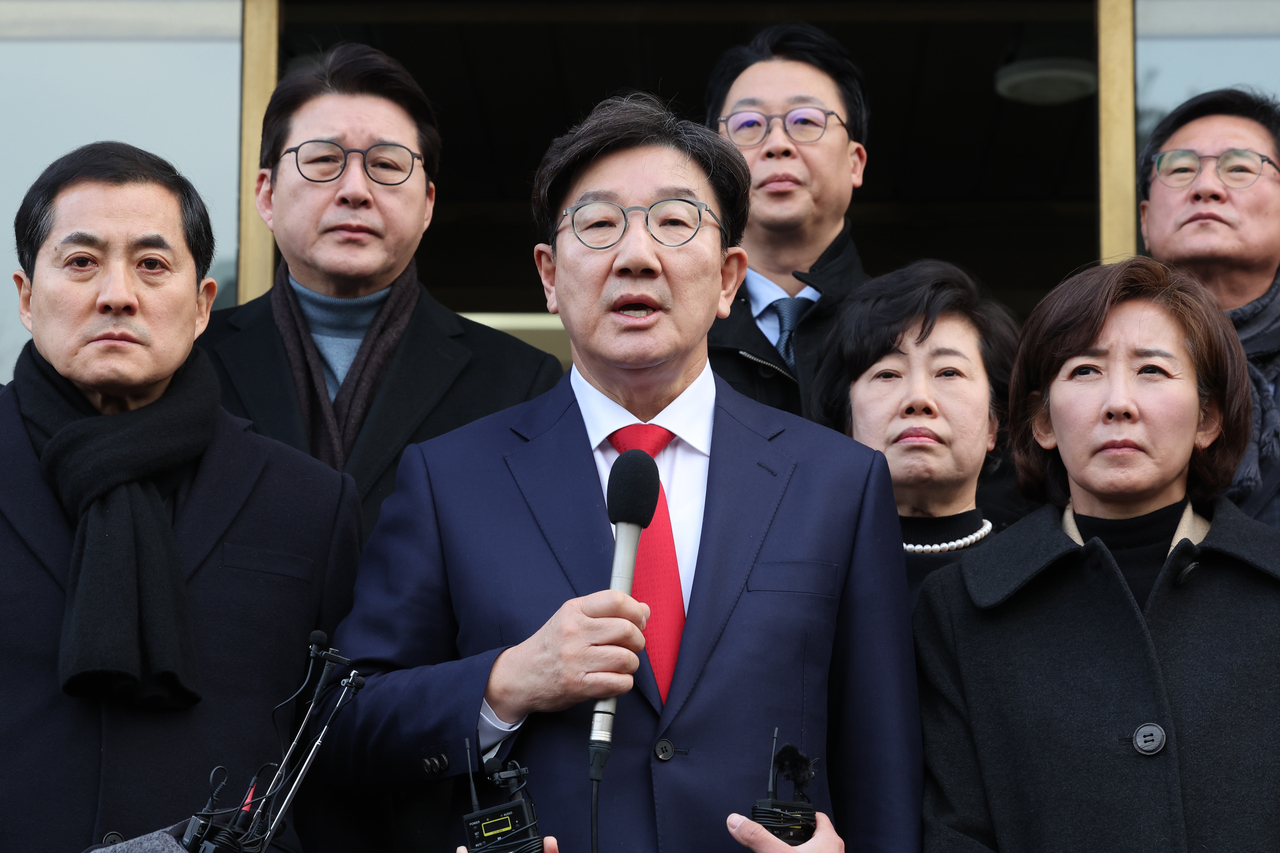
This has led the ruling People Power Party lawmakers including floor leader Kweon Seong-dong to visit the court on Monday to protest and criticize it for being "biased and unfair."
Yoon's legal representatives have also argued that the impeachment was "flawed" if treason charge was excluded, and that the National Assembly would need to re-adopt the impeachment motion.
During Monday’s meeting, justices were expected to review key issues such as the impeachments of Yoon and Prime Minister Han Duck-soo, who was initially acting president after Yoon's impeachment. The court revealed that the first preparatory hearing for Han’s impeachment trial has been scheduled for at 4 p.m. on Jan. 13.
The justices were also expected to address other issues as well, such as the constitutional dispute over the quorum required for the National Assembly to pass the impeachment resolution regarding Han, the constitutional dispute over the investigation of Yoon for alleged insurrection charge by the Corruption Investigation Office for High-Ranking Officials and a constitutional complaint raised regarding current acting President Choi Sang-mok’s refusal to appoint one of three nominated court justices.
Although the court stressed several times that it would prioritize Yoon’s trial, it is likely that the justices will also expedite the trial for Han, given ongoing debates surrounding the impeachment quorum -- a controversy expected to become a central issue in Han's trial.
Another key item on the agenda revolves around issues raised during the second preparatory hearing of Yoon’s case on Friday last week.
Led by Justices Cheong Hyung-sik and Lee Mi-seon, Friday’s session sorted out which evidence to allow and what arguments each side would bring to the formal trial, which is set to begin Jan. 14.
Yoon’s legal team on Friday morning submitted a response statement to the court. The submission came 20 days after the impeachment motion was passed on Dec. 14, and 14 days after the court started to regard Yoon as having been notified of the upcoming trial on Dec. 20.
The justices will review arguments and responses from both sides, and also examine submitted opinions and witness selection.
If Yoon appears in person at the first hearing on Jan. 14, it is likely that the court will discuss security measures with the Presidential Security Service this week. Though Yoon has been suspended from duties since Dec. 14, his security and protocol services remain unchanged.
ddd@heraldcorp.com