South Korea finds itself in uncharted waters: Yoon's trial, potential Cabinet collapse, snap presidential election and challenges to 1987 Constitution
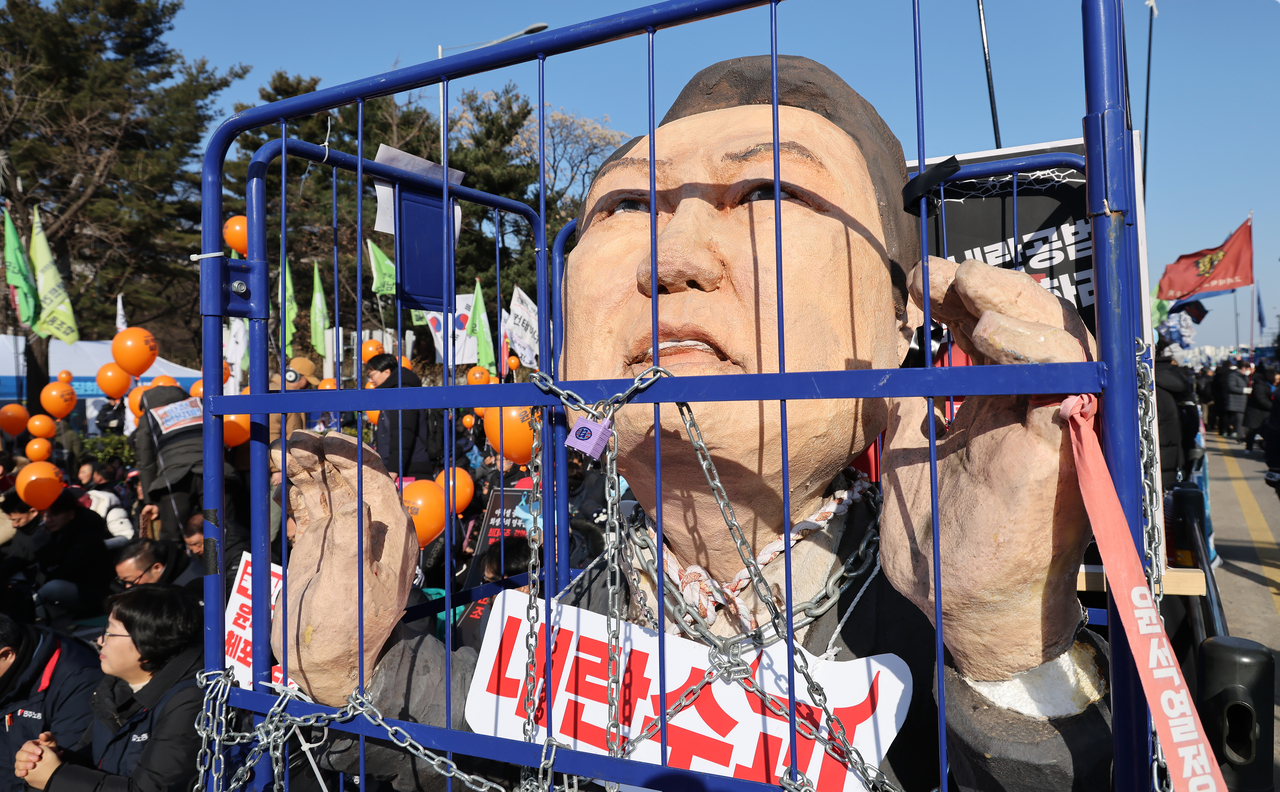
Political uncertainty looms over the new year, driven by President Yoon Suk Yeol's martial law declaration and his impeachment last year.
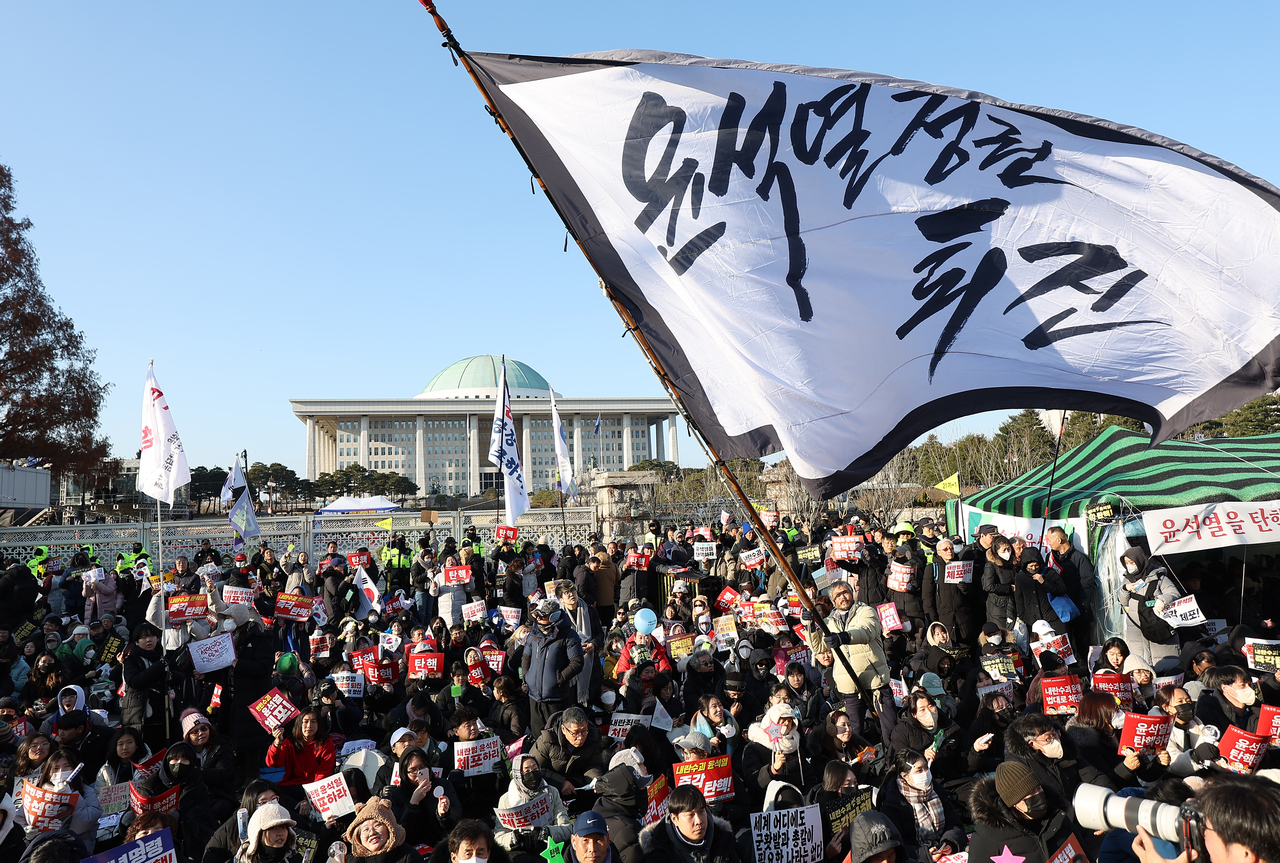
The nation now waits on the Constitutional Court's decision, which could either reinstate Yoon or permanently remove him from office, triggering a snap presidential election just three years after the last one.
Administrative instability adds to the uncertainty, with Finance Minister and Deputy Prime Minister Choi Sang-mok juggling several critical roles -- president, prime minister and his original post. Choi’s simultaneous responsibilities have sparked concerns about the stability of Asia’s fourth-largest economy, especially amid the inauguration of a new US administration that could redefine the bilateral alliance.
Adding to the growing concerns, Choi is now facing threats from the main opposition party, which has raised the prospect of pursuing impeachment against more Cabinet members. Currently, there are 15 sitting Cabinet members out of 21.
The 21-member Cabinet is unable to convene a meeting with fewer than 11 members, as outlined by the Government Organization Act and a related presidential decree. This means that if five more Cabinet members, including Choi, are impeached, South Korea’s Cabinet could collapse. There are no legal precedents to guide the country through such a situation.
Major political events are expected to unfold in the first half of the year, with the Constitutional Court set to rule on Yoon’s impeachment within 180 days. As two justices are due to retire in April, many anticipate the court will reach a decision by then, likely in February or March. Should Yoon be removed, a presidential election will be triggered within 60 days, potentially taking place before June, according to observers.
This sparked concerns that the post-martial law reality has exposed South Korea’s lack of constitutional safeguards to prevent such uncertainties. Meanwhile, rival parties have become increasingly unwilling to cooperate, even at the risk of further destabilizing an administration already grappling with a power vacuum following the martial law imposition.
Observers also argue that the weakness in South Korea's constitutional order only fuels political strife, as major parties seek to exploit legal and constitutional loopholes to their advantage.
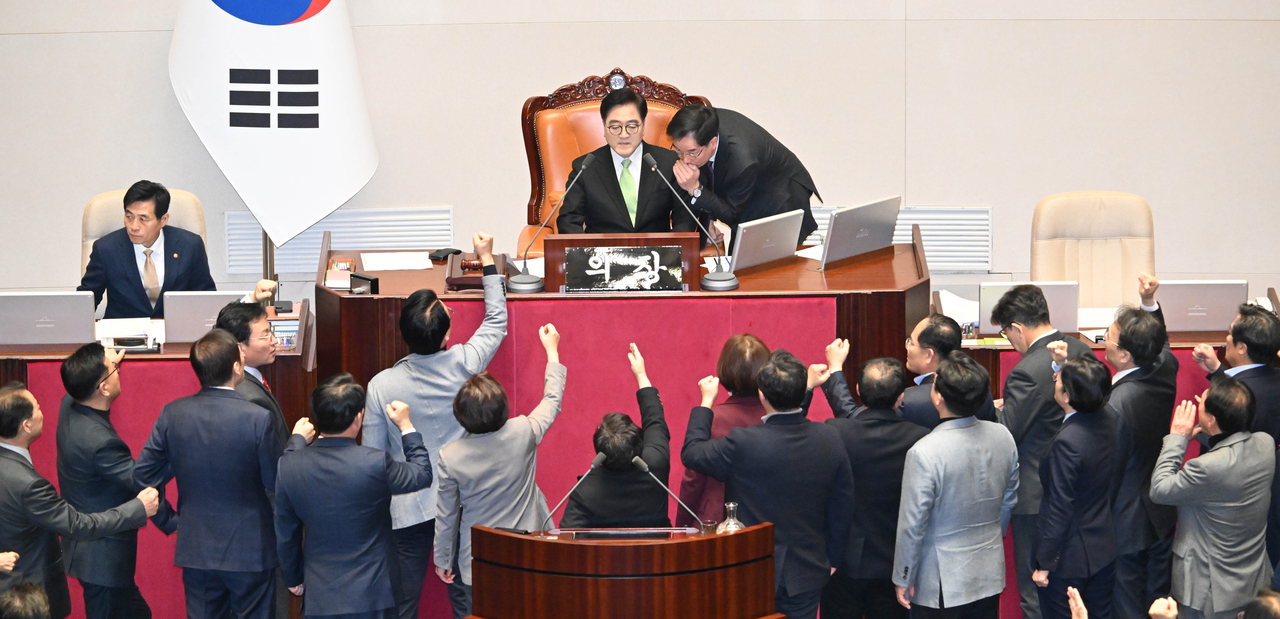
Uncertainty still surrounds the minimum voting threshold for impeaching then-acting President and Prime Minister Han Duck-soo last week.
It remains unclear whether the threshold is 151 votes in favor in the 300-member unicameral parliament, given his position as a Cabinet member, or 200 votes, considering his role as national leader.
National Assembly Speaker Rep. Woo Won-shik proceeded with the 151-vote threshold. This allowed the 170 Democratic Party lawmakers' votes in favor to pass the motion, while prompting a severe protest and search for legal remedy by 108 lawmakers of the ruling People Power Party.
Similar uncertainty surrounds acting president Choi's controversial decision on Tuesday to approve two of the three Constitutional Court justice nominees recommended by the National Assembly.
At the same time, the validity of any Constitutional Court ruling on Yoon’s impeachment without completely filling the vacancies remain questionable.
The ruling party argued that none of the three nominees should be approved and that the court vacancies should remain unfilled. Meanwhile, the main opposition party demanded that Choi approve all three justices, threatening impeachment if he did not comply.
"Even as political parties champion the 'rule of law,' they have become more adept at exploiting legal loopholes or ambiguities to serve their partisan interests," Lee Jong-eun, assistant professor of political science at North Greenville University, told The Korea Herald.
One of the challenges in South Korean politics is the escalating political strife often motivated by the major parties' notion of how they can maximize their political mandate, and the lack of legal safeguards to deter strong political actors' abuse of power, he added.
"It is too easy for the majority party to legally force through legislation against the opposition from minority parties," Lee said. "We could blame the drafters of the 1987 Constitution for the lack of specificity. ... However, what may be happening in Korean politics today is that unwritten political norms and traditions are changing."
Impeachment taken lightly
The fact that South Korea has seen three heads of state impeached by parliament since its democratization in 1987 — following decades of military dictatorship — raises concerns about whether impeachment is becoming a routine or overly politicized tool in South Korean democracy.
Yoon could well be ousted with his five-year term only half-finished. Even before Yoon's martial law declaration, his confrontational leadership style in dealing with the opposition-controlled National Assembly often prompted the opposition parties to threaten Yoon with impeachment.
Experts said that, although there were reasons to hold impeached leaders accountable, impeachment could be increasingly exploited as an attractive strategic political tool, instead of a last resort.
“That is probably unhealthy,” Mason Richey, professor of international politics at Hankuk University of Foreign Studies, told The Korea Herald.
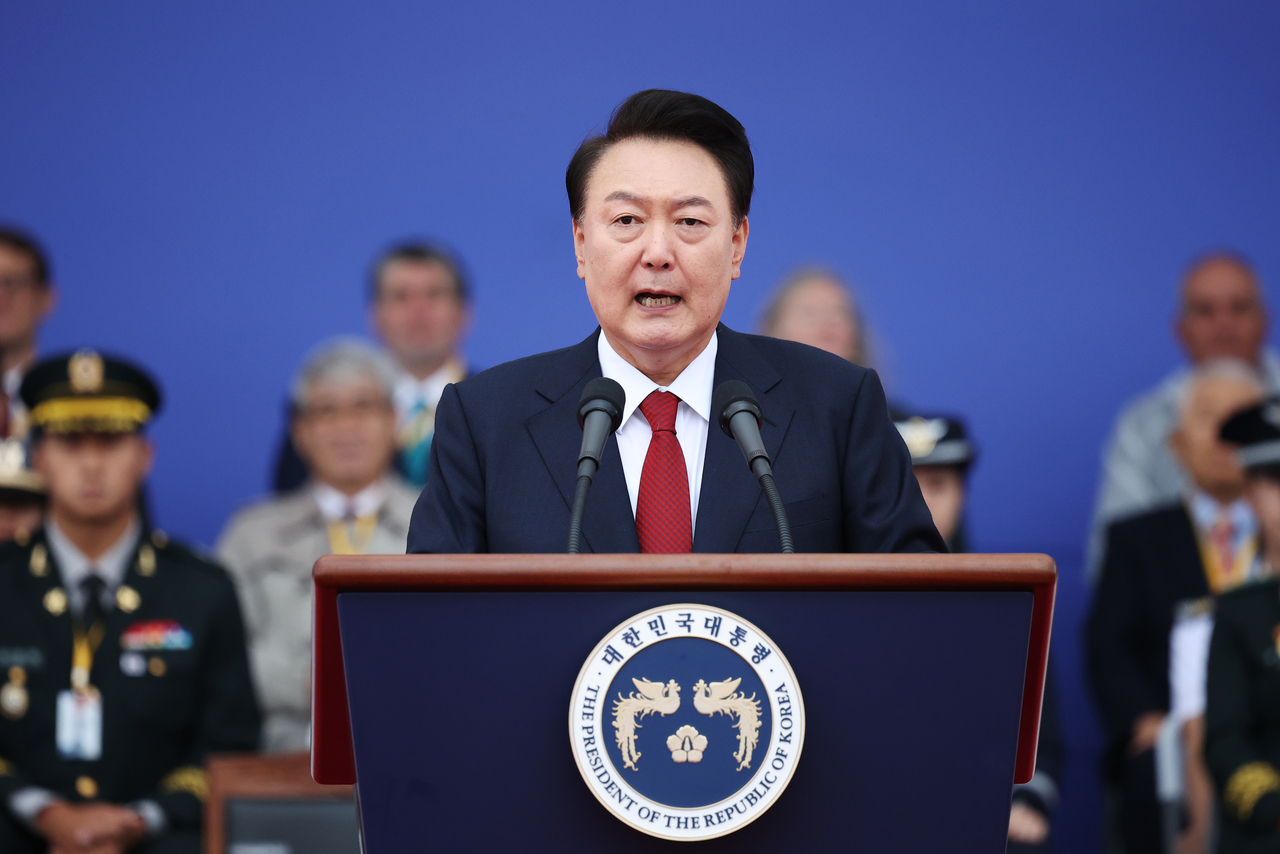
He argued that frequent impeachment attempts highlight weaknesses in South Korea’s constitutional order, while also underscoring the excessive power of the president. In a system where the president controls domestic policy, foreign affairs and serves as commander-in-chief of the armed forces, the nation's No. 1 representative, and the ultimate authority in appointing or dismissing public officials, such concentration of power can lead to instability.
“Attacking him or her is an attractive option for the opposition, insofar as it cripples the president's party and opens up the possibility for a short-term comprehensive political victory,” Richey said.
Another expert suggested that politicians here tend to opt for impeachment -- meant to be reserved for extreme situations -- to pass judgment on elected officials.
“I don't think it’s valid to argue that Yoon shouldn't be impeached because it is being used too often,” said Benjamin Engel, visiting professor of political science and international relations at Dankook University. “But in the future, Korea may be in danger of using impeachment too liberally.”
New leader or Yoon?
As the time is ticking with a power vacuum in place for at least months from now, South Korea is already in a precarious position as the global trade war looms with US President-elect Donald Trump set to regain power in January.
If the Constitutional Court verdict is not made until near the deadline, a presidential election will likely take place in August. But there are indications that the verdict might come sooner.
The verdict that overturned the ex-President Roh Moo-hyun's impeachment came 63 days after the National Assembly vote, and ex-president Park Geun-hye's impeachment was upheld in 91 days. Moreover, for the Yoon trial, two of the six sitting court justices -- Moon Hyung-bae and Lee Mi-son -- are set to resign on Apr. 18, ending their six-year terms.
Whoever leads South Korea in the aftermath of this political turmoil, the first meeting between them and Trump will likely come the furthest-ever into a new US leader's term. Since South Korea's democratization in 1987, the longest time for a new US leader to meet the Korean president is six months, when former President Kim Young-sam held talks with his counterpart Bill Clinton in July 1993.
“Now South Korea has no real leader with whom Trump can build a relationship,” Engel said. “South Korea has cards to play with the US, such as shipbuilding and technological or semiconductor capacity, but no one to play them.”
This holds greater significance, given Trump's preconceived notions that South Korea is free-riding on the back of US defense spending and free trade.
“Without an elected leader with a popular mandate, South Korea risks being steamrolled by an incoming Trump administration,” Richey said. “It also risks being unable to adequately respond to US-China strategic competition.”
But, of course, there's also a possibility of the Constitutional Court rendering the impeachment motion unconstitutional and bringing Yoon back to office.
If Yoon returns, he would be seen by international actors as a president who does not speak for his country and put South Korea’s democracy in jeopardy, Engel said, as the failed self-coup attempt indicated that he had sought to cater to the small batch of supporters – often viewed as right-wing election conspiracy theorists.
These right-wing supporters believe that vote rigging occurred at the general election in April, which led to the ruling party's crushing defeat. They often justified Yoon's martial law declaration, claiming it was the only way to challenge the immunity to investigation held by the National Election Commission, which rebuffed a NIS report that identified security vulnerabilities in 2023.
Yoon's speech after martial law declaration resonated with such a view. Yoon on Dec. 12 revealed that he had ordered ex-Defense Minister Kim Yong-hyun to inspect the NEC through a martial law declaration. The prosecution later revealed that some high-ranking military officials involved in martial law had planned to raid the NEC and arrest officials for their alleged vote rigging.
According to Engel, if Yoon returns to office, it could intensify the theory of election rigging, further deepening political divisions and distrust in the electoral process.
“Although the military may be unlikely to help Yoon seize power via a second attempt at a self-coup, Yoon could instead hasten the rot in South Korea's democracy by hacking away at trust in free and fair elections,” he said.
consnow@heraldcorp.com