After going back and forth on the equity investment ceiling, the ruling Saenuri Party is now against reintroducing it, worrying that it would undermine an already stagnating economy and weaken domestic companies’ global competitiveness, with little effect in decentralizing conglomerates.
Na Seong-lin, vice chairman of Saenuri’s Policy Committee, said a wider perspective must be adopted to foster healthy growth in tandem with economic democratization.
“Just looking at the oligopolies of the domestic market is meaningless. What needs to be considered is how much of a market share the conglomerates possess in a broader international market,” Na told The Korea Herald.
“It would not prevent the number of chaebol from increasing, but merely limit the amount of their investment,” Na said, adding the Saenuri Party plans to regulate the large businesses from a different perspective.
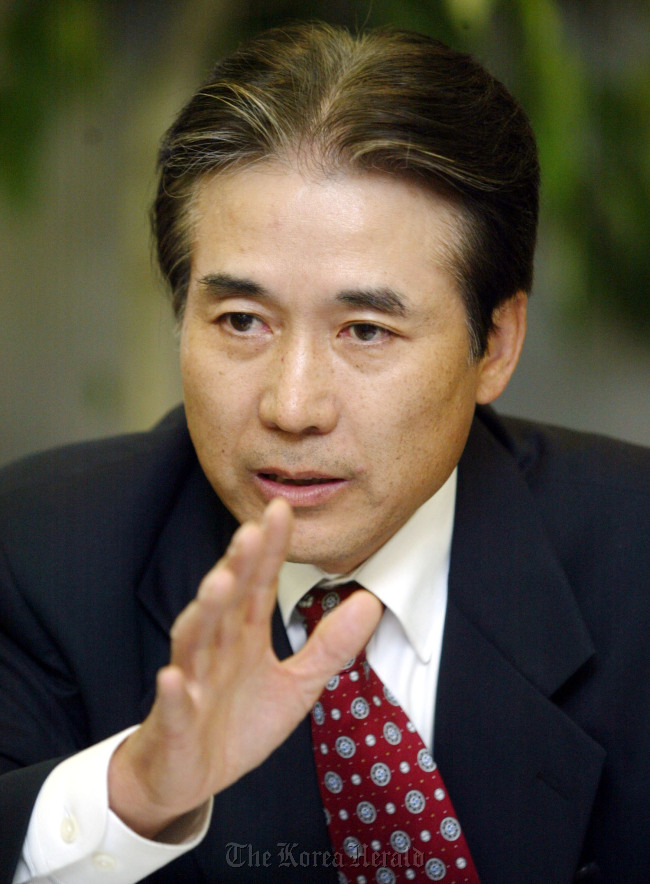
Rep. Na Seong-lin of the Saenuri Party
The Saenuri Party’s main premise is that most chaebol have already lowered their equity investments in their subsidiaries to 20 percent or less of their net asset value. It means the 30 percent ceiling proposed by the opposition Democratic United Party would fall flat, they say.
According to the Economic Reform Research Institute affiliated with a domestic civic group, a 40 percent ceiling would force just three conglomerates ― SK Group, Hanwha Group and Hanjin Group ―to dispose of their excess investment. A 25 percent cap would add only one more, Hyundai Heavy Industries.
Na has been an ardent objector to the equity investment ceiling system and led the debate in 2009, when the cap was scrapped after it had been eased from 25 percent to 40 percent.
Instead, the Saenuri Party says it will adopt a gradual approach to decentralizing the businesses, such as by banning new cross-shareholdings and restricting the voting rights expediently secured by the children of conglomerate chiefs.
The Saenuri Party will also focus on establishing regulations to prevent unfair trade and banning the giants from entering backstreet businesses, he said.
They would include regulations that punish large companies that force smaller vendors to supply them with goods at lower prices in return for their contracts, or unethically recruiting workforces from smaller companies, as well as price collusion.
A strong believer in equity investment leading to capital investment, Na emphasized that economic democratization does not necessarily have to come at the cost of killing off the conglomerates as is pushed by the main opposition Democratic United Party.
“Regardless, bringing back the (equity investment ceiling) will only lead to big confusion in the stock market, and result in there being no one to buy out such large lumps of shares, leading to wider exposure to foreign capital and weakened competitiveness.”
To a question whether specialization or diversification of a business is healthier, Na said, “(Forcing specialization) is a better fit for the 1990s. South Korea has already gone beyond that stage because we now play in the global market.”
koreaherald@heraldcorp.com











