MOSCOW (AFP) ― Russia on Monday banned the import of all vegetables from Germany and Spain and warned the sanction could soon be applied to the rest of Europe because of the deadly E. coli bacteria scare.
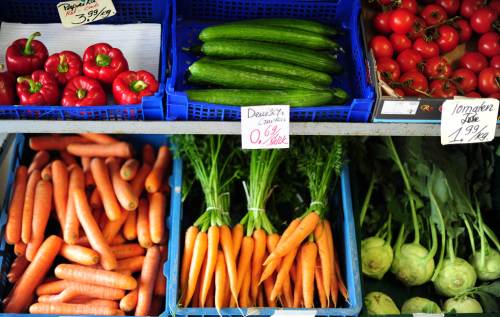
The country’s consumer protection watchdog said in a statement that the ban covered “raw vegetables” including tomatoes, cucumbers and salad produced in Germany and Spain.
Vegetables including German cucumbers are for sale in a shop in Leipzig, Germany, Monday. (AFP-Yonhap News)
“This measure stems from the outbreak in Germany of the acute intestinal infection caused by Enterohemorrhagic E. coli,” the agency statement said.
EHEC can result in full-blown hemolytic uremic syndrome, a disease that causes bloody diarrhea and serious liver damage and which can result in death.
German officials suspect the deadly strain, which has already killed 14 people, may have come from organic cucumbers imported from Spain.
Russia has been quick on past occasions to ban the import of products produced locally for ostensibly health-related reasons ― moves that have seen critics accuse the authorities of unfairly helping local producers.
The consumer protection agency said the measure could soon be expanded to include all European Union countries if Russia failed to receive a sufficient explanation as to how the fatal disease was being spread.
“Moreover, in the coming hours, a decision may be taken to ban the import to or sale in Russia of vegetables produced in all EU countries,” the Russian statement said.
The agency chief’s Gennady Onishchenko urged Russians to eat only locally-grown greens, adding that all vegetables already imported from Germany and Spain would be seized.
“We are calling on the population not to purchase fresh vegetables from Germany and Spain,” Interfax quoted Onishchenko as saying. “Let them purchase domestic products.”










