President calls for stronger US alliance without sacrificing China ties, reaffirms push for early wartime command transfer
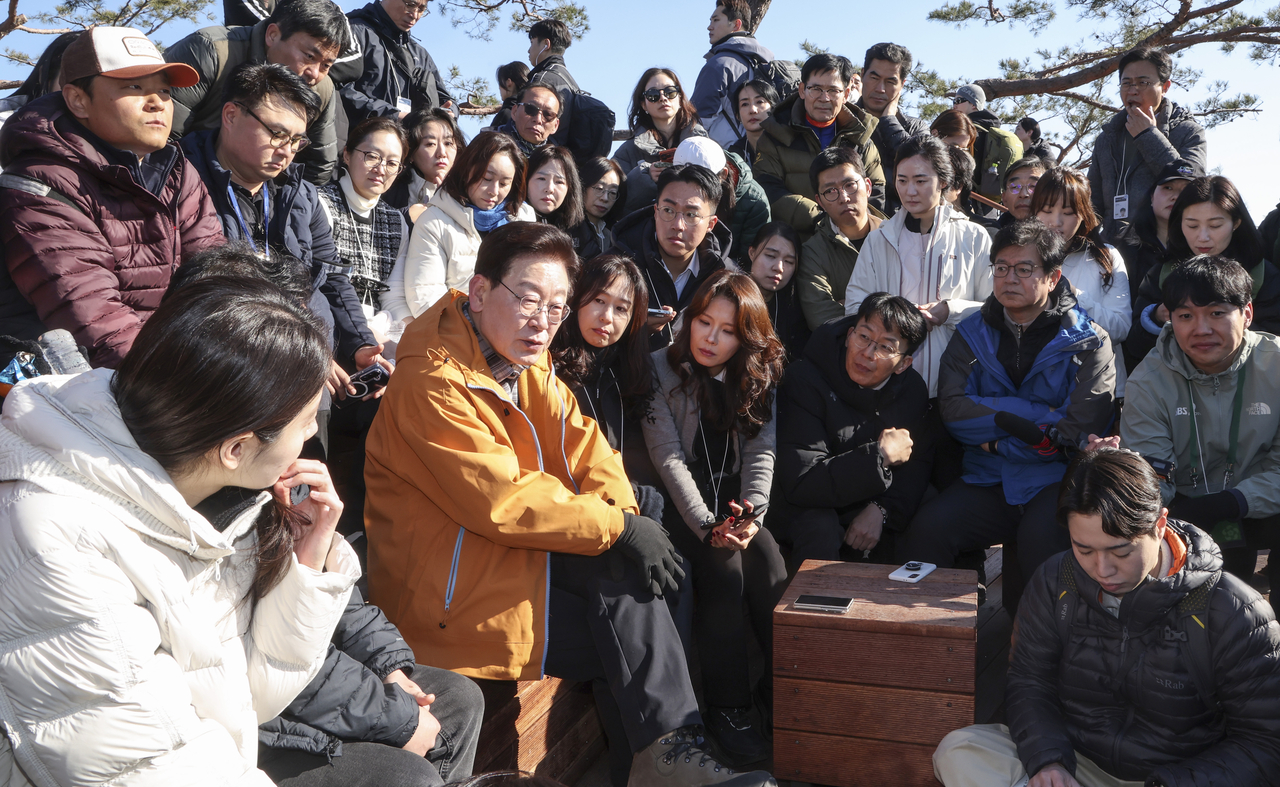
President Lee Jae Myung on Sunday rejected the notion that strengthening South Korea's alliance with the United States and pursuing greater strategic autonomy are incompatible, stressing that closer ties with Washington should not come at the expense of relations with other countries, particularly China.
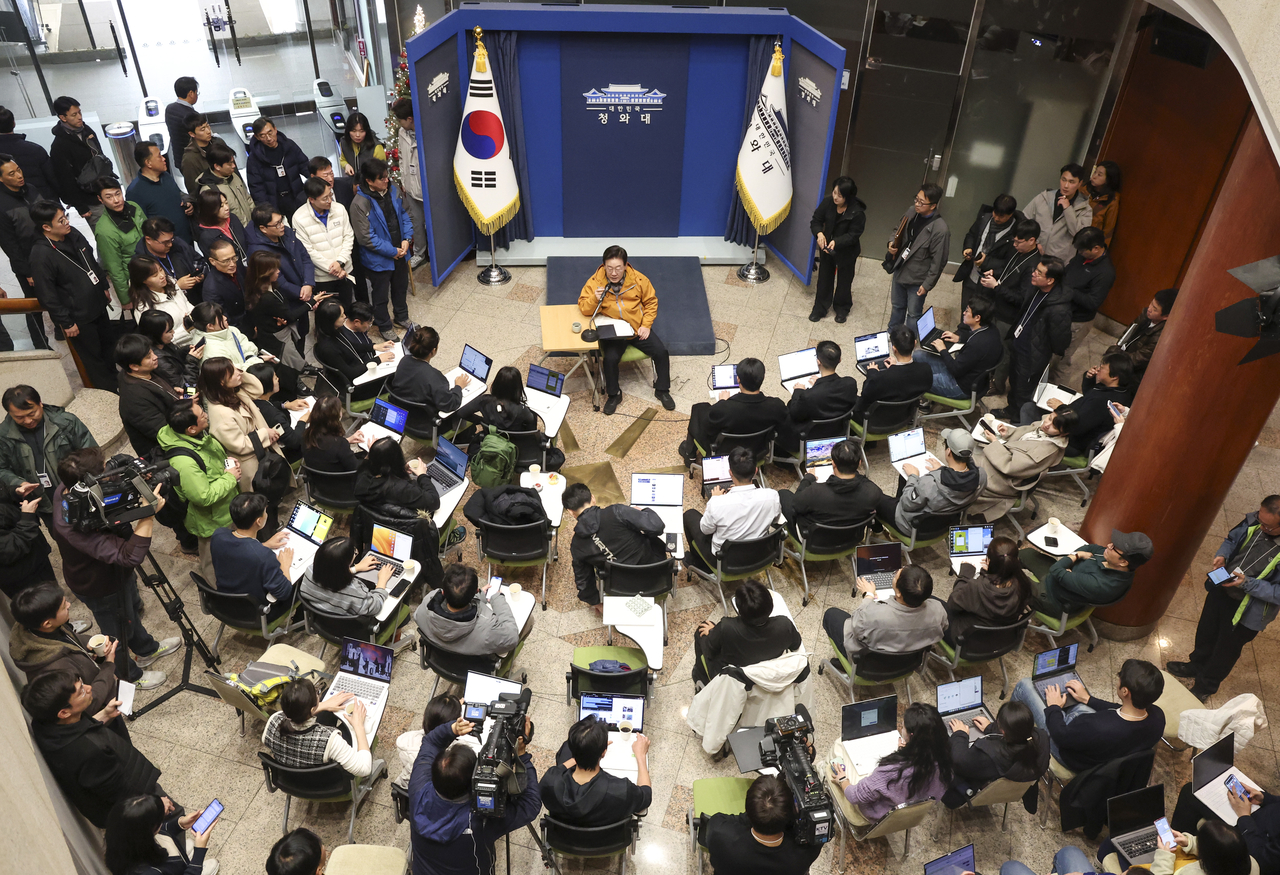
“I am both an advocate of the alliance and an advocate of national autonomy,” Lee said during an impromptu news conference on a hike with the presidential press corps.
Lee was responding to a question from The Korea Herald about whether his recent national security reshuffle signaled a shift in influence toward the so-called alliance camp within his administration.
The reshuffle affected three key foreign policy and security posts, including those held by two prominent figures associated with the autonomy camp: Unification Minister Chung Dong-young and National Intelligence Service Director Lee Jong-seok.
“Both the alliance and autonomy are important, but I don’t think they are mutually exclusive,” Lee said, adding that he could draw on officials' differing perspectives as circumstances warranted.
Managing ties with China
Lee’s remarks on China illustrated how he sought to reconcile the two priorities.
“We need to continue to expand and upgrade our alliance with the US, but we must not be so bound by it that we give up our relations with other countries,” Lee said.
Lee said he had made clear to Beijing the importance of South Korea’s alliance with Washington, while telling the US that Seoul could not afford to neglect its relationship with China.
He also cautioned against unnecessary diplomatic friction over Taiwan, citing the 1992 agreement establishing diplomatic relations between Seoul and Beijing.
Under the agreement, Seoul recognized Beijing as China's sole legitimate government and expressed respect for China's position that Taiwan was part of China.
“We sometimes make needless mistakes over issues like Taiwan. There is no need for that,” Lee said.
On economic ties, Lee welcomed progress in negotiations on services and investment under the bilateral free trade agreement, while acknowledging lingering restrictions on K-pop performances.
“China is offering us most-favored-nation treatment, although K-pop appears to have been left out,” Lee said, suggesting that Beijing could gradually open its market to Korean cultural content.
Lee also stressed the need to diversify South Korea's sources of trade surpluses.
“Our economic dependence on the United States is too high,” Lee said.
Limited room for Seoul on North Korea
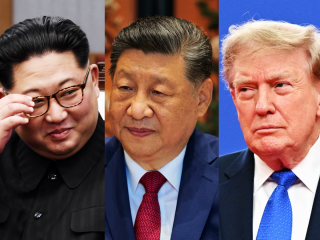
Regarding North Korean leader Kim Jong-un's potential visit to China, Lee said Seoul had information suggesting such a trip was possible but stressed that it remained uncertain.
“We should simply remain composed and prepare for both scenarios — whether he goes to China or not,” Lee said, acknowledging Seoul's limited ability to influence developments.
Despite Pyongyang's refusal to engage with Seoul, Lee pledged to continue efforts to create conditions conducive to dialogue.
“It may make us look tough politically, but when confrontation intensifies, and tensions rise, it is the people who pay the price,” Lee said.
Military autonomy, public support
Lee reaffirmed his commitment to an early transfer of wartime operational control from the US, describing it as “a core element of sovereignty.”
He also said it was reasonable to view North Korea's nuclear arsenal as “a means of defense of last resort,” citing Pyongyang's moves to fortify its border and sever cross-border transport links.
Lee, however, acknowledged domestic opposition to the OPCON transfer, stressing the importance of public support.
“But if an overwhelming majority of the public believes we should leave it in their hands, it would actually be somewhat difficult for us to proceed,” Lee said.
Meanwhile, asked about a possible round of golf with US President Donald Trump during next month's Group of 20 summit in Miami, Lee downplayed the likelihood, citing the tight schedule.
Lee said Trump had repeatedly suggested playing golf, although he was unsure whether the invitations were merely a courtesy.
dagyumji@heraldcorp.com