The Korea Meteorological Administration has expanded its heavy snow text alert service nationwide, warning that sudden cold snaps could trigger heavy snowfall despite the warmer winter.
Forecasters expect strong El Nino conditions to contribute to above-average temperatures and increased precipitation this winter, and say significant temperature fluctuations are likely.
El Nino is a naturally recurring climate phenomenon characterized by unusually warm sea surface temperatures in the central and eastern tropical Pacific.
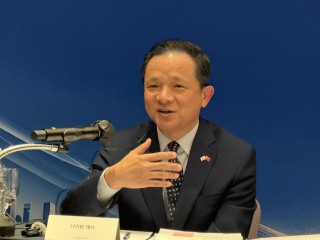
“Due to strong El Nino bringing in warm and humid air, we could see unusually heavy winter rain. Because temperature fluctuations will be quite large this year — almost like a seesaw — warm weather may suddenly give way to severe cold snaps,” said Kim Sung-mook, director of the Forecast Policy Division at the Korea Meteorological Administration.
“Abundant precipitation also means that when temperatures drop, it is very likely to turn into heavy snowfall.”
According to the KMA's three-month winter outlook released Monday, temperatures are expected to be above average from December through February, with precipitation likely to exceed seasonal norms in those months.
Reduced Arctic sea ice and extensive snow cover in eastern Eurasia could also contribute to occasional outbreaks of cold continental air, increasing the risk of sharp temperature drops.
The agency announced its winter disaster prevention plan Thursday, three days after expanding its heavy snow text alert service to 227 cities, counties and districts nationwide.
The service was piloted last winter in Greater Seoul, which includes Incheon and Gyeonggi Province; South Chungcheong Province and North Jeolla Province.
Under the expanded system, the agency will issue text alerts warning of traffic accident risks when at least 5 centimeters of snow falls within an hour. Alerts warning of potential structural collapse will be issued when fresh snowfall reaches at least 20 cm over 24 hours, and the hourly snowfall rate reaches at least 3 cm.
In Gangwon Province and Ulleung, North Gyeongsang Province, the 24-hour snowfall threshold is set at 30 cm.
The agency will also issue cold wave impact forecasts for 235 weather advisory zones nationwide two days before an anticipated cold wave, a day earlier than under the previous system.
The forecasts assess potential risks and provides guidance across six sectors, including public health, agriculture, industry and infrastructure.
In cooperation with the Ministry of Employment and Labor, the KMA will provide tailored cold wave impact forecasts in six languages for foreign workers.
Starting in December, the agency will also work with family members and caregivers to deliver health-related cold wave alerts directly to older adults when the risk reaches the “caution” level or higher.
“We need to prepare thoroughly, given the high likelihood of hazardous weather this winter, including heavy snow,” KMA Administrator Lee Mi-seon said. “We will put public safety first and devote all our resources to responding.”
yunapark@heraldcorp.com