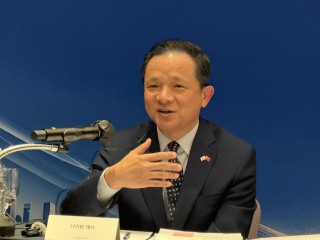
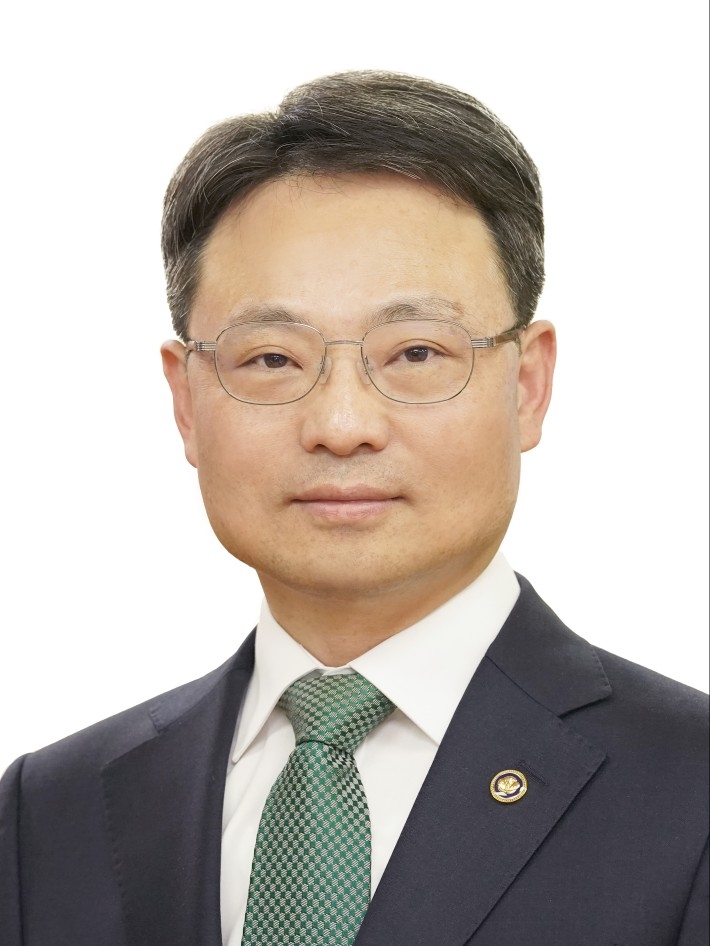
By Park Eun-sik, Minister of the Korea Forest Service
One of the oldest and most reliable ways to slow the pace of the climate crisis is to protect our forests.
Forests absorb carbon dioxide from the atmosphere, but when they are degraded or destroyed, the carbon they have stored is released back into the air.
This is why protecting the world’s forests is protecting the Earth’s climate.
To address this challenge, the international community came up with an initiative called Reducing Emissions from Deforestation and Forest Degradation Plus (REDD+).
While the name may sound unfamiliar, its purpose is clear: it supports developing nations in reducing deforestation and forest degradation while sustainably managing their forests to reduce greenhouse gas emissions, with the international community providing results-based incentives for their achievements.
The value of REDD+ extends far beyond carbon reduction.
It provides sustainable livelihoods for local communities who depend on forests, protects habitats for wildlife, and helps preserve water and soil resources. In essence, it is an international cooperation model where the Global North and the Global South jointly respond to the climate crisis while achieving sustainable development for both the environment and local communities.
To achieve its 2030 Nationally Determined Contribution, South Korea is pursuing 37.5 million tons of international emissions reductions alongside domestic efforts.
The Korea Forest Service aims to contribute by securing 5 million tons of this target through REDD+. This is not merely about securing the mitigation outcomes from abroad; it is a process of sharing South Korea’s forest management and conservation technologies with partner countries and stepping forward as a responsible climate nation that safeguards the world's forests.
For REDD+ to deliver tangible results, close cooperation between the government and the private sector is essential. The government plays a vital role in identifying partner countries and establishing institutional frameworks for the cooperation.
Meanwhile, managing vast forests over the long term requires private-sector capabilities, including stable investment, technology, specialized personnel, and on-the-ground business experience.
When the public credibility and trust of the government combine with the capital and innovation of businesses, both the scale and execution capacity of these projects can grow.
The Korea Forest Service is building an end-to-end public-private partnership framework so that both the government and businesses can leverage their respective strengths.
By reducing initial uncertainties through policy consultations with partner countries and the identification of candidate project sites, we plan to support businesses in participating from the planning stage to co-design viable business models.
Our goal is to create a virtuous cycle in which the government acts as a reliable catalyst to lower private-sector investment burdens and risks, while corporate participation, in turn, enhances the scale and sustainability of the projects.
We are also steadily laying a solid foundation so that companies can participate with confidence.
Through corporate roundtables and specialized training, we share project information and experiences, while providing clear guidance on procedures ranging from project identification to the measurement, verification, and transfer of mitigation outcomes.
By establishing public-private partnership operating guidelines and systematically nurturing specialized talent, we will strengthen the capacity of Korean companies to lead international forest carbon initiatives.
Throughout this process, we will not focus solely on the volume of carbon reductions.
We will ensure that mitigation outcomes are verified scientifically and transparently, respect the sovereignty of partner countries and the rights of indigenous people and local communities, and carefully ensure that project benefits are fairly distributed to all stakeholders.
Only when backed by trust and environmental and social integrity can the achievements of REDD+ be sustained over the long term.
While achieving the 2030 NDC target is a promise we must keep, the future envisioned by K-REDD+ goes well beyond it.
We must open a path of sustainable climate cooperation where governments, businesses, partner countries, and local communities work together to protect forests and share their value.
The Korea Forest Service will continue to foster K-REDD+ as a new public-private partnership model that revitalizes the world’s forests, drives the green growth of Korean enterprises, and elevates climate leadership of South Korea.
Park Eun-sik is the Minister of the Korea Forest Service. The views in this column are his own. -- Ed.
hnpark@heraldcorp.com