New defense white paper breaks with liberal precedent as Pyongyang hardens its stance toward Seoul
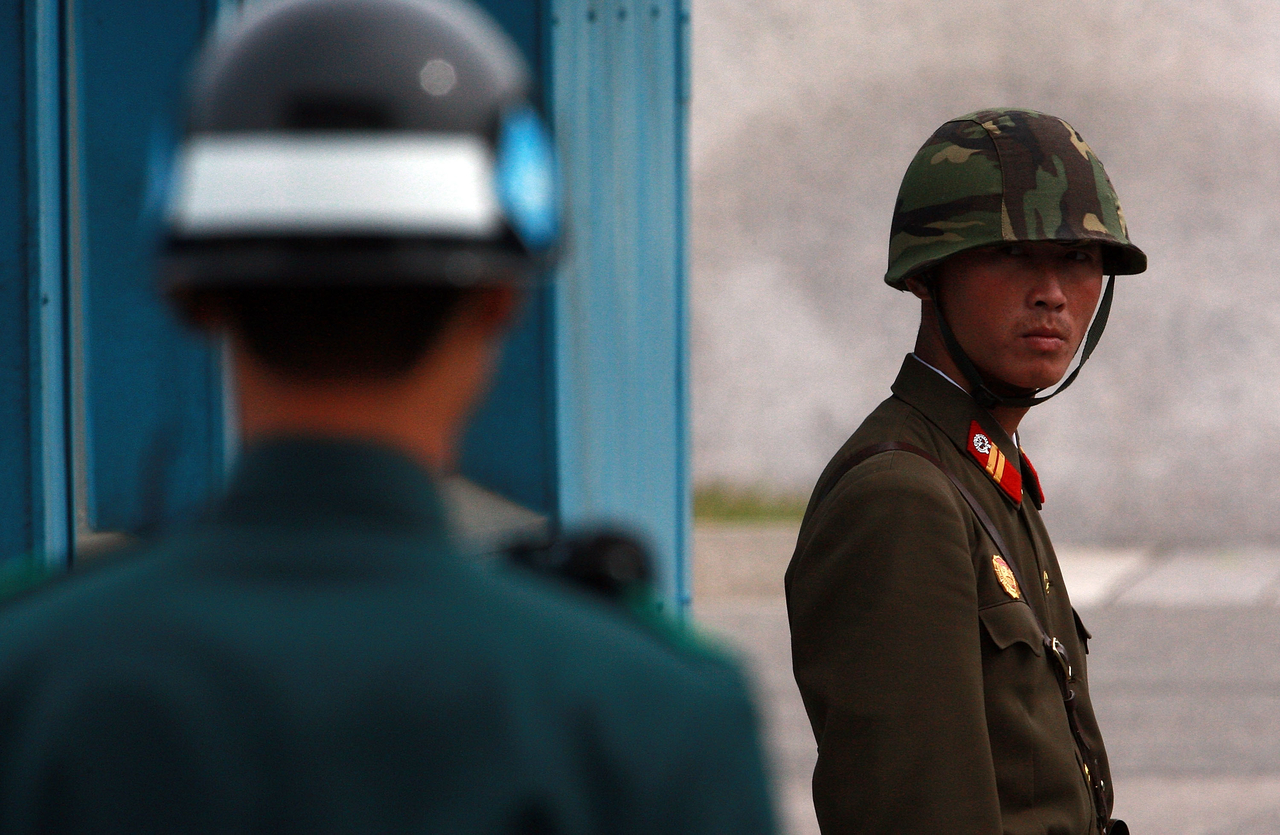
South Korea will retain its designation of the North Korean regime and military as enemies in the first defense white paper under President Lee Jae Myung, breaking with previous liberal administrations that dropped such wording in pursuit of rapprochement.
The decision, confirmed by Defense Ministry officials Wednesday, comes as Lee seeks peaceful coexistence with North Korea despite Pyongyang’s increasingly hostile stance toward Seoul.
“We have decided to retain the wording identifying the North Korean military and regime as our enemies,” a ministry official told The Korea Herald.
The official said the new edition is expected to be published in late December, once materials on the defense budget and policies have been compiled.
The biennial publication will be the first since the 2022 edition issued under conservative President Yoon Suk Yeol, as the 2024 edition was not released amid the fallout from Yoon’s botched martial law declaration on Dec. 3, 2024.
The white paper outlines the country’s defense policy and provides the military with a framework for activities ranging from troop education to operational planning.
“It is essentially a textbook or a bible for the military. It provides basic guidelines for everything from routine duties to major undertakings and can even have some bearing on South Korea-US combined operational plans,” a military official said, speaking on condition of anonymity.
Peace ambitions meet security realities
The decision is particularly notable given that Lee has made peaceful coexistence with Pyongyang a central policy objective since taking office in June last year.
Just seven days after his inauguration, his administration suspended loudspeaker broadcasts across the border, a practice Pyongyang had long vehemently opposed.
In his Liberation Day address in August 2025, Lee also pledged to respect North Korea’s political system, ruling out unification by absorption and hostile acts against Pyongyang.
Pyongyang, however, has shown little willingness to engage with Seoul despite such overtures.
Moon Seong-mook, director of the Unification Strategy Center at the Korea Research Institute for National Strategy, said the decision to retain the designation reflected the security realities facing South Korea rather than a shift in Lee’s policy toward Pyongyang.
“While the government’s policy is to pursue a peace process, the reality is that we remain in confrontation with North Korea, which regards us as an enemy and threatens us with its weapons, including conventional ones,” Moon said.
Previous liberal administrations under Roh Moo-hyun and Moon Jae-in, which pursued rapprochement with North Korea, refrained from explicitly identifying the North Korean regime and military as enemies, focusing instead on the threats posed by Pyongyang’s military capabilities, including its weapons of mass destruction.
The key difference, Moon said, lies in Pyongyang’s willingness to engage with Seoul.
“Under the Roh Moo-hyun and Moon Jae-in administrations, dialogue was possible. There was communication between the two Koreas,” he said.
South Korea therefore cannot afford to relax its military readiness, Moon added.
In December 2023, North Korean leader Kim Jong-un redefined inter-Korean relations as those between two hostile states.
At the Ninth Congress of the Ruling Workers’ Party of Korea in February, Kim went further, describing South Korea as the country’s foremost hostile state and immutable main enemy.
The congress also marked a shift in North Korea’s military strategy from developing nuclear weapons to enhancing its operational capabilities, according to a June report by the state-run Korea Institute for International Economic Policy.
The report said Pyongyang had further heightened its military threat to Seoul by pursuing the simultaneous development of nuclear and conventional forces and explicitly identifying South Korea as a military target.
Three decades of shifting terminology
The language used to describe North Korea in South Korea’s defense white papers has varied across administrations, often reflecting the state of inter-Korean relations.
The term “main enemy” first appeared in the 1995 edition under President Kim Young-sam, a year after a North Korean delegate threatened to turn Seoul into a “sea of fire” during inter-Korean talks.
The term was dropped in 2004 under Roh, whose administration pursued inter-Korean economic cooperation through projects such as the Kaesong Industrial Complex and Mount Kumgang tourism.
The 2010 edition under conservative President Lee Myung-bak explicitly identified the North Korean regime and military as enemies. That year saw two major North Korean attacks on the South — the sinking of the South Korean warship Cheonan and the shelling of Yeonpyeong Island.
The wording was retained under conservative President Park Geun-hye, before it was again dropped from the 2018 and 2020 editions under Moon. He and Kim held three summits in 2018 and signed an inter-Korean military agreement aimed at easing tensions.
The designation was restored in the 2022 edition under Yoon amid North Korea’s growing nuclear and missile threats.
flylikekite@heraldcorp.com