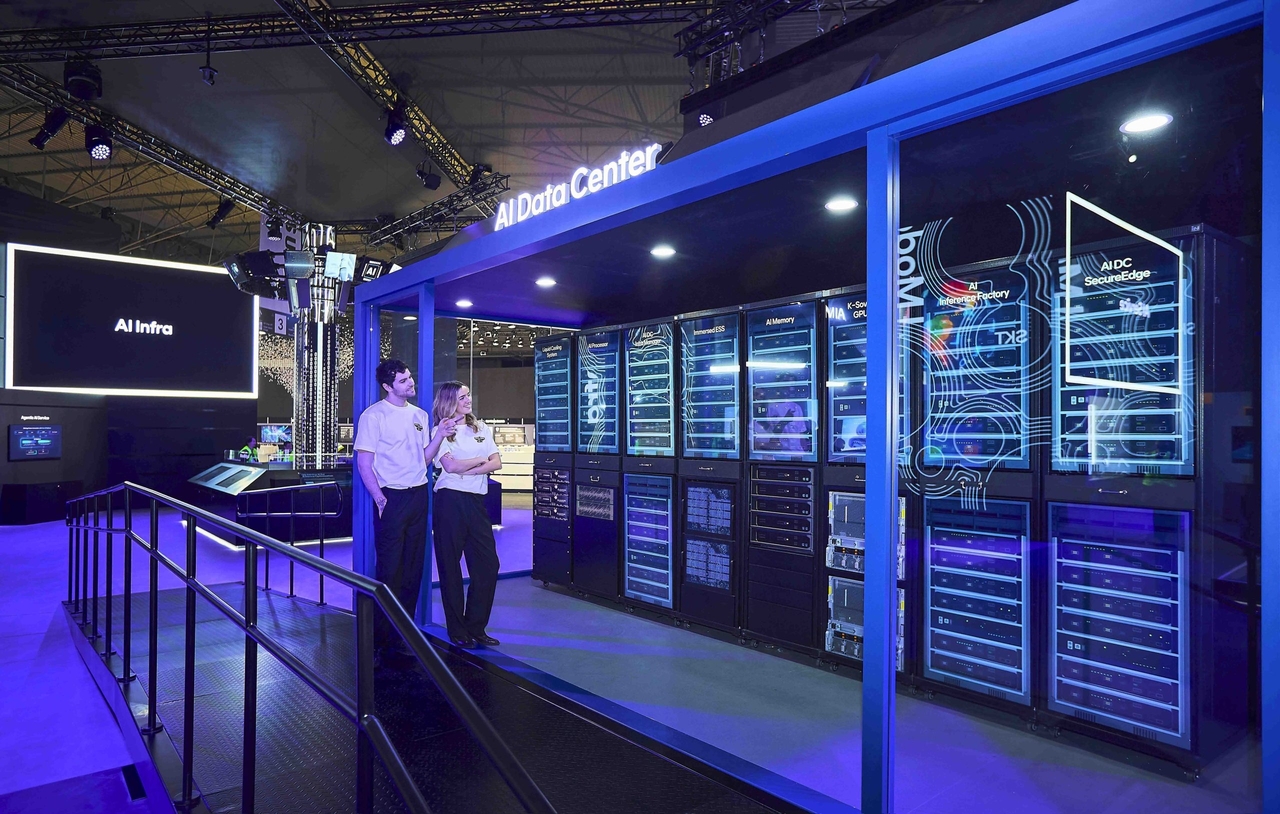
A global shortage of AI data center infrastructure could give South Korean companies an edge in the booming market, SK Telecom said Wednesday, as the mobile carrier looks to capitalize on Korea's strengths in semiconductors and power equipment to attract global technology giants.
In a post on the company’s website, SK Telecom’s AI Policy Research Institute said soaring demand for AI computing was outpacing data center construction worldwide, with access to electricity and equipment becoming major obstacles.
South Korea has expertise in memory chips, data center construction, ultra-high-voltage power equipment and high-speed telecommunications networks, wrote Song Young-woong, a researcher at the institute.
Consulting firm McKinsey estimates global demand for data center capacity could rise from 82 gigawatts in 2025 to 219 gigawatts in 2030, with AI workloads accounting for about 70 percent of the 2030 total.
Yet the race to build new facilities is running into practical limits. Developers face yearslong waits for power grid connections and large transformers, leaving even companies with advanced AI chips struggling to secure the electricity needed to operate them.
Those shortages could prove lucrative for Korean manufacturers. SK hynix supplies high-bandwidth memory used in AI processors, while Hyosung Heavy Industries produces the transformers needed to power massive computing facilities.
SK Telecom wants to turn those industrial strengths into a selling point for global tech giants seeking AI computing capacity in Asia.
The company is spearheading an SK Group plan to develop 15 gigawatts of AI data center capacity by 2035. Facilities in the initial 5-gigawatt phase are slated to open in stages beginning in the second half of 2029. SK Telecom said it was discussing business terms with three to four global operators, according to a Hana Securities summary of its November earnings call.
Winning long-term commitments from major customers will be crucial to securing the billions of dollars needed to turn those ambitions into operating facilities.
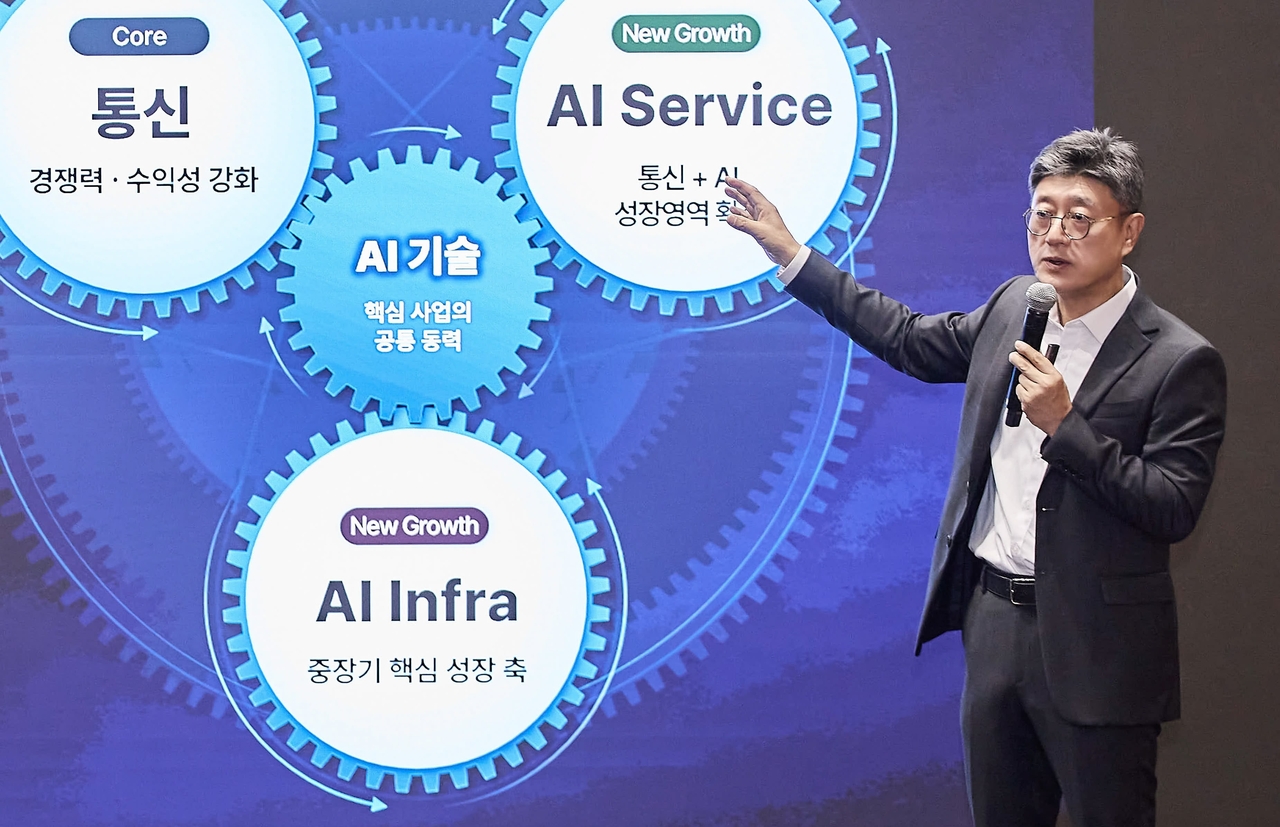
In August, SK Telecom announced a deal valued at about 3.08 trillion won under which KKR and a consortium of IMM Investment and Stonebridge Capital would buy existing and newly issued shares in SK Horizon, a planned spin-off from SK Broadband. Another subsidiary, SK Hyper, is pursuing larger gigawatt-scale projects.
SK Telecom also signed an agreement with Hyosung Heavy Industries last week to cooperate on securing power equipment for large data centers.
In Ulsan, SK Group is developing an AI data center with Amazon Web Services. President Lee Jae Myung visited the site Saturday, urging faster construction and greater foreign investment.
The government announced plans Friday to prioritize power grid assessments for major AI data centers, even as it tightens approval requirements for new facilities in the Seoul metropolitan area.
Still, South Korea faces constraints of its own. Song wrote that developing more data centers would depend on securing suitable sites, connecting them to the power grid and obtaining permits.
mjh@heraldcorp.com