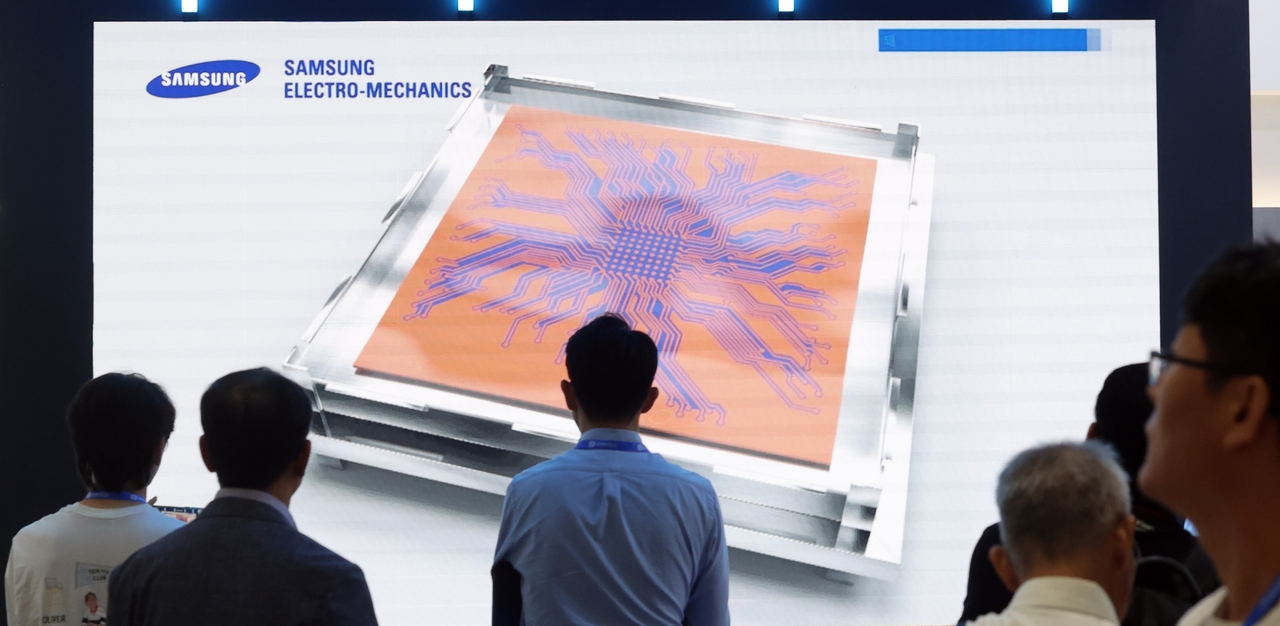
Samsung Electro-Mechanics earned 2.7 times as much operating profit as LG Innotek in its substrate business in the first nine months of 2026, helped by sales of higher-value substrates for AI data centers.
Samsung Electro-Mechanics generated 369.4 billion won ($274 million) in operating profit from its package solutions division over the period, compared with 135.7 billion won at LG Innotek, according to their latest regulatory filings.
Its operating margin reached 15.2 percent, against LG Innotek’s 9.6 percent, even though LG Innotek reported an average substrate production-line utilization rate of 94.4 percent, compared with 90 percent at Samsung Electro-Mechanics.
Samsung Electro-Mechanics has expanded supplies of flip-chip ball grid array (FC-CSP) substrates for server processors and AI accelerators. The components connect chips to circuit boards to carry electrical signals and power.
More powerful processors require larger substrates with finer circuitry and more layers, making them harder to manufacture and more expensive.
The company’s average semiconductor substrate selling price rose 28.1 percent year on year in the first nine months, according to its filings.
Its package solutions operating profit surged 322 percent over the same period, compared with a 69.2 percent increase at LG Innotek.
Third-quarter package solutions revenue also climbed 58 percent year on year to 939 billion won at Samsung Electro-Mechanics, compared with LG Innotek’s 10.1 percent growth to 481.8 billion won.
Samsung Electro-Mechanics said Wednesday that it had agreed to expand its substrate partnership with Nvidia, which will provide additional funding to increase capacity at two existing factories in South Korea. The move follows an October partnership covering substrates for AI processors and high-speed networking chips.
Separately, Samsung Electro-Mechanics announced plans in September to invest 6.78 trillion won to expand FC-BGA production in Sejong, South Korea, and Vietnam.
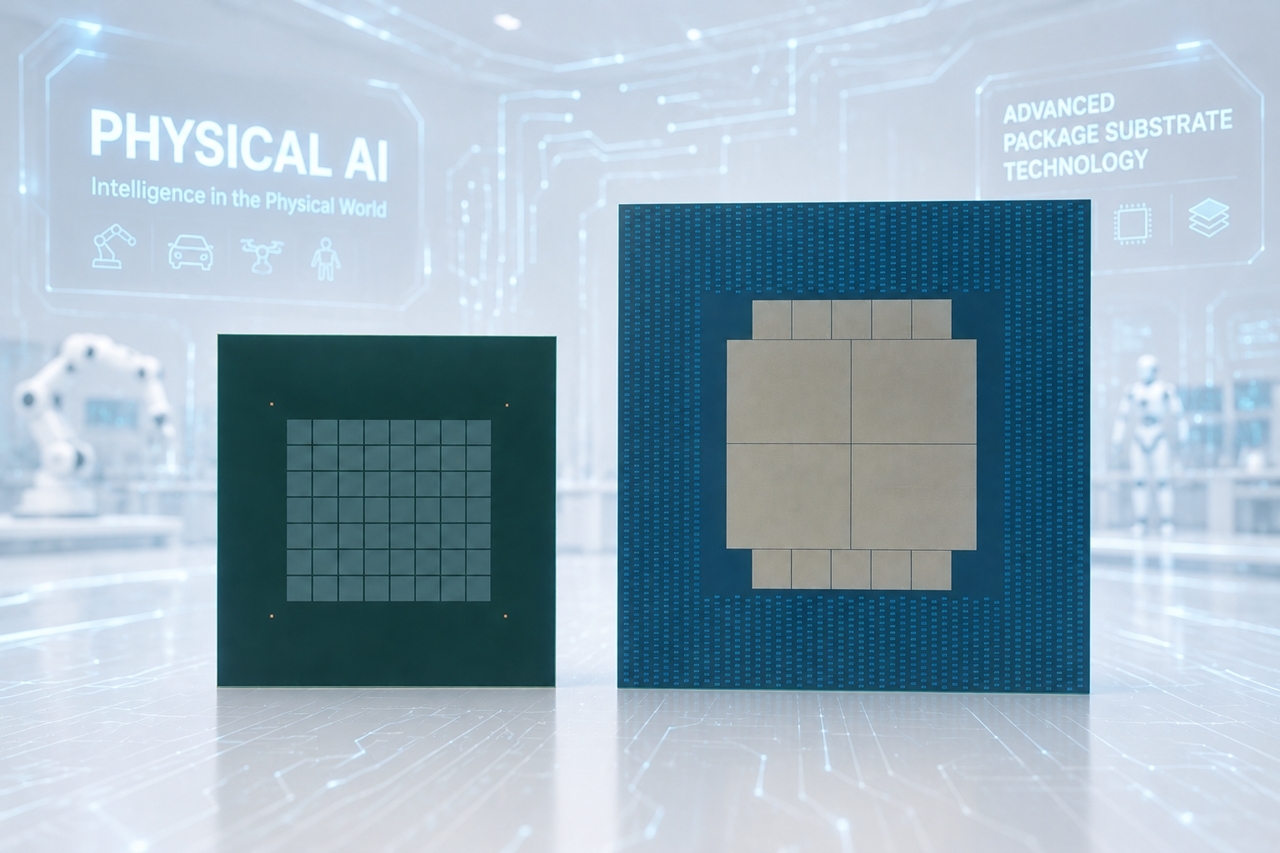
LG Innotek, whose substrate business is anchored by smartphone components such as RF-SiP and FC-CSP, is also pursuing the higher-margin AI server market. It is expanding FC-BGA supplies for PC processors and aims to begin mass-producing substrates for AI training and inference servers in 2027.
The company aims to grow FC-BGA revenue from about 50 billion won in 2025 to more than 1 trillion won by 2030. It has committed approximately 1 trillion won to smartphone substrate production in Vietnam and is discussing separate FC-BGA investments with customers to support its expansion into AI servers.
mjh@heraldcorp.com