On his first visit to Korea, the musical theater legend emphasizes the power of storytelling over music
If artificial intelligence had existed 45 years ago, and Andrew Lloyd Webber, the composer of some of the most commercially successful musicals in history, had asked it what to write after "Evita," it surely would not have told him to set T.S. Eliot's cat poems to music and dress actors accordingly.
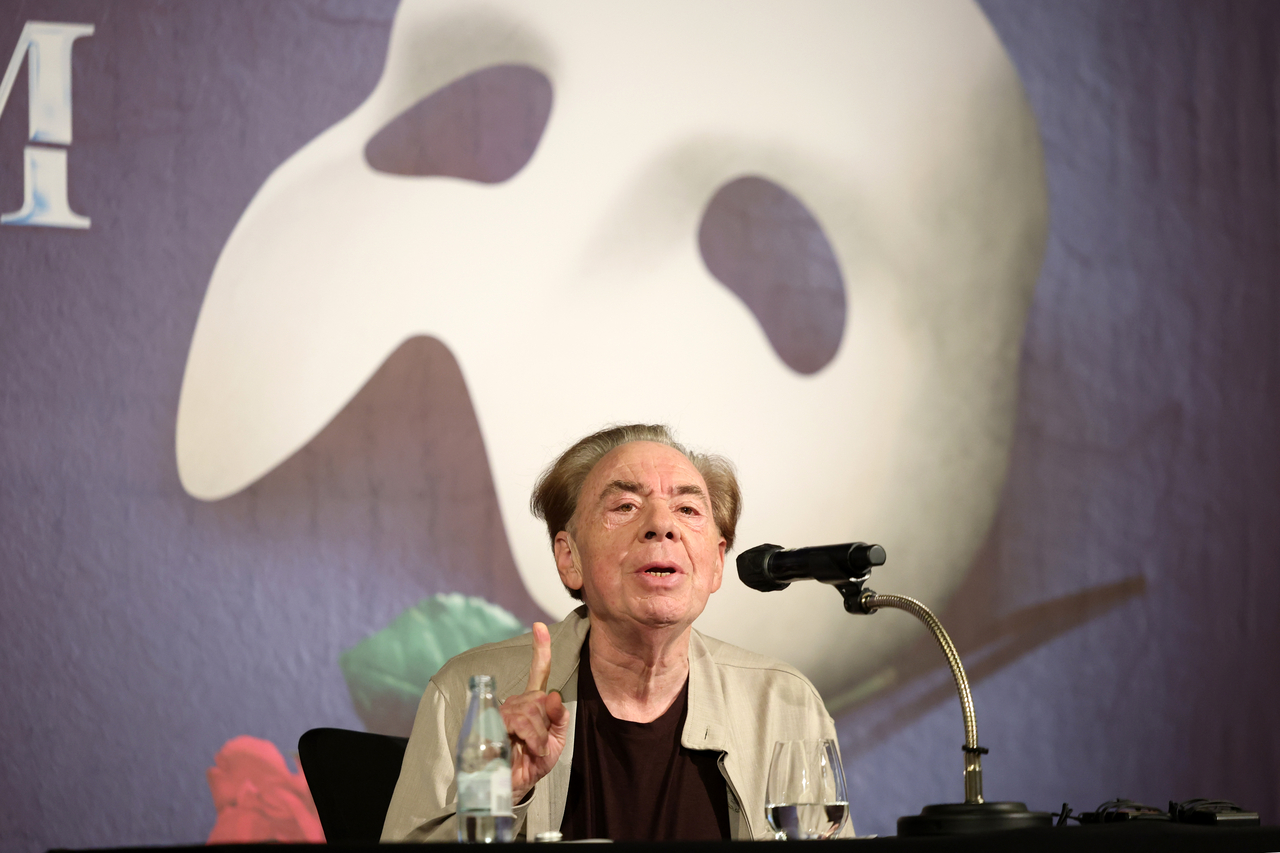
“The Phantom of the Opera,” too, was a departure, Lloyd Webber told reporters Thursday in Seoul, on his first visit to Korea. After a string of shows with “no real love story,” he set out to write “something passionate and something romantic.”
“(AI) would come up with something that had been based on musicals of the past,” Lloyd Webber said. “The thoughts that you can have — it’s the originality, that’s what you bring to it.”
Nor, he said, would AI have suggested the subject of his newest, and as yet untitled, show: the 1911 theft of the Mona Lisa from the Louvre. The idea came from a story he read in The Times of London about how the painting drew little attention until it was stolen. It disappeared for more than two years, and the publicity around the theft made it world famous.
"It made me think: What is fame, and what is the value of any piece of art?" he said. The composer said he plans to present the new musical next year.
For Lloyd Webber, a strong story comes before the music.
"I'm a great believer that a good story can carry a musical score that may not be great," he said. "But I don't think a bad story can carry great music, because the story in the end is the thing that people really come for."
The music, though, has to earn its place. "You've got to think that music is going to add something to the story and be the reason for it being a musical," he said. "Otherwise there's no point."
He said he welcomes new directors' takes on his previous shows, as long as the music stays exactly as he wrote it. He cited director Jamie Lloyd's minimalist version of "Sunset Boulevard" and "Cats: The Jellicle Ball," a reworking of the original.
“The Phantom of the Opera,” however, is the exception.
“The original production by Hal is so phenomenal that for me I don’t think it’ll ever be bettered,” he said, referring to director Harold Prince.
His previous shows keep finding new life onstage but, as he noted, new work faces a harder road these days, especially on Broadway.
“It has become very difficult to produce on Broadway,” Lloyd Webber said. “All of the associated costs with a Broadway musical have become prohibitively high.”
“And so no new work is really being done of any consequence on Broadway anymore,” he added.
In Korea, "Phantom" holds a special place. Its Korean-language premiere in 2001 drew a record-breaking 240,000 people and generated 19.2 billion won in revenue — exceeding the Korean musical theater industry's annual revenue of 14 billion won that year, according to producer S&Co.
In all, there have been six productions of "Phantom" in Korea, drawing more than 1.5 million cumulative admissions.
Seol Do-yoon, who produced the 2001 iteration, recalled trying to fund the show while Korea was still emerging from the 1997 financial crisis.
"I ran around everywhere trying to raise money, but nobody would invest," Seol said. "But whenever I played people the music, every one of them said, 'This show is going to do really well. It's so moving.'"
The musical's 40th anniversary will be celebrated in Seoul with a Korean-language production that opens Dec. 22 at Blue Square's Woori Bank Hall and runs through Feb. 28.
Choi Jae-rim, Jeon Dong-seok and Park Kang-hyun will rotate as the Phantom. Sopranos Lee Hae-won and Choi Seon-ho will make their musical debuts as Christine, and Song Won-geun and Kim Sung-sik will play Raoul.
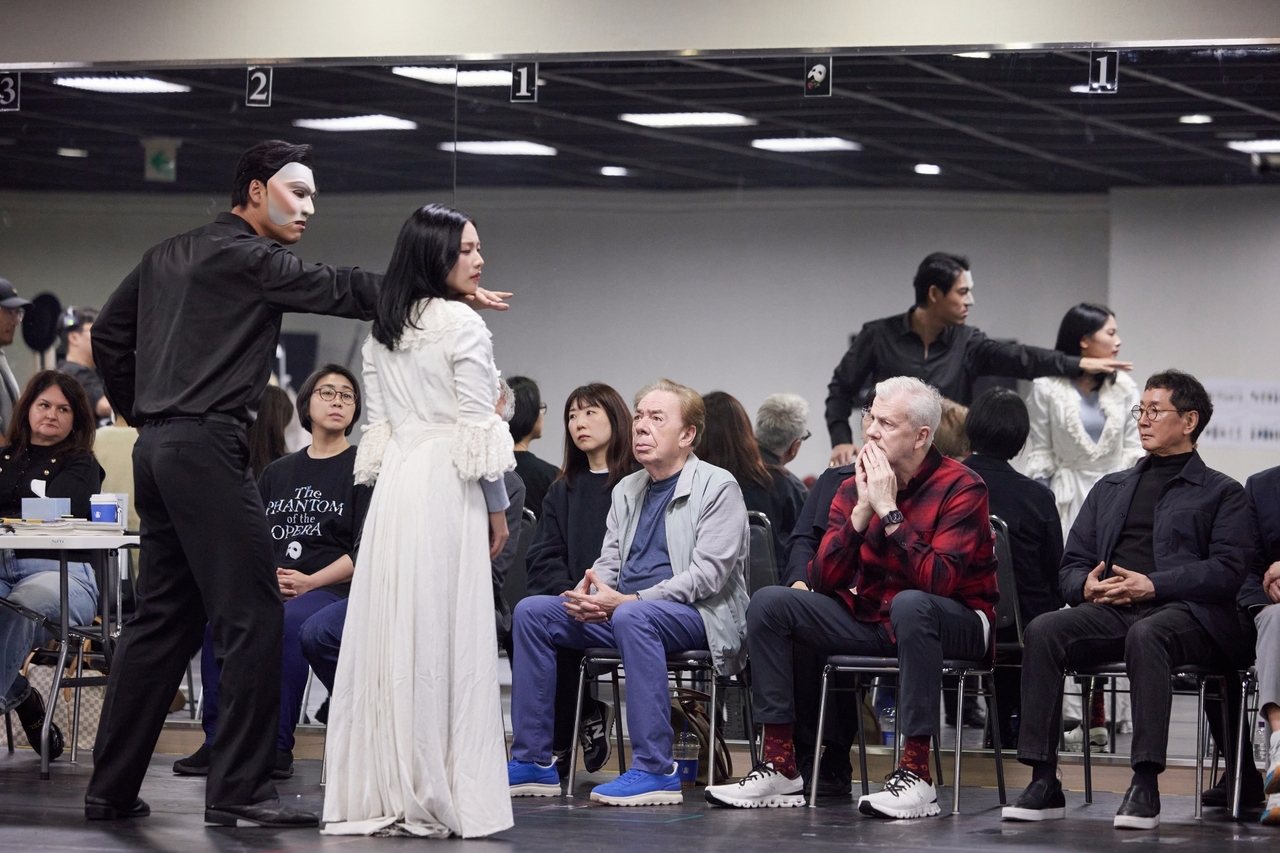
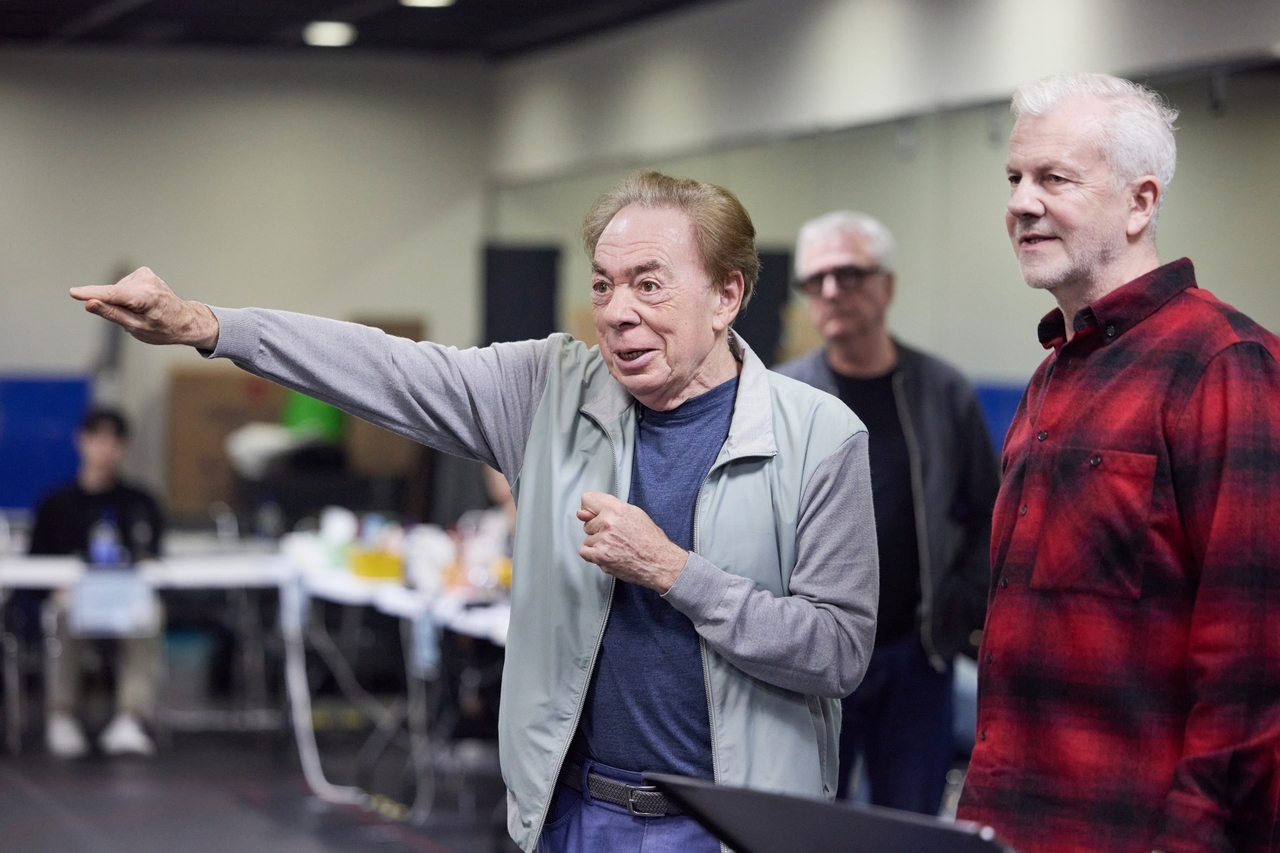
Lloyd Webber attended a rehearsal Tuesday and called the cast "absolutely excellent." He said the Korean translation stood out.
"The Korean language sat beautifully on the music," he said. "It was stunning, and I almost wished that I could hear it (in Korean) all the time. It was really, really good."
He said he would return next year to hear the musicals being written in Korea.
"I'm older now, and I love hearing what young people are doing in the musical theater, which is the thing that I love most," he said.
gypark@heraldcorp.com