Industry leaders call for regulatory coordination, interoperability and stronger links to traditional financial markets
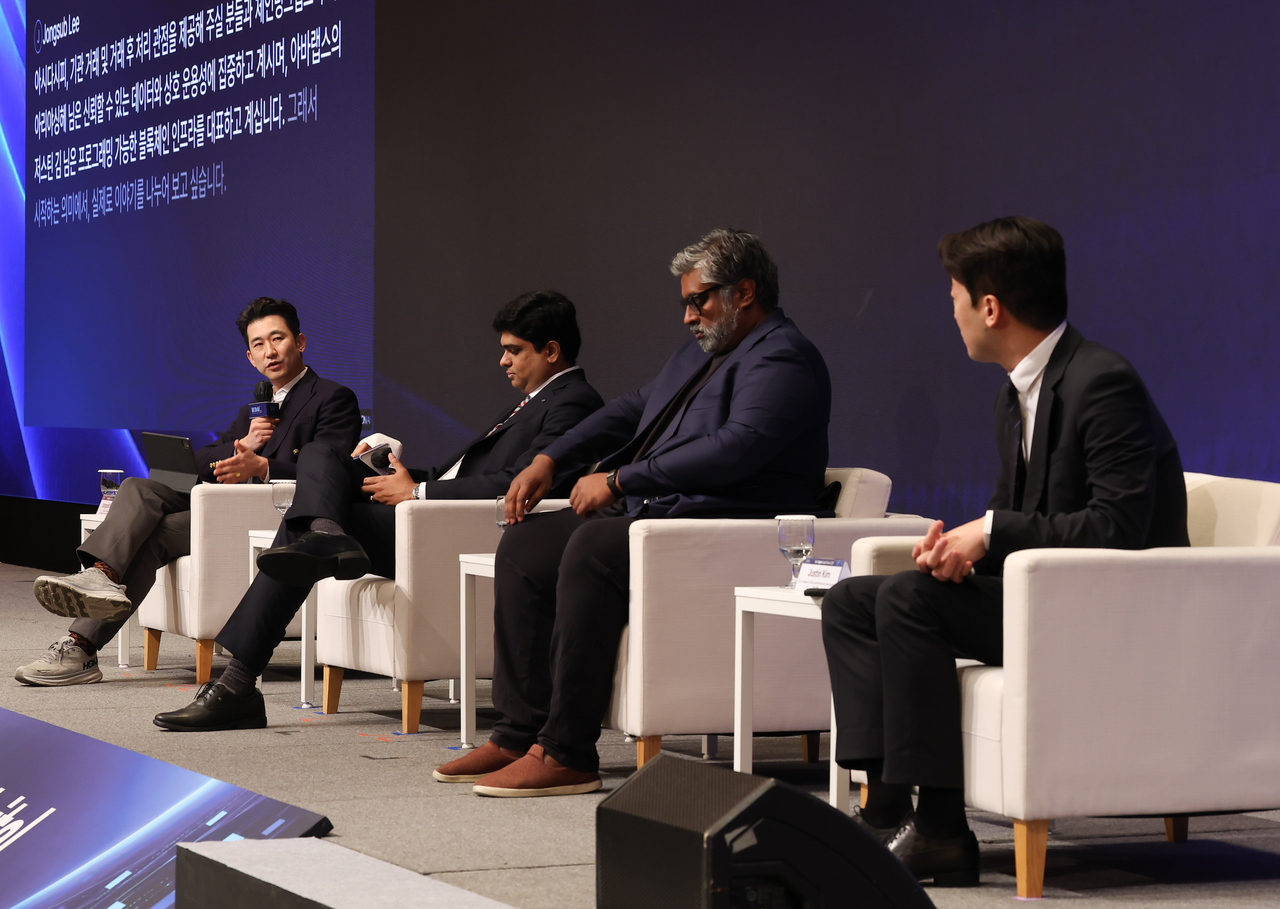
Tokenizing real-world assets will only deliver meaningful benefits if it helps financial institutions free up capital, cut funding costs and move assets more efficiently, industry executives said Monday at the World Digital Assets Forum 2026 in Seoul.
"They're not just looking for cost or operational efficiencies. They want to see measurable benefits on their balance sheets," said Ashfaq Shaik, executive vice president of engineering and digital assets at Broadridge, during a panel titled "The Framework for Tokenized Markets."
Shaik said faster transfers of collateral, or assets pledged to secure financial obligations, could reduce the need for institutions to set aside funds in advance and lower financing costs.
"If collateral can move in minutes rather than hours, you only pay for the time you use it — an hour instead of a full day," he said.
Yet translating that potential into commercial services remains a challenge.
Niki Ariyasinghe, vice president for Asia-Pacific and the Middle East at Chainlink Labs, said financial institutions must find ways to integrate blockchain technology into existing legal, risk management and compliance systems.
"Risk teams need to understand the vulnerabilities and exposures this technology could introduce. Addressing those concerns is critical to moving into production," he said.
Justin Kim, vice president of international business development at Ava Labs, pointed to a cross-border payment involving banks in two countries as an example of blockchain's potential.
The transaction took about seven minutes, compared with the three or four days a conventional international wire transfer can take, he said. Most of that time was spent on compliance checks, highlighting the importance of regulatory coordination.
After years of experiments, Kim urged the industry to move toward practical pilot projects involving legal and compliance teams from the outset.
Ariyasinghe also called for greater coordination among regulators to ensure tokenized assets are recognized across jurisdictions.
Shaik stressed that blockchain networks must work alongside existing financial infrastructure rather than replace it.
"Financial markets work through augmentation. New technology gets plugged into existing systems. Coexistence is the key criterion," he said.
Without common standards and interoperability between blockchain networks, he warned, existing fragmentation across national markets could simply be replaced by fragmentation between digital ledgers.
Ariyasinghe added that tokenized collateral would require reliable real-time pricing, access to trading venues and systems linking blockchain transactions with conventional compliance and reporting processes.
Lee Jong-seop, a finance professor at Seoul National University who moderated the discussion, said the industry's progress should be measured by how effectively tokenized assets connect with trusted information and established financial institutions, rather than by the number of assets brought onchain.
Kim also cautioned that creating a digital version of an asset does not automatically generate investor demand.
"Just because an asset is tokenized doesn't mean people will buy it," he said.
Panelists agreed that South Korea should prioritize international standards and global connectivity as it develops its tokenized asset market, allowing domestic institutions and investors to participate more easily in cross-border transactions.
ch0221@heraldcorp.com