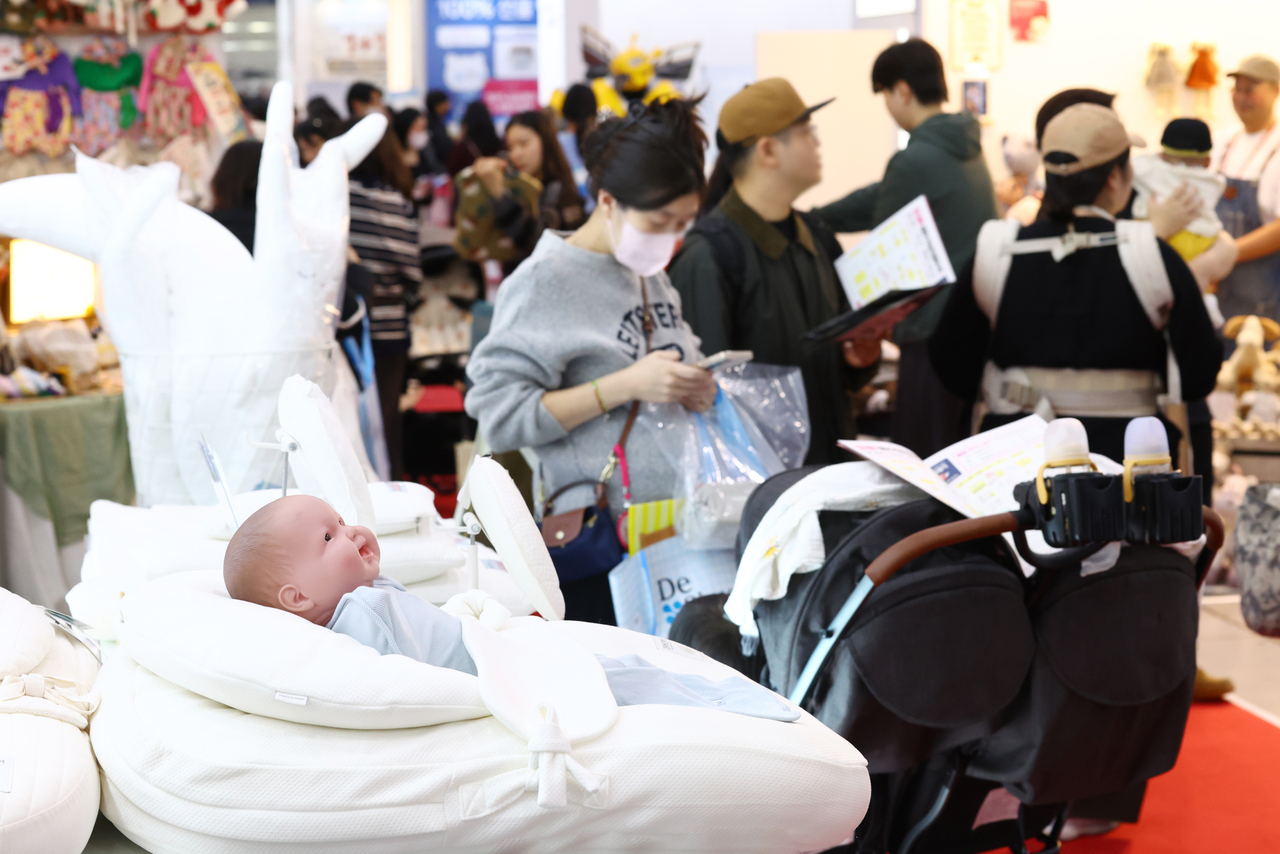
For Kim, a 37-year-old employee in Seoul expecting her second child in January, one of the most welcome changes at work is that it has become easier to take a day off when her child needs her.
“It’s easier to juggle work and childcare when you can take annual leave more flexibly, because mothers feel guilty when they can’t be there in an emergency,” Kim said. “I think people at work are starting to understand that.”
Park, a Seoul resident with a 2-year-old daughter, said she feels comfortable asking for a day off at her company.
“I’m fortunate to work for a large multinational with a lot of women. I can take annual leave without worrying about what people will think,” Park said. “I’m sure some people don’t have that flexibility.”
For mothers who need a longer stretch of time off, parental leave figures show a sharp divide by employer size.
Among eligible women who gave birth in 2024, nearly 8 in 10 at companies with at least 300 employees took parental leave that year.
At workplaces with four or fewer employees, about 4 in 10 did, according to preliminary government figures released in December 2025.
Taking leave at a small workplace
Nearly 1 in 5 workplaces with five to nine employees said even eligible workers could not take parental leave, according to a Korean Women’s Development Institute survey report published by the Labor Ministry in December 2025.
Companies that said leave was unavailable most often cited the extra workload for colleagues and managers, followed by a workplace culture that discouraged leave and difficulty finding replacements.
To help small businesses cover absences, the government raised the monthly cap on subsidies for replacement workers from 1.2 million won to 1.4 million won ($889 to $1,038) this year for companies with fewer than 30 employees. The subsidy can also cover up to a month of handover after an employee returns.
In August, South Korea introduced paid short-term parental leave, allowing eligible workers to take one or two weeks off once a year to care for a child during a school break or a hospital stay.
The government has also expanded financial support for couples who both take parental leave. Since 2024, the higher payments have covered up to six months per parent when both take leave for the same child within 18 months of birth. Each parent can receive up to 4.5 million won in the sixth month.
Who workplace benefits cover
The changes come as fewer women outside the labor force report childcare as their main activity. In August, 632,000 women fell into that category, just over half the number in the same month in 2020, according to government data.
At one financial company in Seoul, discussions between employees and management have also turned to benefits for employees without children, said Ji Hye-jin, a labor consultant at the company.
“Family benefits tend to focus on childbirth and childcare,” Ji said. “Lately, we’ve been getting more requests from unmarried employees or those who don’t plan to have babies, for comparable benefits, such as more days off.”
“The company is still weighing the idea,” she said. “If we can offer benefits like these, it could help us attract people with different plans for marriage and parenthood.”
yunapark@heraldcorp.com