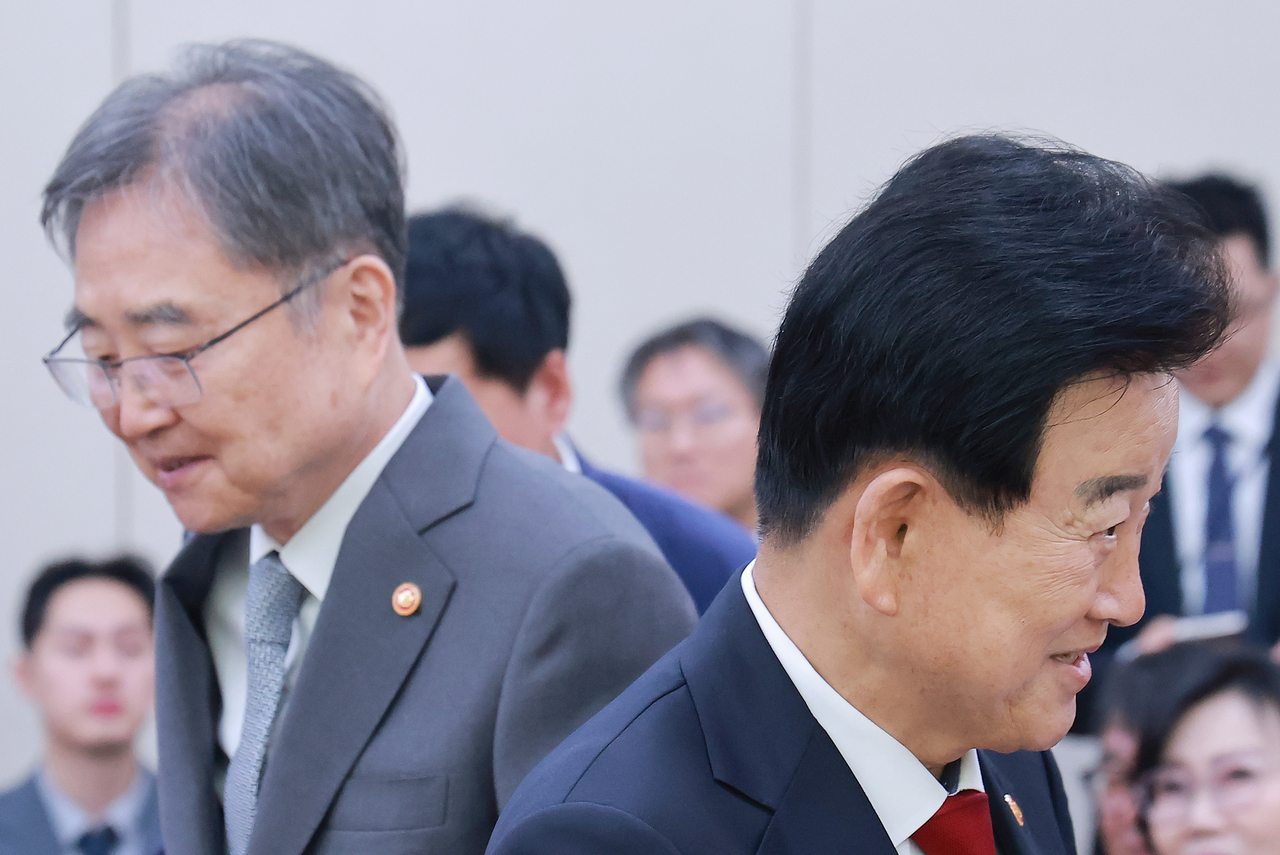
Foreign, Unification ministries reportedly at odds over additional cyber sanctions, exposing broader divisions over how to balance international coordination with inter-Korean engagement
The South Korean government is facing a growing dilemma over whether to impose additional unilateral sanctions on North Korea, as differing approaches within the administration expose tensions between maintaining international pressure on Pyongyang and preserving prospects for renewed inter-Korean dialogue.
The disagreement also appears to reflect a broader policy divide within the administration between officials who prioritize close coordination with Washington and the international community and those who emphasize Seoul's autonomy in managing inter-Korean affairs and pursuing renewed engagement with Pyongyang.
The divide came to a head during an Oct. 1 meeting of the National Security Council's standing committee, when Foreign Minister Cho Hyun proposed additional unilateral sanctions targeting North Korea's illicit cyber activities as part of Seoul's response to a land mine explosion in the Demilitarized Zone in September that seriously injured three South Korean soldiers.
Unification Minister Chung Dong-young opposed the proposal, questioning its relevance to the mine incident and raising concerns that additional sanctions could run counter to President Lee Jae Myung's efforts to ease inter-Korean tensions.
The disagreement underscores contrasting priorities between the two ministries, with the Foreign Ministry seeking to align Seoul's response to North Korean provocations and illicit activities with broader international efforts, while the Unification Ministry remains wary that additional punitive measures could further narrow the already limited prospects for dialogue with Pyongyang.
The policy divide has become increasingly apparent in the ministries' differing responses to the recent Binance cryptocurrency theft, which US authorities have attributed to North Korea.
At a regular press briefing on Thursday, Foreign Ministry spokesperson Park Doo-soon said Seoul was internally reviewing additional measures against Pyongyang, including unilateral sanctions targeting its illicit cyber activities.
A Foreign Ministry official, requesting anonymity, explained that the sanctions had been under consideration even before the Binance incident and that the latest allegations were being factored into the government's broader assessment.
The Unification Ministry, however, struck a more cautious tone the same day, with an official saying that interagency information-sharing was necessary to establish the circumstances surrounding the hacking incident. The official added that government-level discussions on a response to the latest breach had yet to begin.
The contrasting accounts have raised questions about the extent of policy coordination between the two ministries, particularly as the Foreign Ministry has publicly acknowledged reviewing additional sanctions, while the Unification Ministry maintains that discussions on a government-wide response to the Binance incident have not begun.
The differences are not new.
The two ministries also diverged over how to respond to the September land mine explosion in the Demilitarized Zone.
On Oct. 6, Foreign Minister Cho Hyun signaled that additional measures, potentially including sanctions, were under consideration, saying his ministry would explore various options in response to the incident.
Unification Minister Chung Dong-young publicly pushed back the following day, arguing that a policy of peaceful coexistence was incompatible with sanctions.
His remarks underscored the Unification Ministry's emphasis on creating conditions for restoring inter-Korean relations, even as the Foreign Ministry sought to maintain pressure on Pyongyang over its provocations and alleged illicit activities.
The issue has taken on added significance as Washington continues to stress the importance of enforcing sanctions against North Korea and maintaining a coordinated international response to its nuclear weapons development and illicit activities.
A decision by Seoul to refrain from imposing additional sanctions could raise questions about the extent to which its approach aligns with that of Washington and other international partners, particularly as North Korea's cyber operations face growing scrutiny.
Conversely, pursuing fresh sanctions risks complicating the government's efforts to ease military tensions and rebuild inter-Korean relations, potentially undermining its broader strategy of creating conditions for renewed engagement.
The dispute also highlights a fundamental challenge confronting the administration: how to respond firmly to North Korean provocations without closing off diplomatic channels that Seoul hopes could eventually lead to a resumption of dialogue.
mkjung@heraldcorp.com