Partnerships with Alibaba and Baidu ease regulatory hurdles but raise concerns over growing technological dependence
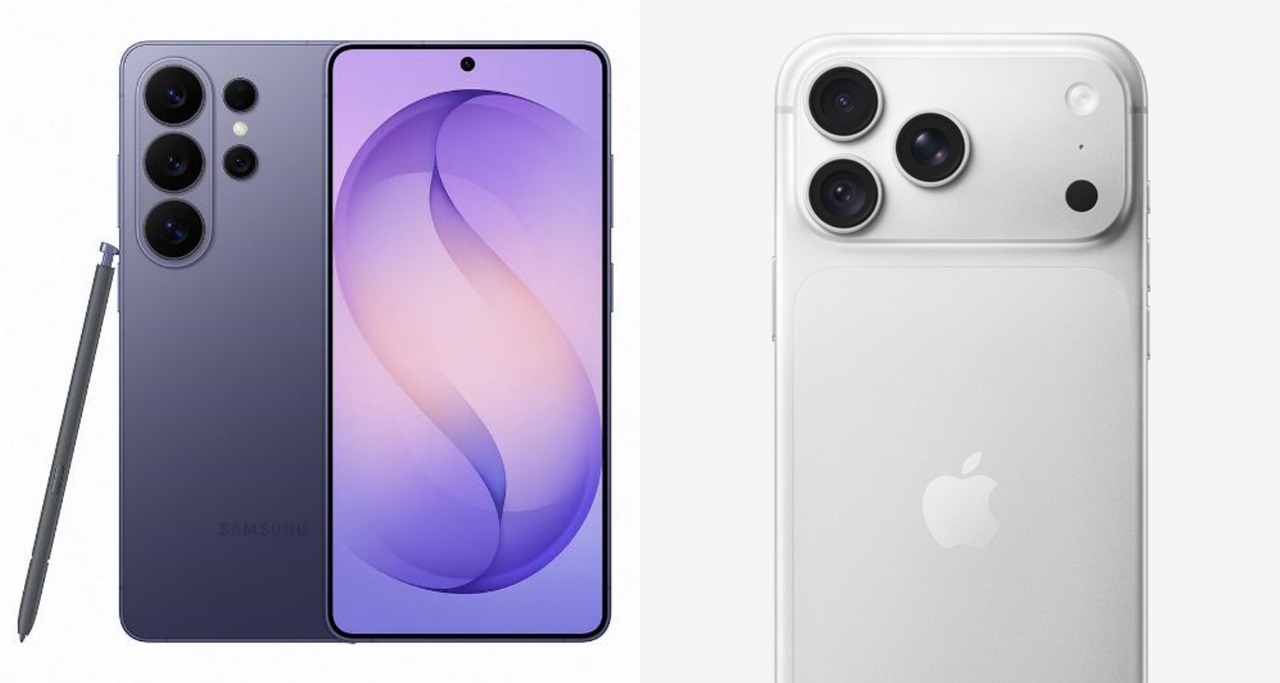
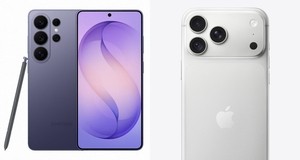
Apple and Samsung Electronics are increasingly relying on Chinese technology giants to power their artificial intelligence services in China, highlighting a growing dilemma for foreign smartphone makers: Competing in the world's largest smartphone market means depending on local companies that could eventually become AI rivals.
Apple's new partnership with Alibaba Group and Samsung's existing collaboration with Baidu reflect the growing importance of Chinese AI technology in a market where strict regulations and limited access to foreign platforms constrain global services.
While Chinese law does not explicitly require foreign smartphone makers to partner with domestic AI providers, industry experts say such collaborations have become a practical way to meet regulatory requirements and tailor services to local consumers.
China requires public-facing generative AI services to meet content and security standards and undergo regulatory registration. In July, its cyberspace regulator included Apple Intelligence and Galaxy AI among seven registered smartphone AI services.
"It's less a matter of choice than something they have to do to enter the Chinese market," Park Seung-chan, a Chinese studies professor at Yongin University, told The Korea Herald.
Lee Sang-woo, an adjunct professor in the Department of AI and Data Law at Inha University, said local partnerships allow foreign companies to use infrastructure already adapted to China's regulatory environment.
Apple taps Alibaba, Samsung builds on Baidu ties
On Oct. 31, Alibaba announced a partnership with Apple to integrate its Qwen AI model into Apple Intelligence in China. Developer testing began Wednesday, with a public rollout planned for December through iOS 27.3.
Qwen will support Siri, Writing Tools and Visual Intelligence, allowing users to generate text and ask questions about photos and documents. Apple's own models will continue to power features such as live translation and photo editing, while its next-generation Siri AI will not be included in the initial rollout.
Industry sources have said Alibaba developed technology to filter Apple's AI output under Chinese content rules, although neither company has publicly detailed how it works.
Samsung partnered with Baidu in January 2024 to localize Galaxy AI. While Circle to Search on global Galaxy S24 models uses Google's technology, the Chinese version relies on Baidu's Ernie model and search capabilities. Chinese media reported in July that the collaboration had expanded to the Galaxy S26 series.
The companies have also worked on Chinese-language input, document summarization, Bixby and an AI call assistant that can handle courier and food-delivery calls when configured by users, according to Baidu.
Beyond compliance, access to digital ecosystems
The partnerships could offer benefits beyond regulatory compliance by connecting smartphone AI services with China's extensive digital ecosystems.
Alibaba operates Taobao and Alipay, while Baidu has a strong position in Chinese search and mapping. Integrating AI with such platforms could make assistants more useful for everyday activities, including shopping, payments and navigation.
Lee pointed to Alibaba's Qwen app, which integrates Taobao and Alipay, as an example of the potential benefits.
"The competitiveness of AI services as perceived by Chinese consumers may depend not only on model performance but also on how seamlessly they integrate with these platforms," he said.
Neither Apple nor Samsung has confirmed plans to integrate these broader services into Apple Intelligence or Galaxy AI.
Different stakes, shared risks
The commercial stakes differ sharply for the two smartphone makers.
According to Counterpoint Research, China's smartphone shipments fell 10 percent on-year in the third quarter. Huawei Technologies led with a 21.3 percent market share, followed by Apple at 19.5 percent. Samsung remained outside the top six.
"For Apple, it's a necessary tool to defend its market share," Park said.
For Samsung, whose smartphone presence in China is much smaller, Park said that maintaining ties to the country's manufacturing supply chain may matter more than an immediate recovery in handset sales.
"Rather than trying to boost sales right away, the most important thing is to stay close to the supply chain," he said.
But the growing reliance on Chinese AI providers carries risks, including fragmented user experiences across markets, regulatory uncertainty and reduced control over technology and data.
"These companies aren't just partners. Even if they don't make smartphones, they could become competitors in AI services," Park warned.
Lee stressed that maintaining technological independence and effective control over data would be essential to long-term competitiveness.
Ultimately, the partnerships could help Apple and Samsung remain competitive in China without substantially changing the balance of power in the country's smartphone market.
"I don't expect market shares to change much," Park said, pointing to a market dominated by Apple and domestic Chinese brands.
yeeun@heraldcorp.com