Kia said Friday that it would invest 3 trillion won ($2.21 billion) in a new electric-vehicle production facility at AutoLand Gwangju, transforming the plant into a strategic mobility base.
Running through 2029, the investment is part of Hyundai Motor Group’s broader commitment announced in November 2025 to inject 125.2 trillion won into domestic operations over five years.
The new funding will expand the Gwangju plant's manufacturing line beyond internal combustion engine models into a primary hub for software-defined vehicles and eco-friendly mobility.
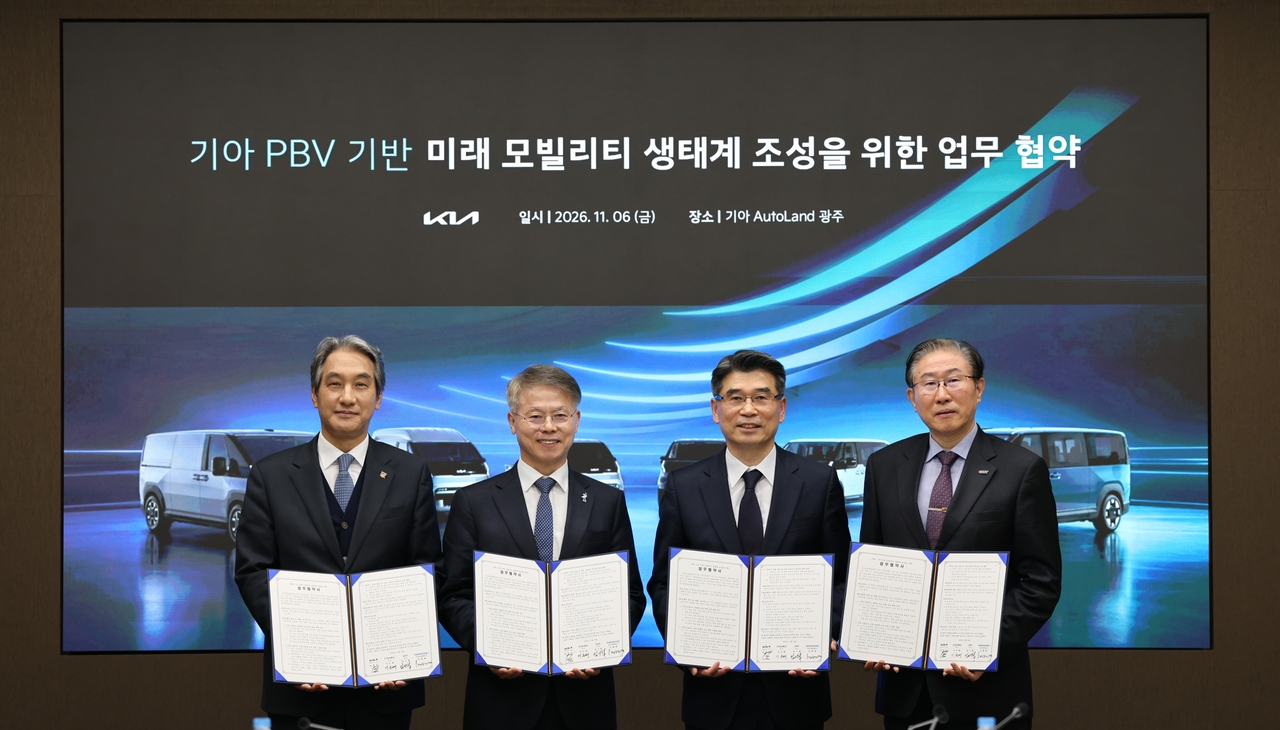
Alongside the plant construction, Kia signed a memorandum of understanding earlier Friday with Jeonnam-Gwangju, Chonnam National University and the Gwangju Institute of Science and Technology to build an integrated mobility ecosystem.
Key figures included Kia President and CEO Song Ho-sung, Mayor Min Hyung-bae, Chonnam National University President Lee Keun-bae and Gwangju Institute of Science and Technology President Lim Ki-chul.
The partnership focuses on testing Kia’s Purpose-Built Vehicles for flexible transport systems, including demand-responsive Transit vehicles, autonomous PBV shuttles, Kia PV5 Van’s remote-driving systems for mobility-impaired passengers and reconfigurable vehicle designs tailored for logistics or passenger transportation.
To support these service trials and train the AI systems for the PBVs, the consortium will deploy a fleet of 200 autonomous Hyundai Ioniq 5 EVs across local residential, commercial and urban roads.
Song stated, “The partnership will accelerate the commercialization of PBV-based technologies while helping position the Jeonnam-Gwangju Integrated Special City as Korea’s flagship center for future mobility.”
hyejin2@heraldcorp.com