German industrial giant eyes deeper Korean partnerships in automotive, green technologies
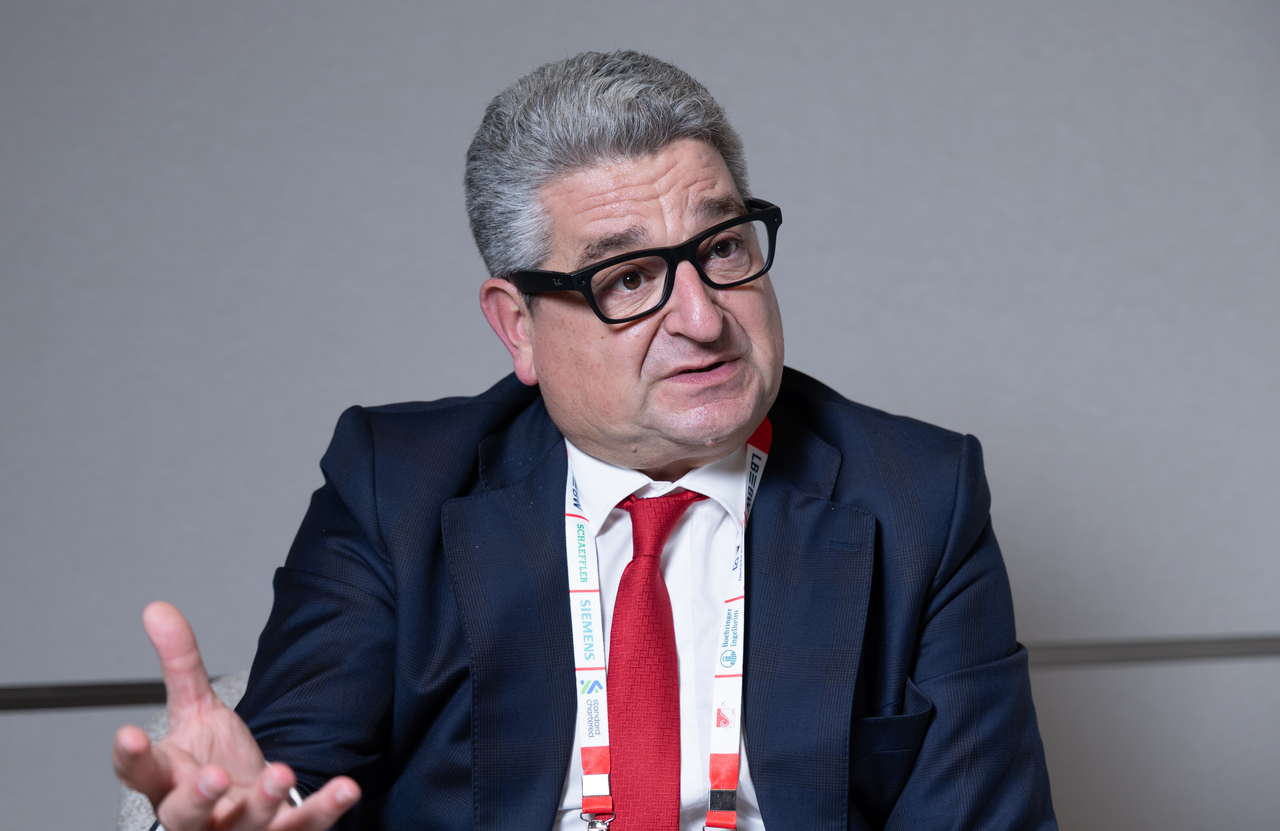
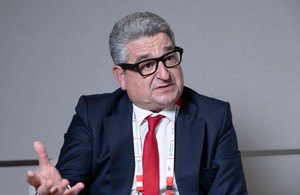
Thyssenkrupp CEO Miguel Lopez acknowledged the fierce competition between its naval shipbuilding arm TKMS and South Korea’s Hanwha Ocean in Canada’s recent submarine procurement contest, while expressing optimism about broader industrial cooperation between Germany and Korea.
“Canada has been very, very close competition. I don’t think that there was a lot of delta between the two companies,” Lopez told The Korea Herald in an interview on the sidelines of the Asia-Pacific Conference of German Business in Seoul on Friday.
His remarks came after TKMS was selected as Canada’s preferred supplier in July for a multibillion dollar program to acquire up to 12 submarines, following an all-out contest in which Germany and South Korea threw their full weight behind their respective bidders.
Asked whether the two countries' shipbuilders could cooperate on international defense projects or technology development despite their rivalry, Lopez said the changing geopolitical landscape was creating opportunities for closer cooperation between European and South Korean companies.
“I am very much convinced that in the next couple of years, more and more cooperation will happen between German, European and South Korean companies,” Lopez said, though he stopped short of identifying any specific partnerships involving the shipbuilders.
The CEO emphasized that TKMS would continue to strengthen its technological edge in the global naval defense market, particularly through investments in uncrewed systems and software.
Beyond defense, Lopez pointed to automotive and decarbonization technologies as Thyssenkrupp’s two main growth opportunities in Korea, where its business remains relatively small compared with the country’s industrial strength.
“I do see the best opportunities in two fields,” he said. “One is … automotive because we are starting there from a base where there’s a lot of space.”
Thyssenkrupp, which supplies automotive components, currently holds a small market share with Korean automakers, leaving considerable room to expand its customer base.
The second area is decarbonization technologies, including advanced chemical plant engineering, electrolyzers and synthetic fuels such as electro-sustainable aviation fuel, e-methanol as well as biomass gasification, he said.
“I think there is an opportunity for a closer cooperation, so we have obviously South Korea on our agenda for getting much more involved in what is going on here in the market,” Lopez said.
Asked about potential partnerships with Korean companies, Lopez said the company was using the Seoul conference to initiate discussions.
"We are using this platform now to get into the conversations, and I'm optimistic that we will see in the future some concrete agreements happening," he said.
Steel next in Thyssenkrupp's overhaul
The drive to grow in Korea comes as Thyssenkrupp carries out sweeping restructuring aimed at turning the German industrial conglomerate into a lean financial holding company by 2030.
Lopez, who assumed the helm in 2023 and has since spearheaded the overhaul, said the transformation reflects the limited benefits of keeping diverse businesses under one roof without clear operational synergies.
"If you have no clear synergies within one industrial conglomerate, then you have no advantage," he said.
The company has already spun off and listed several businesses, including its naval shipbuilding arm TKMS in October last year and aerospace materials business TK Accelis last week. In both transactions, Thyssenkrupp retained a 51 percent controlling stake, while the remaining 49 percent was distributed to its shareholders.
Lopez said separately listing businesses was helping unlock their market value and reduce the “conglomerate discount.”
Steel is next in line, followed by automotive operations and, eventually, decarbonization technologies, he said.
“We are preparing now for making steel independent,” he said, adding that no firm date has been set.
Lopez said Thyssenkrupp favored a capital market transaction over other options, including an outright sale, for its steel business, Thyssenkrupp Steel Europe, arguing that it would generate greater value.
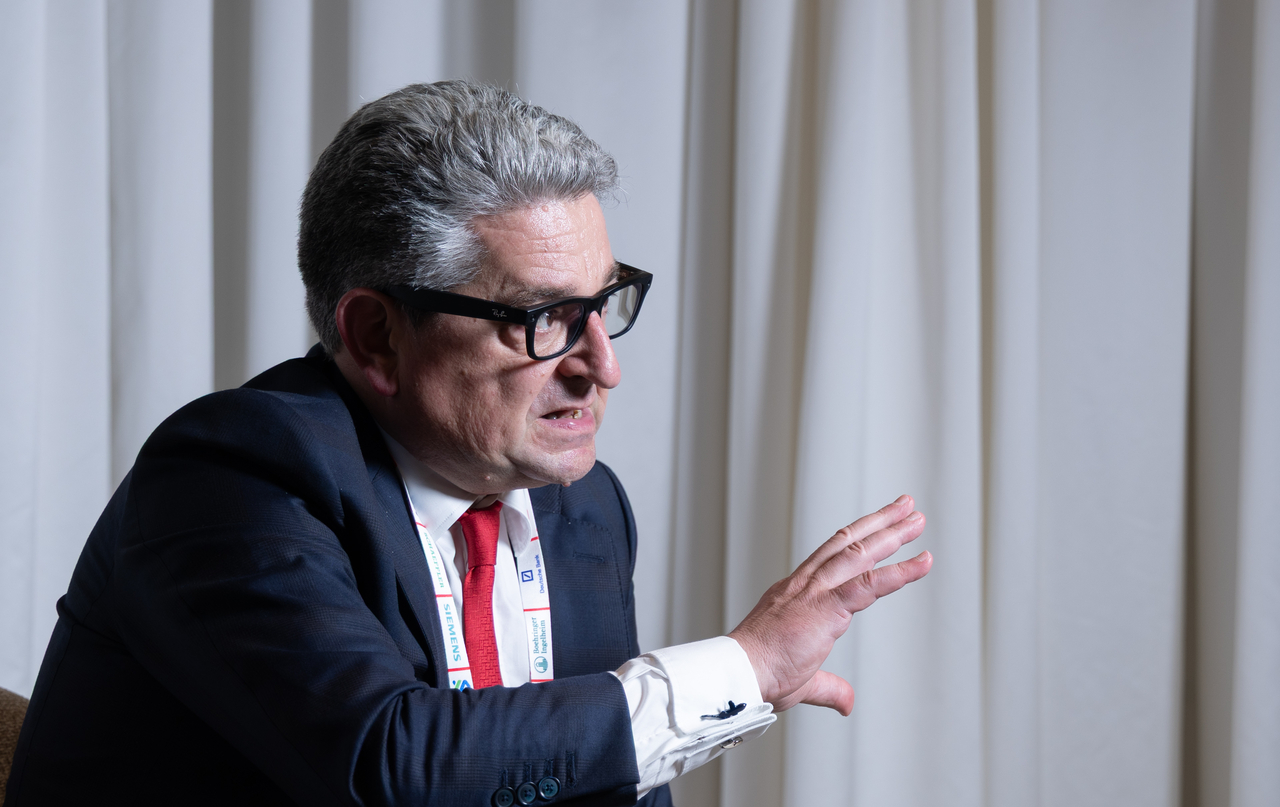
"The value creation which we see now for steel will be much, much better with a capital market transaction rather than some other types of options," he said.
Automotive operations still need further restructuring before they are ready for capital markets, while decarbonization technologies will require more time as clean technology markets mature.
"We want to be completed by 2030 overall," he said.
Under the new structure, Thyssenkrupp aims to become a small financial holding company overseeing its independently operated businesses through their supervisory boards.
The overhaul is also meant to give each business more freedom to make acquisitions and grow faster.
“With the access to the capital markets, we have access to additional capital,” he said, adding that the funding could support both organic expansion and mergers and acquisitions.
Despite intensifying global competition and geopolitical uncertainty, Lopez said Thyssenkrupp would continue to prioritize proximity to customers in its major markets, with South Korea among the countries where it sees room to expand.
"The global strategy is to be as local as possible," he said.
sahn@heraldcorp.com