Six Korean universities rank among Asia's top 20, highlighting divide between leading institutions and regional universities
More than half of South Korean universities fell in the latest QS Asian university rankings, with institutions outside the Seoul metropolitan area accounting for most of the declines.
Five of the six Korean universities in the top 20 are based in Seoul, underscoring the growing disparity between higher education institutes in the capital region and those in other areas of the country.
According to the 2027 QS World University Rankings: Asia, released Tuesday by global higher education analyst Quacquarelli Symonds, 56 percent of previously ranked Korean universities saw their positions decline from the previous year, while 35 percent climbed and 9 percent remained unchanged.
The decline was particularly pronounced among universities outside the greater Seoul area.
Of the 61 previously ranked universities outside the Seoul metropolitan area, 38 saw their rankings fall, while only 17 recorded improvements. By comparison, 20 of the 42 universities in Seoul, Incheon and Gyeonggi Province fell in the rankings, while 19 climbed.
Despite the overall downward trend, Korea maintained a strong presence near the top of the Asian rankings.
Six Korean universities placed among Asia's top 20, the second-largest number after mainland China's seven.
Yonsei University retained its position as South Korea's highest-ranked institution at 11th in Asia, followed by Korea University at 12th.
KAIST, which was absent from last year's rankings, returned at 15th, sharing the spot with Sungkyunkwan University, which rose one place from 16th.
Seoul National University climbed from 17th to 16th, while Hanyang University rose from 20th to 19th.
Postech, however, slipped four places from 18th to 22nd, falling out of Asia's top 20.
Among the Korean universities ranked within Asia's top 100, Sogang University recorded the largest improvement, jumping 18 places to 65th. Ewha Womans University climbed five places to 64th, while Kyung Hee University rose one place to 38th.
The number of Korean universities in Asia's top 100 fell from 15 to 14, although the number in the top 200 increased from 24 to 26.
Korea had 108 universities represented in the rankings, the fifth-largest number in Asia.
Regional universities face mounting pressure
The weaker performance of regional universities comes as Korea faces a prolonged decline in its college-age population, putting increasing pressure on institutions outside the capital region to attract students and maintain their competitiveness.
According to projections by the Korean Council for University Education, the number of students entering universities is expected to fall from approximately 440,000 in 2023 to 260,000 by 2040.
QS noted that regional universities have been particularly affected by declining enrollment, prompting government efforts to support institutional reform.
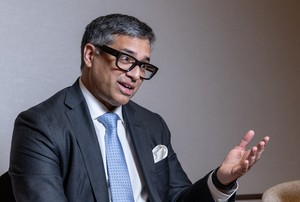
"South Korea’s best universities are among the strongest in Asia," said Ben Sowter, senior vice president of QS. "Six are in the regional top 20, almost all of the top tier has climbed or held its place, and four are among the 15 universities in the region most respected by academics."
"Further down, it is a harder year," he added. "More than half of South Korea’s ranked universities fall, and most of the losses are outside the capital region, where the shrinking university-age population is already affecting enrolment."
Sowter added that Korean universities would need to expand international research collaboration and attract more foreign faculty to maintain their competitiveness, identifying these two areas as major weaknesses.
Across Asia, the University of Hong Kong retained the top position for the second consecutive year, followed by Peking University in second and Tsinghua University in third.
The rankings assessed 1,722 universities across 26 Asian higher education systems, based on 11 indicators covering academic and employer reputation, research performance, teaching resources and internationalization.
seungku99@heraldcorp.com