The industry is watching to see whether the veteran hitmaker’s signature sound can make K-pop’s future sound more like its past
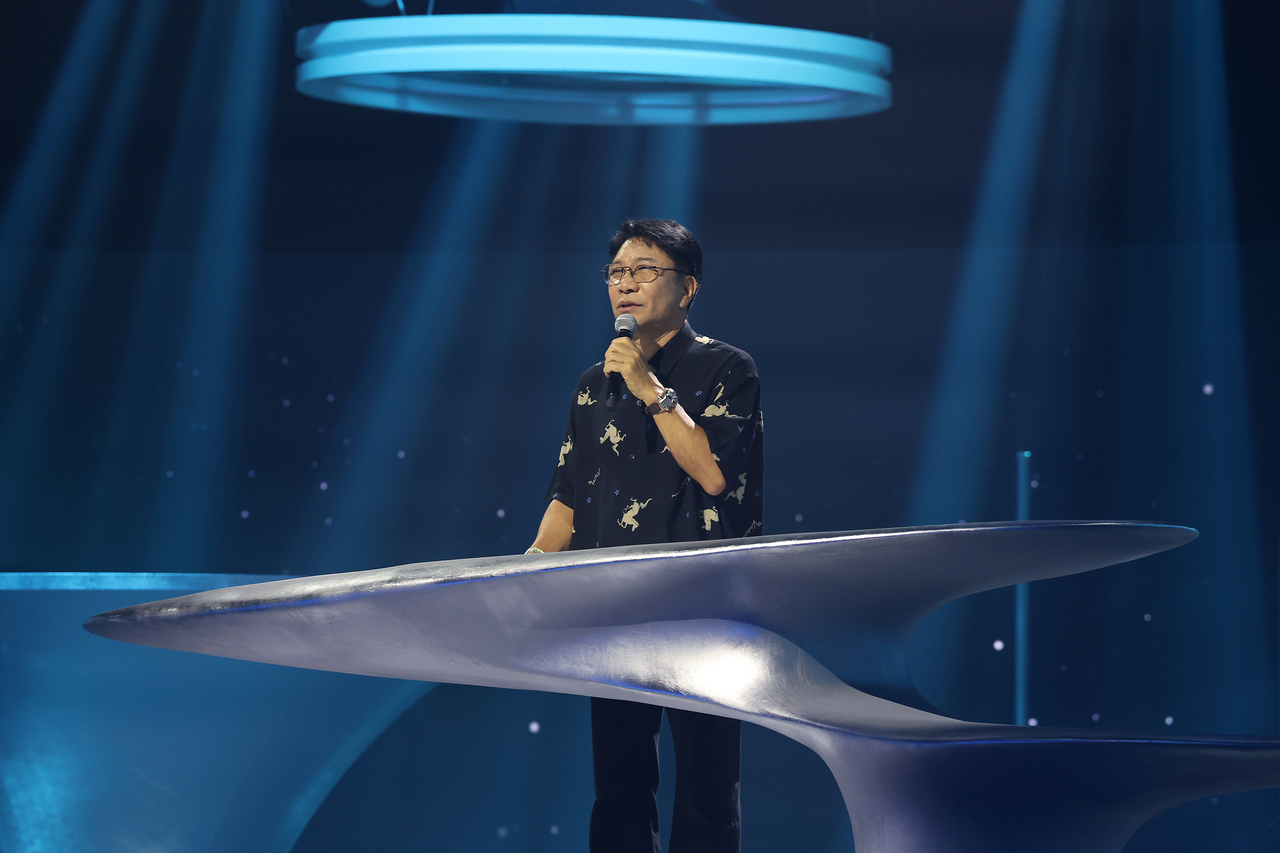
A2O Lite’s debut with “Neon” is putting Lee Soo-man’s comeback to the Korean music scene to the test: Can the producer who helped shape K-pop’s sound revive the elaborate, vocal-forward pop that defined an earlier era in a landscape now dominated by new production trends and shifting fan tastes?
The nine-member girl group debuted earlier this month alongside 15-member boy group A2O Soul under A2O Entertainment, the company Lee established after leaving SM Entertainment.
“Neon” climbed to No. 1 on Melon’s Top 100 roughly 29 hours after its release and has continued to gain traction across domestic streaming platforms and social media. Performance clips from music shows have racked up millions of views, while some fans have hailed A2O Lite as marking the beginning of a new K-pop generation.
The response reflects the anticipation surrounding Lee’s return to the Korean market, which had been building since early 2026. For a producer whose name is closely tied to K-pop’s evolution, A2O Lite’s reception offers an early measure of whether his signature approach can resonate with a new generation of listeners.
Lee spent decades shaping the careers and sounds of artists including H.O.T., BoA, TVXQ, Girls’ Generation, Shinee, Exo, NCT and Aespa at SM Entertainment before leaving the company in 2023. His domestic production activities were subsequently restricted for three years under a noncompete agreement tied to the sale of his SM shares to Hybe.
By the time he could fully return to the Korean market, interest had already built around what his first new idol groups outside SM would look and sound like.
The attention was heightened further by the people joining him.
Producer Yoo Young-jin, who worked alongside Lee for decades and played a major role in shaping SM’s vocal and production style, participated in A2O’s music production. Girls’ Generation member Sunny, who is Lee’s niece, was also involved in training the company’s rookies.
“The familiar names together made A2O feel less like an entirely new company, and more like the reappearance of a production lineage many longtime K-pop listeners already liked,” explained music critic Lim Hee-yun.
“The recognition encouraged comparisons too, such as comparing A2O Lite members with earlier SM artists like BoA and Girls’ Generation and describing ‘Neon’ as reminiscent of older SM releases for its layered harmonies, high notes, dramatic progression and dance break.”

Yet, nostalgia alone does not explain why the song resonated.
In recent years, K-pop songs have generally become shorter, and many releases have placed greater emphasis on immediately recognizable hooks and sections suited for short-form video platforms. While that shift helped songs spread quickly through TikTok, Instagram Reels and YouTube Shorts, some listeners complain that recent tracks increasingly feel built around one repeatable section rather than a fuller musical progression that was once common in K-pop.
“To listeners, ‘Neon’ sounds less streamlined. The song builds through multiple sections and gives prominent space to harmonies, vocal climaxes, ad-libs and a dance break — elements that were once common in K-pop but have become less dominant as listening habits changed,” added Lim. “This contrast may help explain why some listeners have described the track as refreshing despite its similarities to music from an earlier generation.”
Whether Lee can shift K-pop’s direction, however, will become clearer only after the initial buzz around A2O Lite dies down, another critic suggested.
Though A2O Lite benefited from the familiarity attached to Lee, Yoo and the broader SM legacy, if every new release is primarily discussed in relation to BoA, Girls’ Generation, f(x) or other former SM artists, the nostalgia could “eventually become a limitation.”
“The current response to ‘Neon’ suggests there may be demand for songs with stronger vocal development, fuller arrangements and more dramatic progression,” explained culture critic Jung Duk-hyun. “(Lee’s) challenge will be to recapture what listeners seem to miss about older K-pop while adapting its appeal to contemporary tastes, rather than simply reproducing the sounds of the past.”