Period: Unified Silla Period
Provenance: Gwangyang, Jeonnam-Gwangju
Materials: Stone
Dimensions: H. 250.0 cm
Designation: National Treasure103
In Korea, Buddhists and Confucians built stone lanterns at Buddhist temples and burial sites to symbolize the effort of finding the truth or to ensure peace for the spirits of the dead.
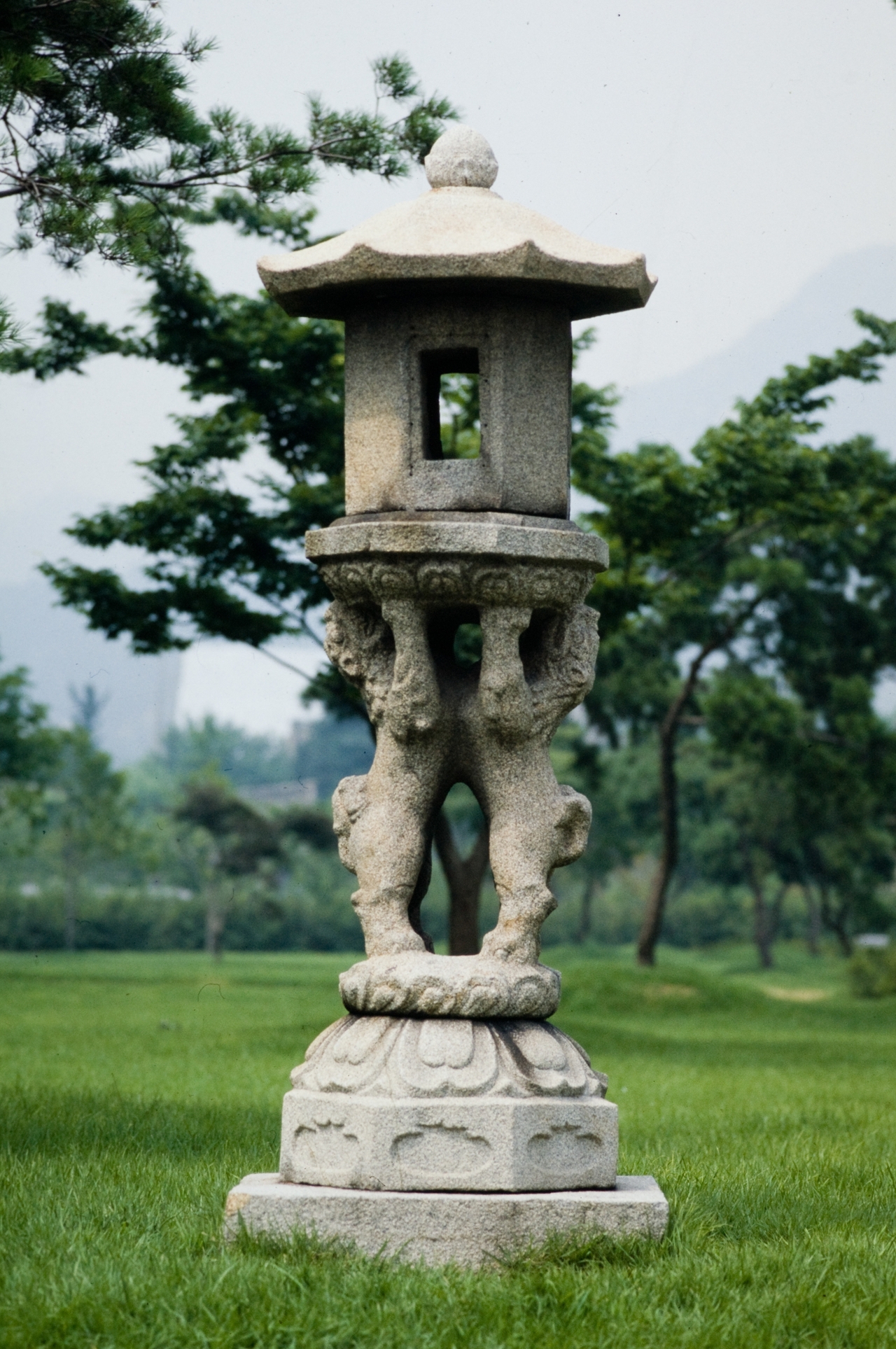
This particular stone lantern can be characterized by a central pillar in the shape of two lions holding the light chamber and roof. The Twin-lion Stone Lantern of Jungheung Mountain Fortress comes from Gwangyang, in what is now Jeonnam-Gwangju, and was later moved to the National Museum of Korea in 1918.
The stone lantern features two sculpted lions as its central support, unlike conventional round or octagonal pillars. This distinctive design is believed to reflect the view of lions as guardians of the Buddha's teachings.
Together with the twin-lion stone lantern at Beopjusa in Boeun, North Chungcheong Province, and the stone lantern at Yeongamsa in Hapcheon, North Gyeongsang Province, it is regarded as one of Korea's most notable examples of unusually shaped stone lanterns.
mjcha@heraldcorp.com

![[Graphic News] 6 in 10 people living alone feel lonely](https://wimg.heraldcorp.com/news/cms/2026/10/13/news-p.v1.20261013.78692699312346e2a2817fabedf14bb6_T1.gif?type=h&h=800)