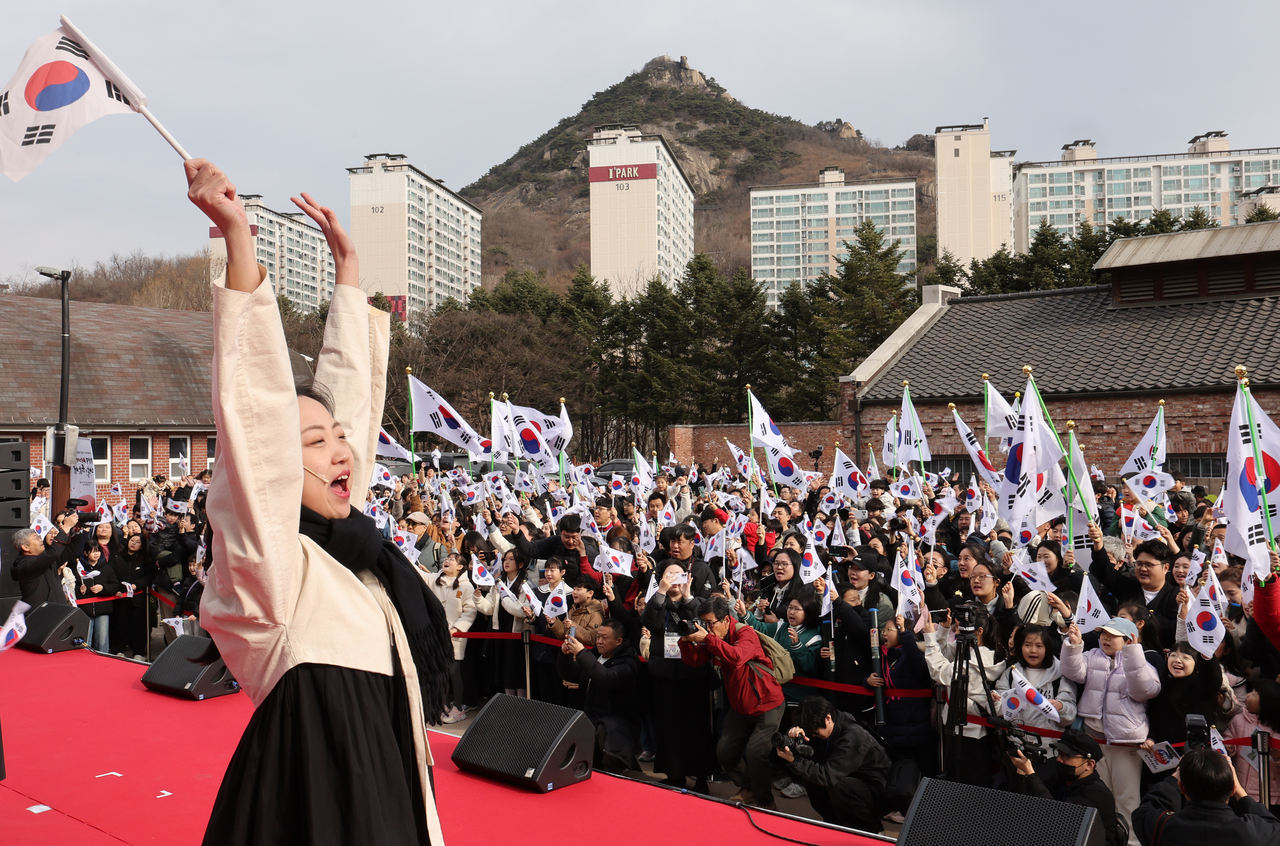
The government of North Jeolla Province in southwestern Korea will reportedly pay an annual allowance of 1.2 million won ($868) to each of 723 family members of participants in the Donghak Peasant Revolution, which took place 132 years ago.
대한민국의 남서부에 위치한 전라북도 지자체가 132년 전에 일어난 동학농민혁명 참여자의 후손 723명에게 연 120만원의 수당을 지급할 것이라는 보도가 있었다.
The government is using taxpayers’ money to provide cash payments to the grandchildren and great-grandchildren of participants in the revolution, as descendants of victims of the historic event of 1894-1895. The Donghak Peasant Revolution was a popular uprising against feudalism and foreign powers, sparked by local officials’ exploitative taxation and ruthless rule. The uprising prompted military intervention by China and Japan and ultimately led to the First Sino-Japanese War.
전북도는 국민의 세금으로 1894-5년에 일어난 역사적 사건의 희생자들의 후손이라며 혁명참여자의 손자녀와 증손자녀에게 현금을 지급하려 한다. 동학농민혁명은 지방 관료들의 착취에 가까운 과세와 가혹한 통치로 촉발된 반봉건, 반외세 민중 봉기였다. 이 봉기는 중국과 일본의 군사적 개입을 가져왔고 이는 최초의 청일전쟁으로 이어졌다.
The very idea of digging up history as far back as the late Joseon period to create a sort of veterans’ allowance is simply absurd.
일종의 보훈 수당을 신설하고자 조선 후기까지 역사기록을 뒤진다는 발상 자체가 참으로 터무니없다.
Even more astonishing is the dire financial situation facing the provincial government.
더욱 놀라운 것은 지자체가 처한 매우 어려운 재정 상태다.
In 2024, North Jeolla’s fiscal self-reliance ratio stood at 23.51 percent, the lowest among the country’s 16 metropolitan cities and provinces. Its own revenue is barely enough to cover the salaries of its civil servants, and the province is now deeply in debt after issuing local government bonds to make up for a budget shortfall.
2024년 전북도의 재정자립도는 23.51퍼센트로 전국 16개 광역단체 중 최하위권이다. 자체 수입은 공무원의 월급을 겨우 충당하는 수준이며 예산 부족을 채우기 위해 지방채를 발행한 이후로 막대한 부채를 안고 있다.
Moreover, North Jeolla Province has forced the cities and counties under its jurisdiction to shoulder 70 percent of the cost of these allowances. The financial situation is even worse at the city and county level: Most, with the exception of Jeonju, had fiscal self-reliance ratios below 20 percent, while Jinan County ranked last among the country’s local governments at just 6.69 percent.
더욱이 전북도는 관할지역 내 시,군에 이 수당지급비용의 70퍼센트를 부담하도록 강요했다. 시,군의 재정상태는 더욱 심각하다. 전주를 제외한 대부분의 지역의 재정자립도는 20퍼센트 이하로 진안군은 6.69퍼센트에 불과해 대한민국 지방정부 중 최하위를 기록했다.
The decision to pay the allowance sets a dangerous precedent that undermines the nation’s veterans’ benefits system.
수당을 지급하기로 한 결정은 국가의 보훈제도를 약화시키는 위험한 선례가 될 것이다.
Even the Ministry of Patriots and Veterans Affairs has opposed granting official honors to participants in the Donghak revolution, citing a lack of academic consensus and the risk of confusion with independence activists officially honored by the government.
국가보훈부마저도 동학혁명 참가자들에게 공식적인 서훈을 수여하는 것을 반대해 왔다. 학술적 합의의 부재 그리고 정부의 공식 서훈을 받은 독립운동가들과의 혼동 우려를 이유로 들면서다.
The Democratic Party of Korea has been relentless in its push to grant special recognition and benefits to participants in the Donghak Peasant Revolution, which began in North Jeolla Province, one of its political strongholds.
민주당은 정치적 지지기반 중 한 곳인 전북도에서 시작된 동학농민혁명 참가자들에게 특별 예우와 보상을 부여하고자 끈질기게 밀어붙여왔다.
The relevant special law was enacted in 2004, and the Roh Moo-hyun administration began accepting applications to register participants and bereaved family members. When applications remained low, it expanded the scope of eligible bereaved family members in 2007 to include even great-great-grandchildren.
관련 특별법은 2004년에 실행되었고 노무현 정부는 참가자와 유족을 등록하고자 접수를 시작했다. 지원율이 저조하자 2007년 대상 유족을 증손자녀까지 포함하는 것으로 확대했다.
If this is how historical events are to be recognized, there is reason to restore the honor of the farmers who rose up against corrupt officials in Jinju, South Gyeongsang Province, more than 30 years before the Donghak Peasant Revolution. By the same logic, allowances would have to be paid to the bereaved families of peasants who took up arms against corrupt officials around the turn of the 20th century -- and perhaps even to the descendants of those who fought Japanese invaders during the 1592 invasion of Joseon.
역사적 사건이 인정받는 방식이 이러하다면 동학농민혁명이 일어나기 30여년전 경남 진주에서 부패한 관료들에 반해 봉기했던 농민들의 명예도 회복시켜야 한다. 같은 논리로 19세기 말 부패관료들을 상대로 무기를 들어올렸던 농민들의 유족에게도 수당이 지급되어야 할 것이다. 어쩌면 1592년 조선을 침략한 일본에 맞서 싸운 이들의 후손에게도다.
When it comes to Korea’s independence movement, it is only reasonable to limit official government compensation to those who contributed to the movement after Korea came under Japanese colonial rule. The government could go further back in time, but it would become increasingly difficult to identify those involved, locate their descendants who are alive, and reach agreement on how the events should be assessed.
한국의 독립운동에 있어 정부의 공식적인 보상은 한국이 일본의 식민지배에 놓인 이후에 독립운동에 이바지한 인물에 국한되어야 마땅하다. 정부가 더 과거로 소급적용할 수도 있겠으나 관련된 인물을 식별하고 살아있는 후손을 찾고 해당 사건들이 어떻게 평가될지 합의하는 것은 한층 어려워질 것이다.
The Donghak Peasant Revolution is already taught in school textbooks. Memorial towers and monuments have also been erected at major historic sites. Their honor has already been restored.
이미 교과서를 통해 동학농민혁명에 대해 가르치고 있다. 기념탑과 기념물들도 주요 유적지에 세워졌다. 명예는 이미 회복되었다.
Yet this financially strapped North Jeolla plans to pay allowances to the descendants of those who participated in a popular uprising more than 130 years ago. This is an exploitation of history for populist ends, giving the Donghak Peasant Revolution preferential treatment over other historical events.
그러나 재정난에도 불구하고 전북도는 130여년전에 있었던 민중봉기에 참여한 이들의 후손에게 수당을 주려고 하고 있다. 이는 여타 역사적인 사건에 비해 동학농민혁명에 특혜를 주는 포퓰리즘을 위한 역사의 오용이다.
feudalism 봉건주의
veteran 참전 용사
dire 몹시 나쁜
stronghold 근거지, 지지 지역
bereaved 사별을 당한
khnews@heraldcorp.com