Gov't to strengthen anti-cheating measures through radio-frequency detectors
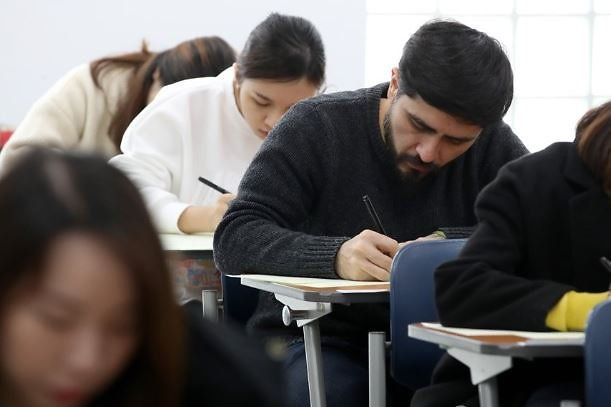
South Korea plans to overhaul its state-run Korean language proficiency test by 2029, using artificial intelligence to help create and grade questions and gradually allowing some candidates to take the exam from home, the Education Ministry said Tuesday.
The ministry and the National Institute for International Education announced the plan as demand for the Test of Proficiency in Korean, or TOPIK, continues to grow. The exam is used for university admissions, visa applications and employment in Korea and overseas.
TOPIK applications rose from 421,812 in 2023 to 566,665 in 2025, according to ministry data. By September this year, applications had reached 564,606, up 10.2 percent from the same period last year.
Under the plan, the government will develop a new evaluation framework by June 2027, conduct pilot tests in 2028 and introduce the revamped exam in 2029.
An AI-based system would help generate and grade questions, with experts reviewing its output to catch errors and safeguard fairness.
The government also plans to gradually introduce a home-based version from 2029. It would begin with lower-level tests whose results are not directly used to determine university admission or residency eligibility.
The overhaul follows calls from universities and other institutions for a test that better measures practical communication skills.
Authorities have also cited concerns about increasingly sophisticated cheating and limited access to test centers as demand rises.
To strengthen exam security, the government plans to expand the use of radio-frequency detectors to identify prohibited devices, including AI-enabled glasses and miniature earphones.
Under the plan, people caught impersonating candidates, leaking exam papers or using forged identification documents could be barred from taking TOPIK for up to five years.
seungku99@heraldcorp.com