For many people outside Korea, Hangeul begins with a name.
A K-pop fan learns to recognize the letters spelling the name of his or her favorite idol. A viewer pauses a Korean TV drama to decipher a word on a storefront. Someone who discovered Korean culture through a song or webtoon starts learning Hangeul — first out of curiosity, then perhaps to understand the language behind something they have come to love.
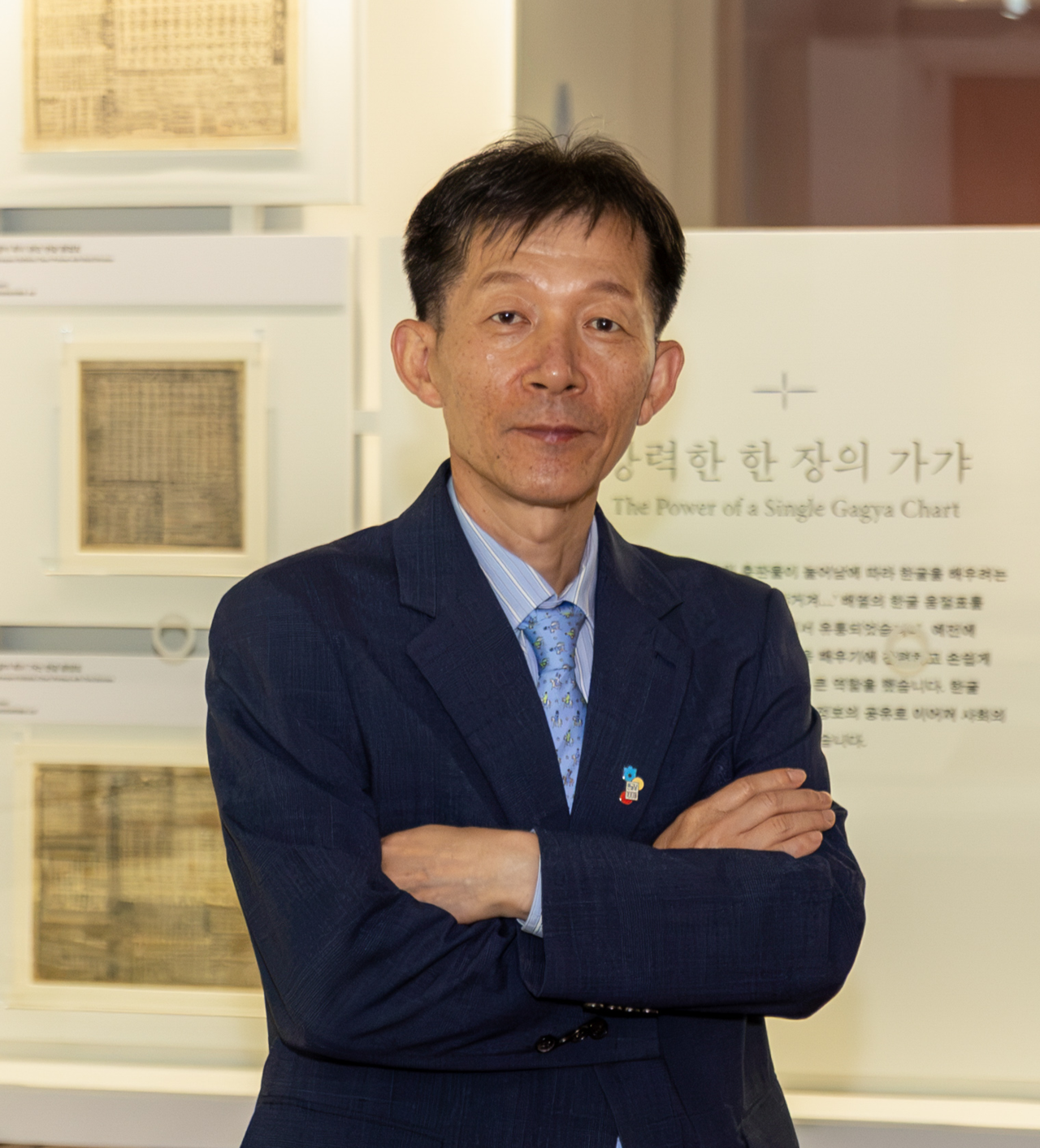
For Lim Seong-hwan, director of the National Hangeul Museum, that represents a striking new chapter in Hangeul’s long history.
“We are instinctively drawn to those we like. Hangeul is like that,” he said in an interview with The Korea Herald ahead of Hangeul Day, celebrated annually on Oct. 9. This year marks its 100th anniversary.
“No matter how it is packaged — whether as K-pop, K-beauty or K-dramas — Hangeul is at the heart of it all,” Lim said. “Each Hangeul letter embodies the very soul and spirit of its people. It is from this cultural essence that our songs and art are created.”
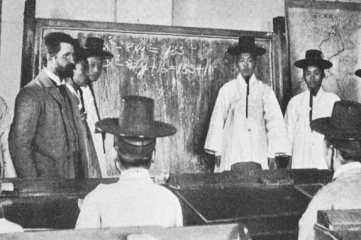
Created under King Sejong in the 15th century to make reading and writing more accessible to ordinary Koreans, Hangeul later became a powerful symbol of Korean identity during Japanese colonial rule from 1910-45. Now, a century after the first Hangeul Day was established, it is being encountered by a new generation far beyond Korea — often through the very popular culture that has made the country globally familiar.
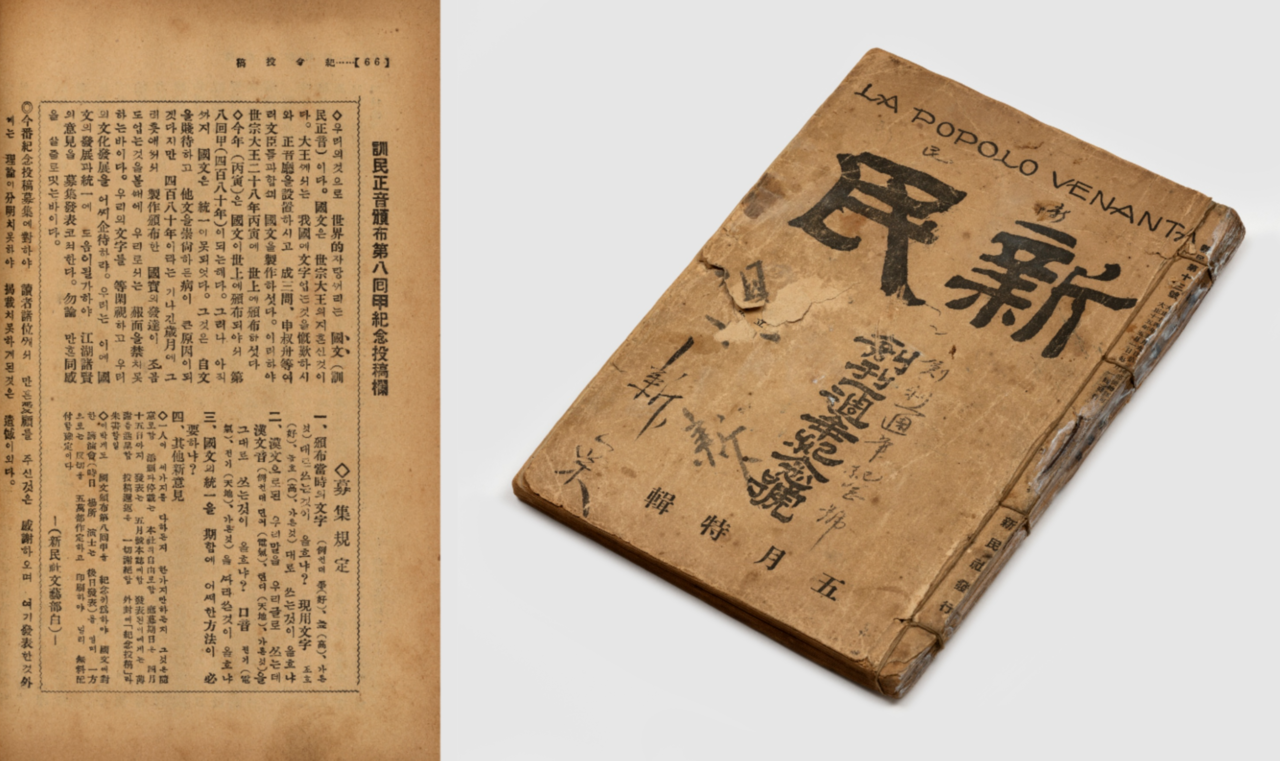
The first Hangeul Day was established in 1926 by the Korean Language Research Society. Originally called Gagya Day after the first two syllables of the traditional sequence used to teach Hangeul, it was intended to honor the Korean language at a time when Korean culture faced systematic suppression.
“It was a part of reclaiming our identity, a part of the independence movement,” Lim said. “Our ancestors believed that claiming our own letters and writings would mean that although foreign powers may temporarily govern us, we can and will recover any time.”
“Today, however, with the rise of Korea’s global standing as well as K-content, more people are approaching Hangeul as a means of understanding not only celebrities but also regular Korean people and Korean culture.”
Hangeul in AI era
The desire to learn a language might seem less urgent at a time when artificial intelligence can translate conversations almost instantly.
Lim sees it differently.
Translation can communicate meaning, but it cannot always reproduce the experience of a language — the sounds, rhythms and associations.
He pointed to “Grass Flower,” a short poem by Korean poet Na Tae-joo. Its literal meaning can be translated into English, but reading it in Korean offers another experience, one shaped by the sound and rhythm of the original.
“Translation is optional, but when you can hear and speak (Hangeul) directly, one can engage with the content deeply,” Lim said.
The director hopes that this interest will extend beyond language itself.
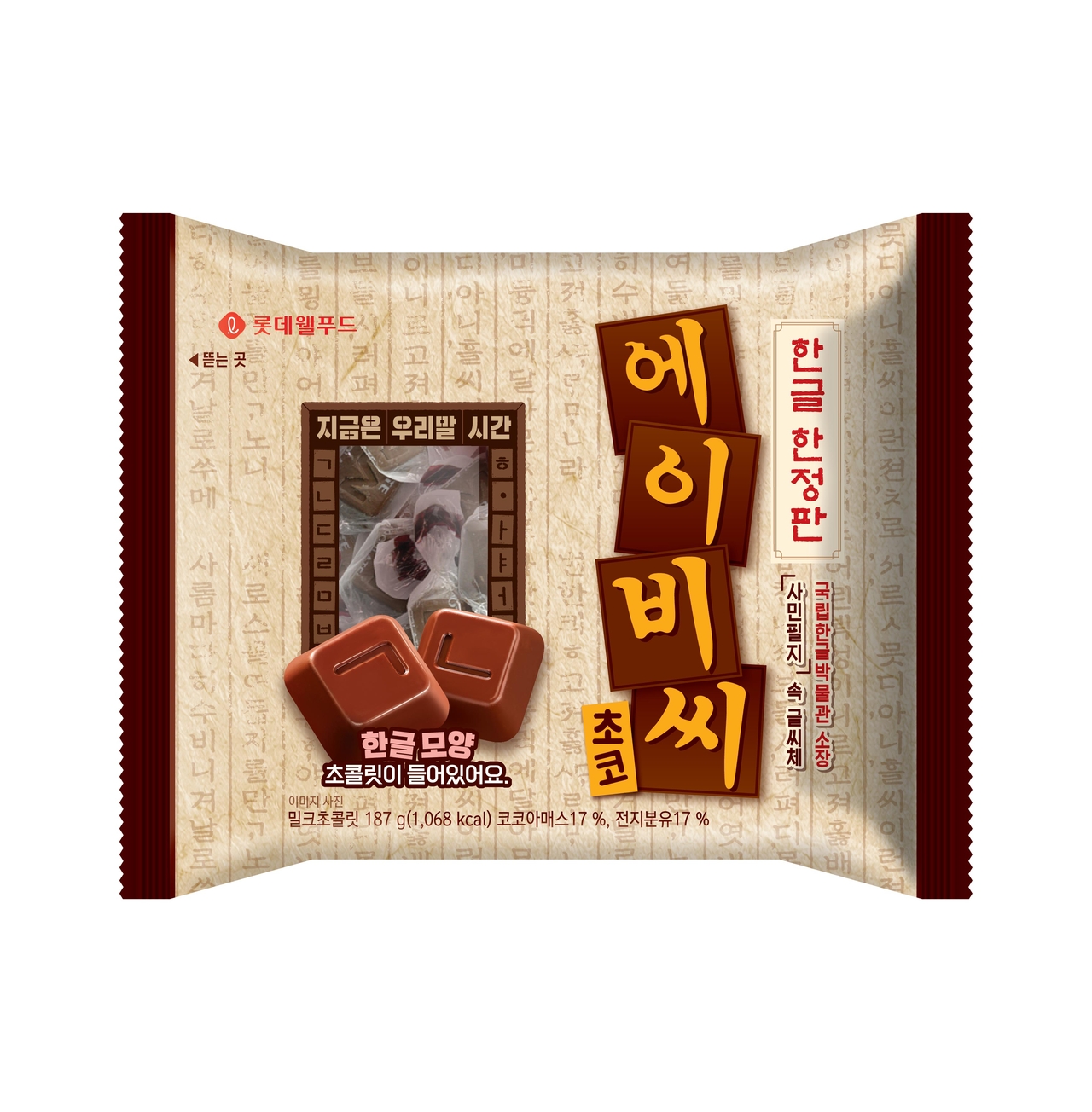
Hangeul is increasingly visible as a form of visual expression, appearing in typography, calligraphy, fashion, design and art.
More businesses are incorporating Hangeul on their packages, even for products exported overseas. Instead of using translated names in local languages, Hangeul is increasingly imprinted on the designs because of the letters' appeal.
"These businesses voluntarily uses Hangeul because customers want to see them on the designs," Lim said.
Using Hangeul as a design motif, Lotte Wellfood re-created their famous ABC chocolates with Hangeul, while Orion's Turtle Chip added its Hangeul name next to its products sold in Vietnam. A beauty brand based in Germany takes its name from Hangeul: Yepoda, meaning "beautiful."
“It’s essential to demonstrate the formative and aesthetic beauty of Hangeul, rather than presenting it solely as a historical record or communication tool,” he said.
The structure of the writing system gives designers and artists another way to experiment with its forms. Different typefaces and styles of calligraphy can evoke different periods, personalities and moods.
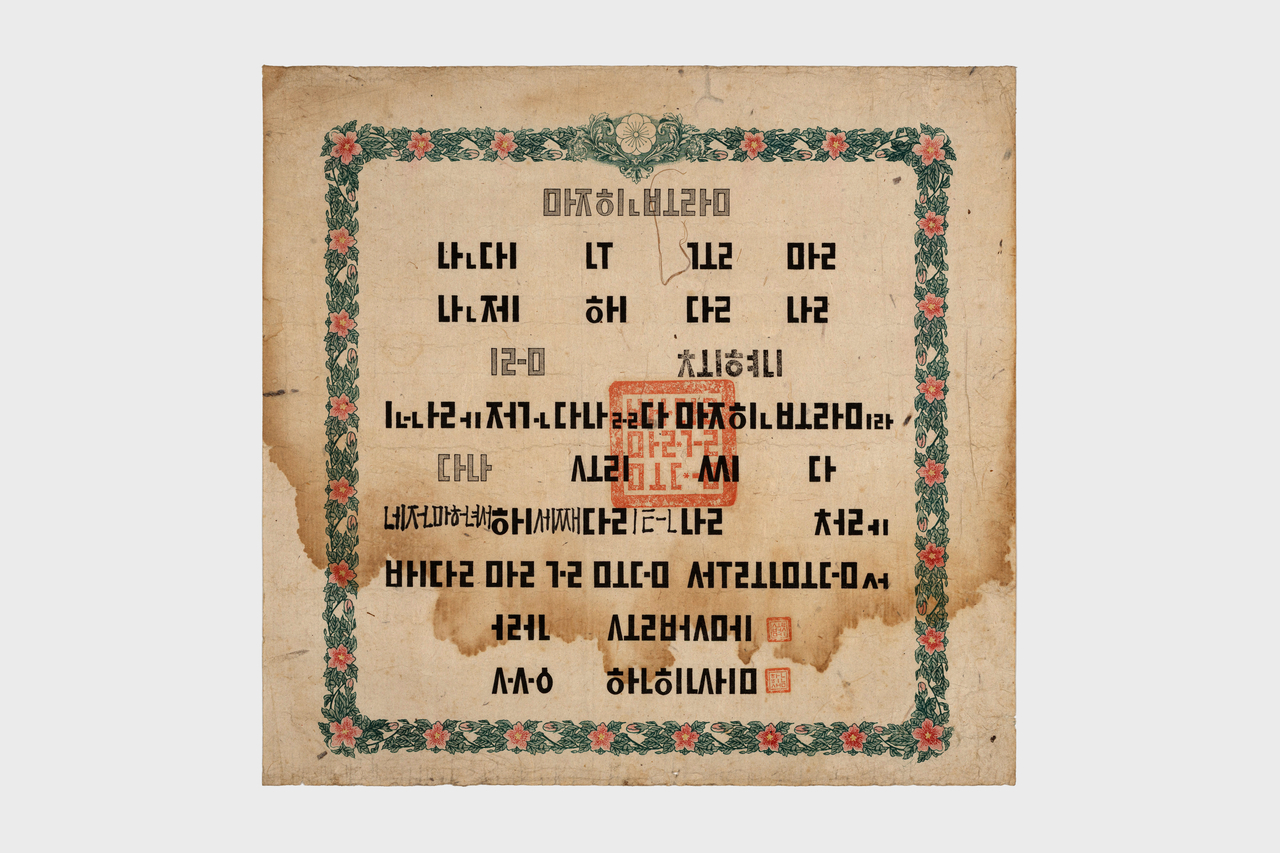
One example is the use of a typeface inspired by independence activist Ahn Jung-geun. In 2020, the Daejeon National Cemetery introduced a new plaque written in Ahn's handwriting to commemorate the 110th anniversary of his death.
The typeface was created based on a digitized archive from Ahn's handwritten poetry to honor his legacy, while enshrining the soul of a patriot through his Hangeul.
"Handwritten fonts are essential," Lim said. "It captures the very breath of the person."
Likewise, through different styles, Hangeul carries the tradition, history and spirit of Korea.
The Korea Copyright Commission has created fonts based on independence activist Ahn Chang-ho and Emperor Sunjong, while the city of Asan, South Chungcheong Province, created a Yi Sun-sin font honoring the national hero of the Joseon era. Hancom software similarly created a font based on Hunminjeongeum, the 1446 text that introduced Hangeul.
"More works are on its way," Lim said. "We are digitalizing data from archives including letters to create fonts or reinterpret them to create works."
For the National Hangeul Museum, that contemporary dimension is part of its mission.
Having opened in 2014 in central Seoul, the museum preserves and studies Hangeul through its collections, research, exhibitions and educational programs. The museum is currently under an expansion project that was delayed three years by a fire. The museum in Yongsan, inside the National Museum of Korea compound, is set to reopen in 2028.
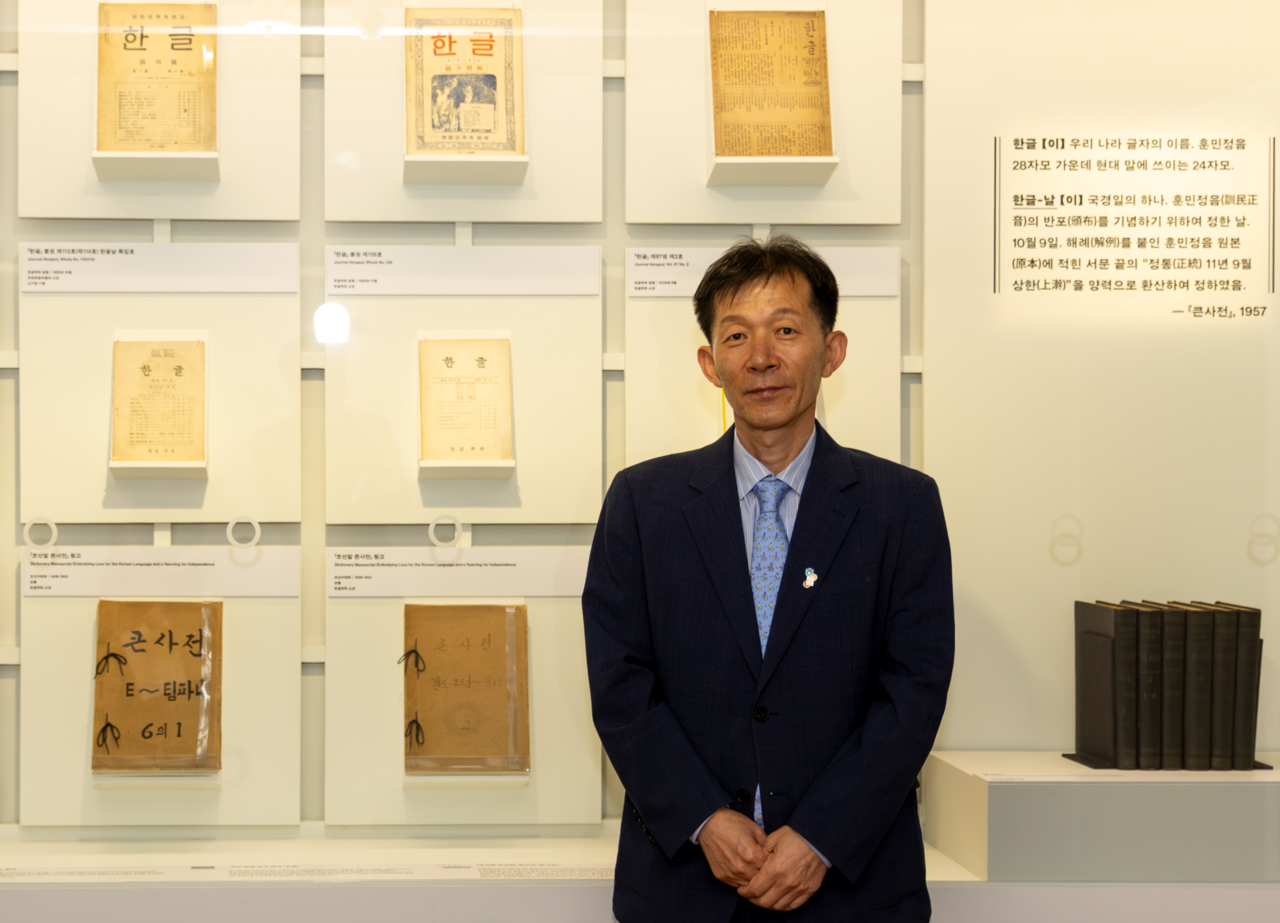
In the meantime as well as in years forward, the museum's role will be digitizing these materials, Lim said, adding that the role is to provide a backbone for high-quality cultural and linguistic data for future generations.
"A lot of data in the AI tools we use are in English," Lim said. "Compared to the over 100 million English books in the Library of Congress, the museum only owns a thousandth of that."
"Now, it is the museum's task, duty and obligation to preserve and digitize as many Hangeul documents as we can."
For more than 500 years, Hangeul has already had several lives. Lim sees that trajectory continuing.
“For the next 100 years, I hope Hangeul will become a global script,” he said. "Just like water and air, we should cherish Hangeul as a precious part of our everyday lives and preserve this heritage well, expanding its global footprint."
mjcha@heraldcorp.com