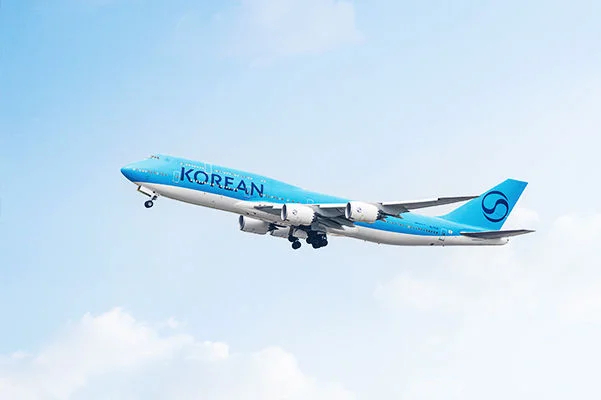
Korean Air’s deferred revenue related to unused mileage stood at 3.1 trillion won ($2.3 billion) at the end of the first half of this year, according to the Ministry of Land, Infrastructure and Transport on Sunday,
The figure was up 9.7 percent from 2.8 trillion won at the end of last year.
Deferred mileage revenue refers to the accounting value of services that an airline is obligated to provide in the future in connection with unused customer mileage.
Asiana Airlines had 936.1 billion won in deferred mileage revenue at the end of last year, bringing the combined figure for the two airlines to 3.78 trillion won.
Meanwhile, the share of award tickets paid for with mileage has declined. Mileage tickets accounted for 11.8 percent of Korean Air’s total passenger traffic in 2023, 11 percent in 2024 and 10.3 percent last year, marking a decline for two consecutive years.
The total travel distance of passengers using mileage tickets also fell 5.1 percent last year to 8 billion kilometers from 8.4 billion kilometers a year earlier.
Korean Air attributed the increase in deferred mileage revenue partly to higher mileage accumulation amid growing travel demand. Some passengers also delayed using their mileage while waiting to see how the mileage program would be operated following the airline's integration with Asiana Airlines. Korean Air noted that mileage ticket usage was above 2019 levels before the COVID-19 pandemic.
Chang Jong-tae, a Democratic Party of Korea lawmaker on the National Assembly’s Land, Infrastructure and Transport Committee, said that customers should be able to use the mileage they earned by purchasing airline tickets and using affiliated services.
"Award ticket availability should be expanded on high-demand routes and during peak periods," he said.
jyoungseon8@heraldcorp.com

![[Graphic News] Average parental age of S. Koreans rises](https://wimg.heraldcorp.com/news/cms/2026/09/27/news-p.v1.20260927.0bcbf944ca9043c4a6ad4401fcfae25c_T1.gif?type=h&h=800)