Lee Jin-yeob's new production invites audiences to connect onstage and experience ‘the joy of being together’
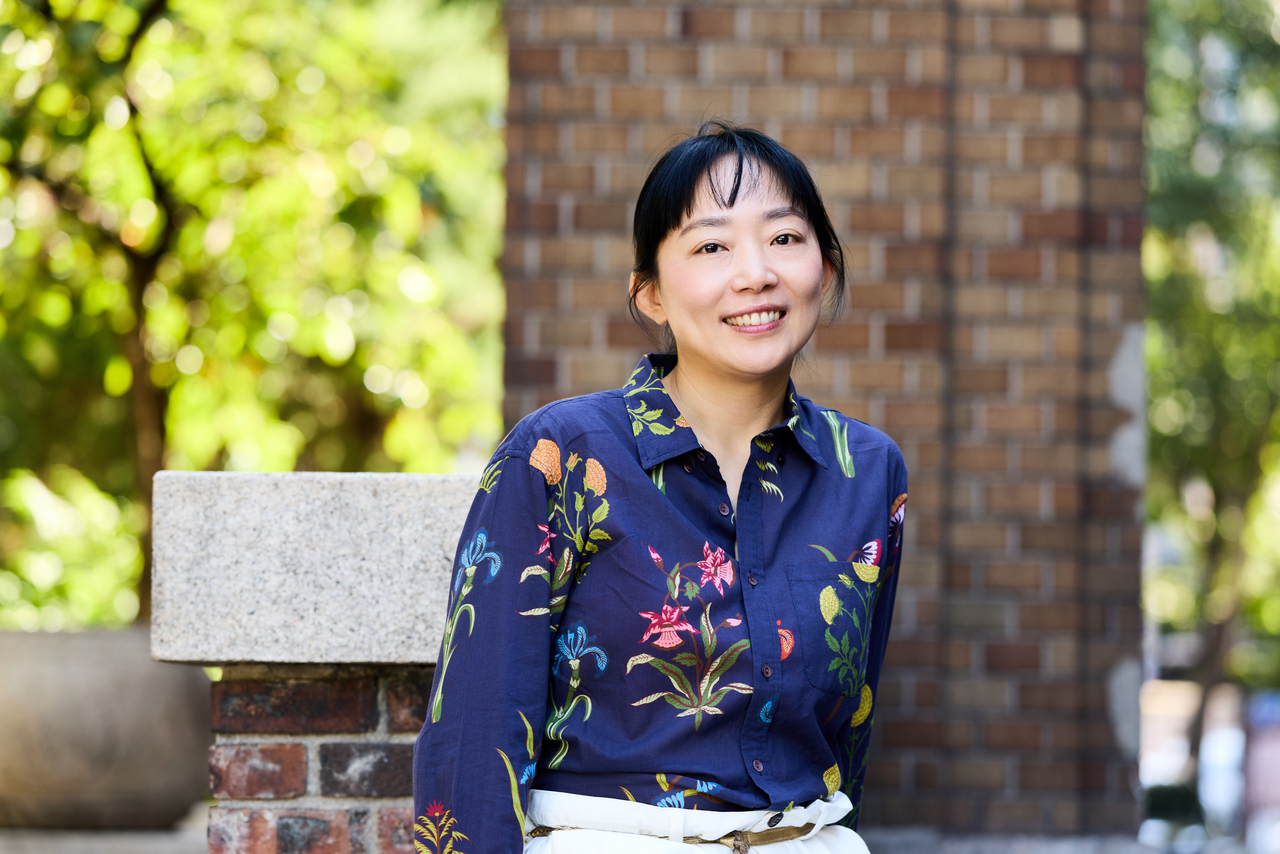
For theater director Lee Jin-yeob, the stage is not a place where people simply sit and watch a performance. It is a place where strangers can meet.
“What I want audiences to experience through my performances is the joy of being together,” Lee said in a group interview in Seoul on Tuesday.
Her new participatory work, “Challa,” will be performed Oct. 17-18 at the National Theater of Korea as part of the Seoul Performing Arts Festival. The performance invites around 200 audience members onto the stage, where they will create drawings and communicate with one another without words.
Lee describes the work as an experience in which “play and meditation coexist.”
“It is a work where you can let go of your thoughts and focus on the present moment by following the traces in the sand as they are created and disappear.”
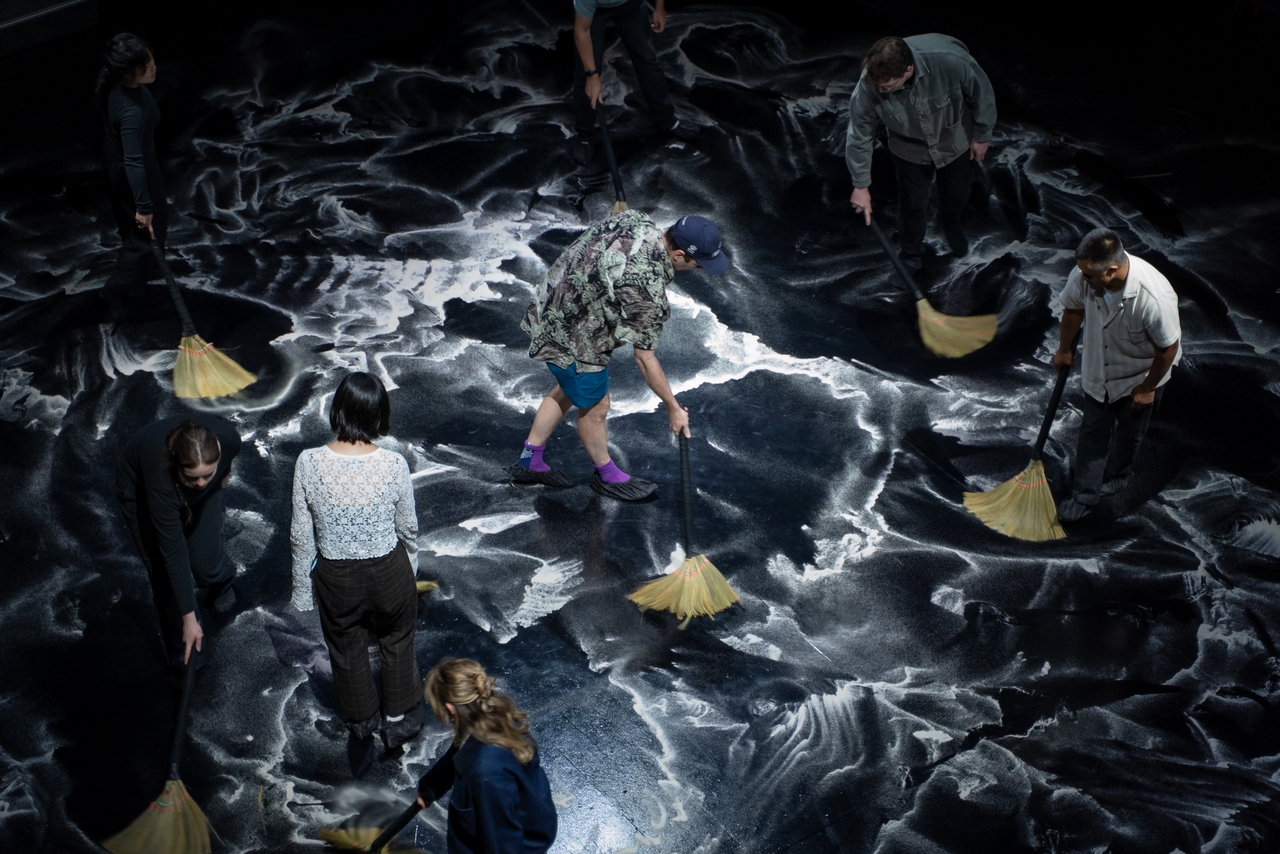
At first, the participants will follow instructions from two performers to make simple drawings in the sand. They will then be encouraged to move more freely, using brooms and other tools to create their own images. The drawings will continuously appear, disappear and overlap. One person’s traces meet those left by another, merging into new forms and eventually vanishing.
The work grew out of Lee’s encounter with Danish visual artist Helle Hove, who is known for her sand-based art and is joining the project as co-director. For more than a decade, Hove has created performances in which she draws with sand on black stones, exploring the finite nature of life and the importance of being present. Lee saw an opportunity to expand the idea.
“Because the sand drawings keep disappearing, it was important to focus on the moment,” Lee said. “When I heard that story, the word ‘challa’ (meaning a fleeting moment) came to mind.”
The fleeting nature of the drawings is central to the performance. Nothing remains permanently on the stage, and participants cannot control how their marks will change once they encounter someone else’s.
The uncertainty is also what allows strangers to communicate.
“Compared with other unfamiliar places, I think it is easier to do things together in a theater,” Lee said. “I hope the audience can let down their guard and feel, ‘So this is what it means to be together.’”
The idea of making audiences part of the work has been central to Lee’s artistic practice.
As the head of the performance-making collective Elephants Laugh, she has developed works that explore audience participation, place and human relationships, connecting performance with everyday life.
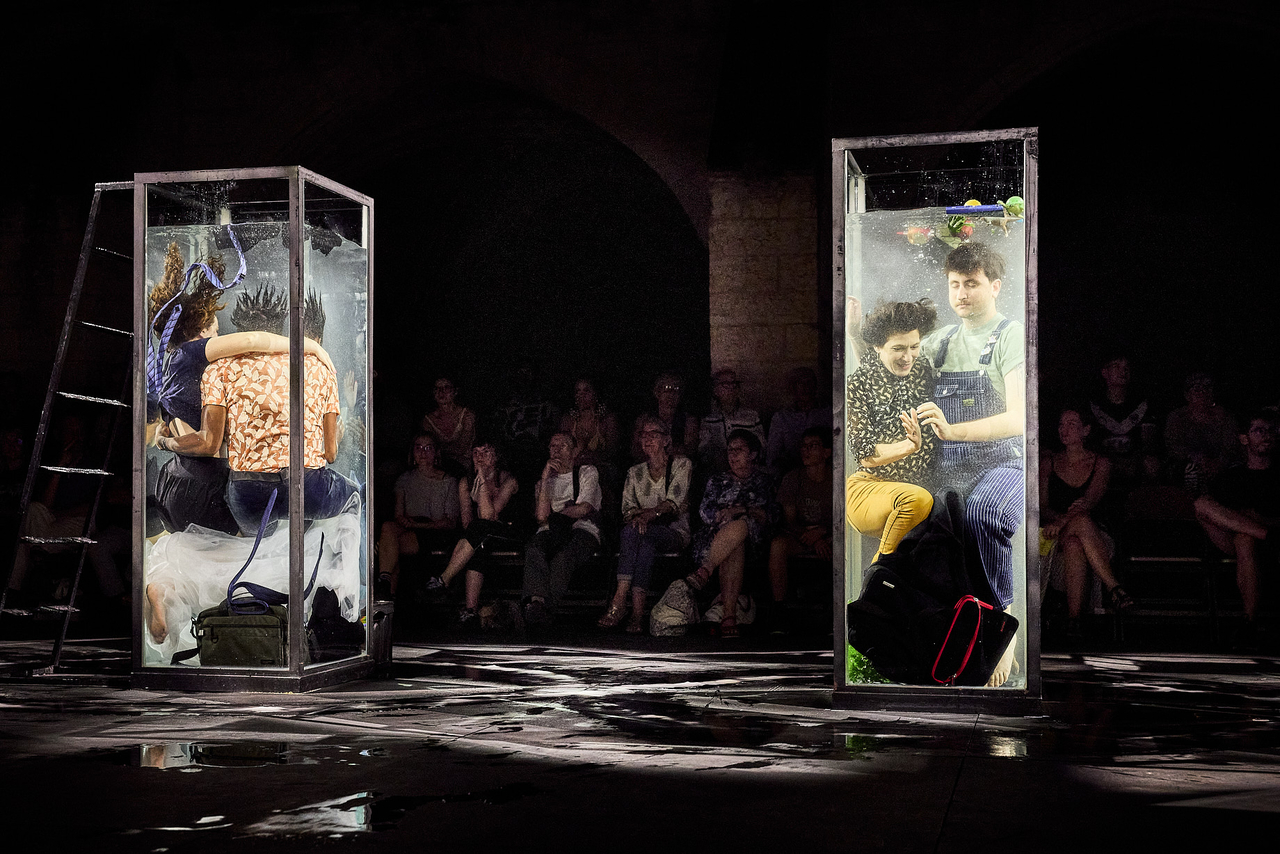
Her acclaimed work “Muljil,” which draws on the lives of haenyeo, or female divers on Korea’s Jeju Island, places audiences around and inside a water tank to explore life, death and the sensation of crossing boundaries.
The production was invited to the Avignon Festival in France in July and is scheduled to tour internationally for the next two to three years.
“It was striking to see audience members ranging from 5-year-olds to people in their 90s completely focused on the performance,” she said. “I had thought the subject matter was very Korean, but I realized that it could reach people regardless of their nationality.”
Lee acknowledges that not everyone is comfortable with strangers.
“Some people feel uncomfortable with the idea of connecting with strangers,” she said. “But there are also people whose minds change after going through a performance. I think that is a reflection of our society, and I wanted to try to create connections between audience members.”
hwangdh@heraldcorp.com

![[Graphic News] Seoul rises to 7th in global financial hub ranking](https://wimg.heraldcorp.com/news/cms/2026/10/15/news-p.v1.20261015.d4dd881eab584b4e8ce6ec52a672b278_T1.gif?type=h&h=800)