Former US State Department nuclear affairs official says Trump-Kim talks should be backed by diplomats, military experts and scientists
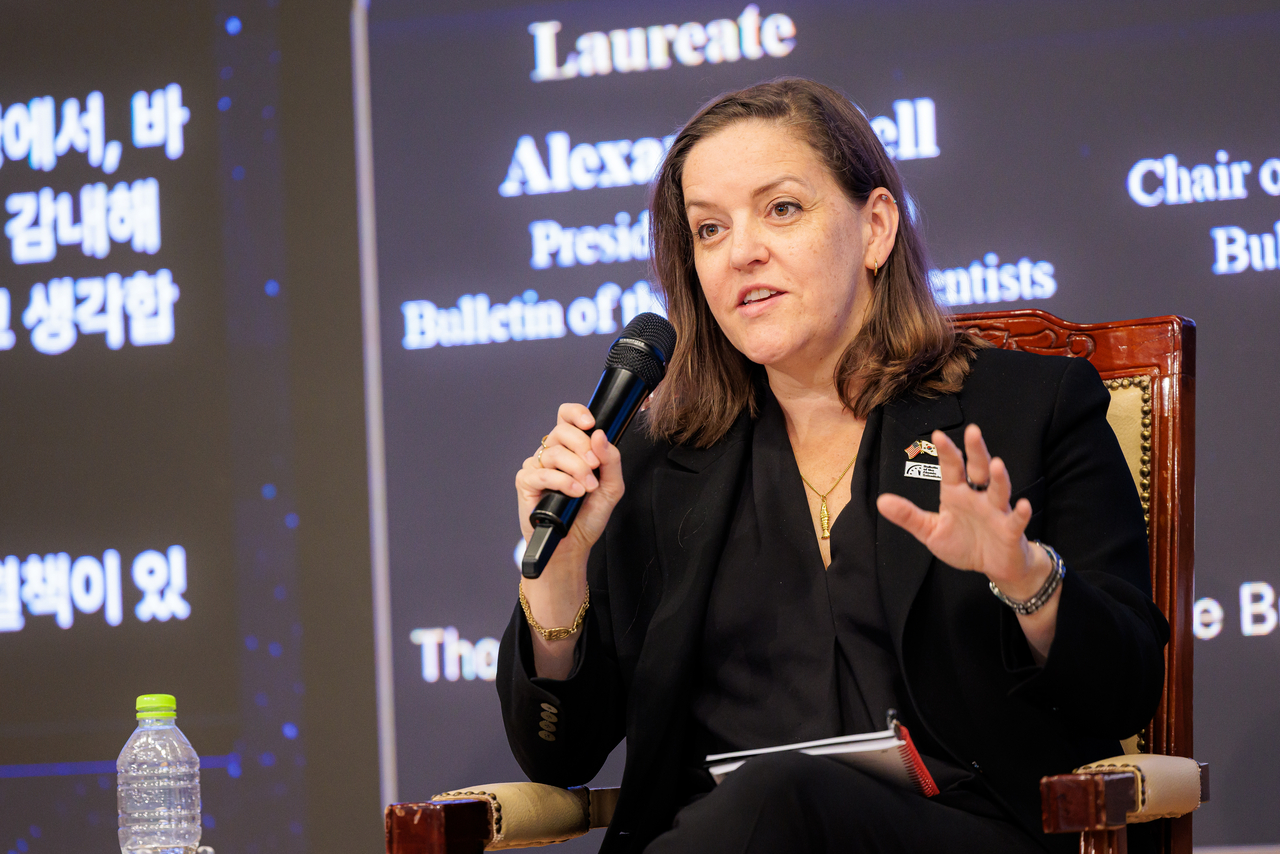
North Korea’s nuclear program has become “a major open wound” in the global nonproliferation system that the international community has neglected for far too long, the head of the Bulletin of the Atomic Scientists said in Seoul on Monday.
Alexandra Bell, president and CEO of the US-based organization behind the Doomsday Clock, said Pyongyang’s nuclear threat remains a major unresolved challenge to the international nuclear order and called for renewed urgency in addressing it.
Founded in 1945 by scientists who had worked on the Manhattan Project, the Bulletin counted Albert Einstein and J. Robert Oppenheimer among its early sponsors. It now works to raise awareness of human-made existential threats, including nuclear weapons, climate change and disruptive technologies.
“I think we’ve gone far too long assuming that there’s a solution that will just happen sometime in the future,” Bell said during a press meeting in Seoul. “It’s almost like we just forgot about that as a major open wound in the most important nuclear treaty on this Earth.”
Bell was referring to the Nuclear Non-Proliferation Treaty, the cornerstone of the international system intended to prevent the spread of nuclear weapons. North Korea announced its withdrawal from the treaty in 2003.
Bell, a former US State Department official who worked on arms control and strategic stability, said the international community must also give greater weight to the security threat facing South Koreans as North Korea continues to advance its nuclear capabilities.
Trump-Kim talks should be backed by experts: Bell
She said the technical tools and scientific expertise needed to verify and monitor a potential agreement with Pyongyang already exist. Resolving the issue, however, would require sustained diplomacy rather than a single meeting between national leaders.
Lessons from previous negotiations with North Korea, as well as the 2015 Iran nuclear deal, could help inform future efforts to address Pyongyang’s nuclear program, she added.
Asked about the possibility of renewed talks between US President Donald Trump and North Korean leader Kim Jong-un, Bell recalled being surprised when Trump agreed during his first term to meet Kim without first securing commitments from Pyongyang.
The meetings ultimately produced little concrete progress, but Bell said they nonetheless changed the status quo. Should dialogue resume, she said, experts in diplomacy, the military and nuclear science must be empowered to help shape the negotiations.
“I hope no matter what happens, we will go about this in the pragmatic and patient way that a complex diplomatic structure like this deserves,” she said.
“Whoever gets to sign an agreement and potentially win a peace prize of another kind, they won’t get there if they don’t empower the experts, the diplomats, the military experts and the scientists in that process,” she added.
US must ‘be careful’ what it signals amid Seoul’s nuclear debate: Bell
When asked about growing calls in South Korea for the country to develop its own nuclear capabilities, Bell said the US and South Korea should return to the basic principles behind the international nonproliferation regime and consider why those structures were created and why they remain worth preserving.
She also called for "real conversations" about "what may be driving some of the conversations about proliferation."
Bell said the US has benefited from maintaining close partnerships with its allies, arguing that the alliance system has contributed to broader stability.
"First, I would state that the United States is stronger and safer because of our alliance system," Bell said. "I think it is important for the United States to maintain those commitments, not only to make regions around the world safer, but to make the United States safer."
She added that Washington must "be very careful" about how it talks about its alliances so as not to give any country reason to believe the US would fail to honor its commitments.
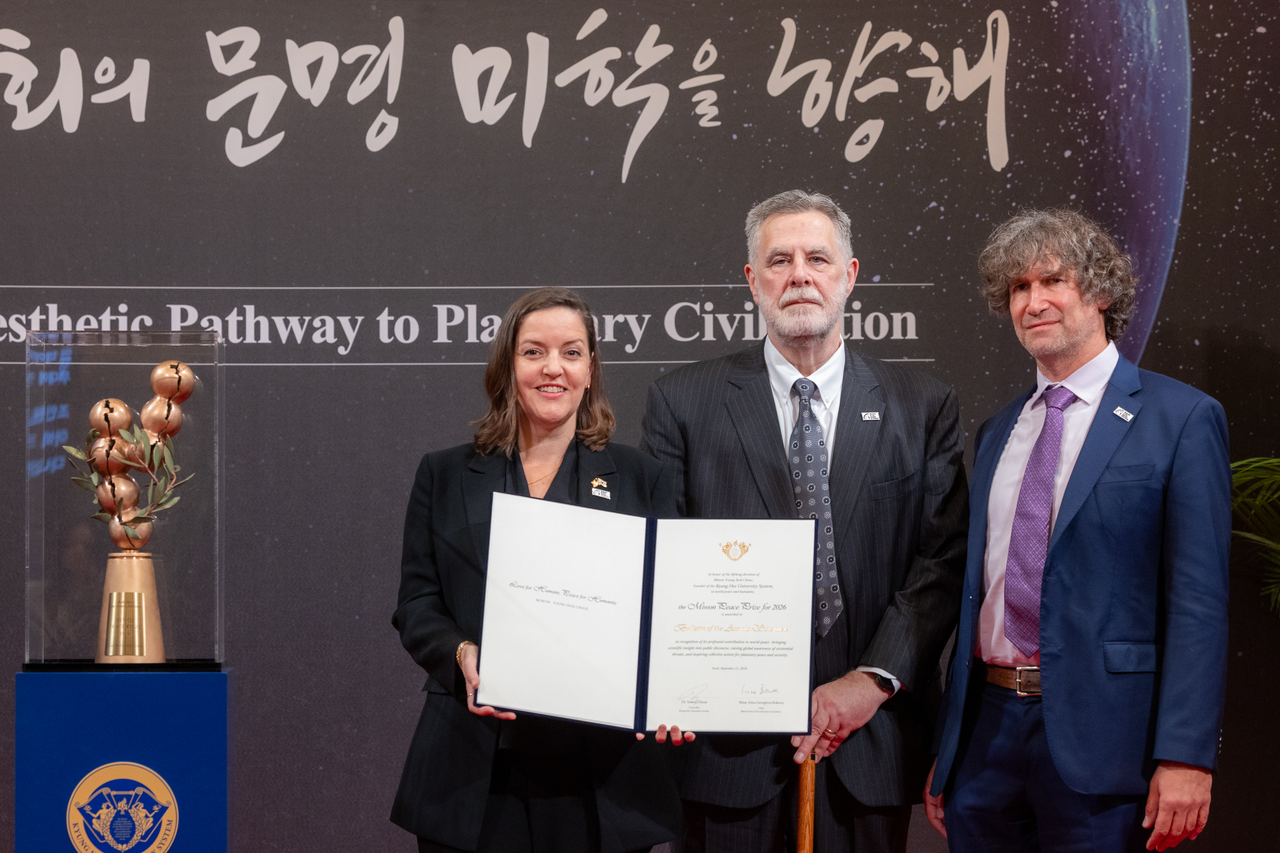
Bell spoke on the sidelines of the 2026 Peace BAR Festival and the second Miwon Peace Prize ceremony at Kyung Hee University in Seoul.
The Bulletin was selected as this year’s Miwon Peace Prize recipient in recognition of more than eight decades of work highlighting existential threats, particularly nuclear weapons, and its operation of the Doomsday Clock, which represents the organization’s assessment of how close humanity is to global catastrophe.
Established in 2024 in honor of Kyung Hee University founder Cho Young-sik’s peace philosophy and activism, the prize is awarded every two years to an individual or organization that has contributed to global peace and the future of civilization.
seungku99@heraldcorp.com