Lee trades his usual levity for contrition, taking blame and vowing to govern with greater care
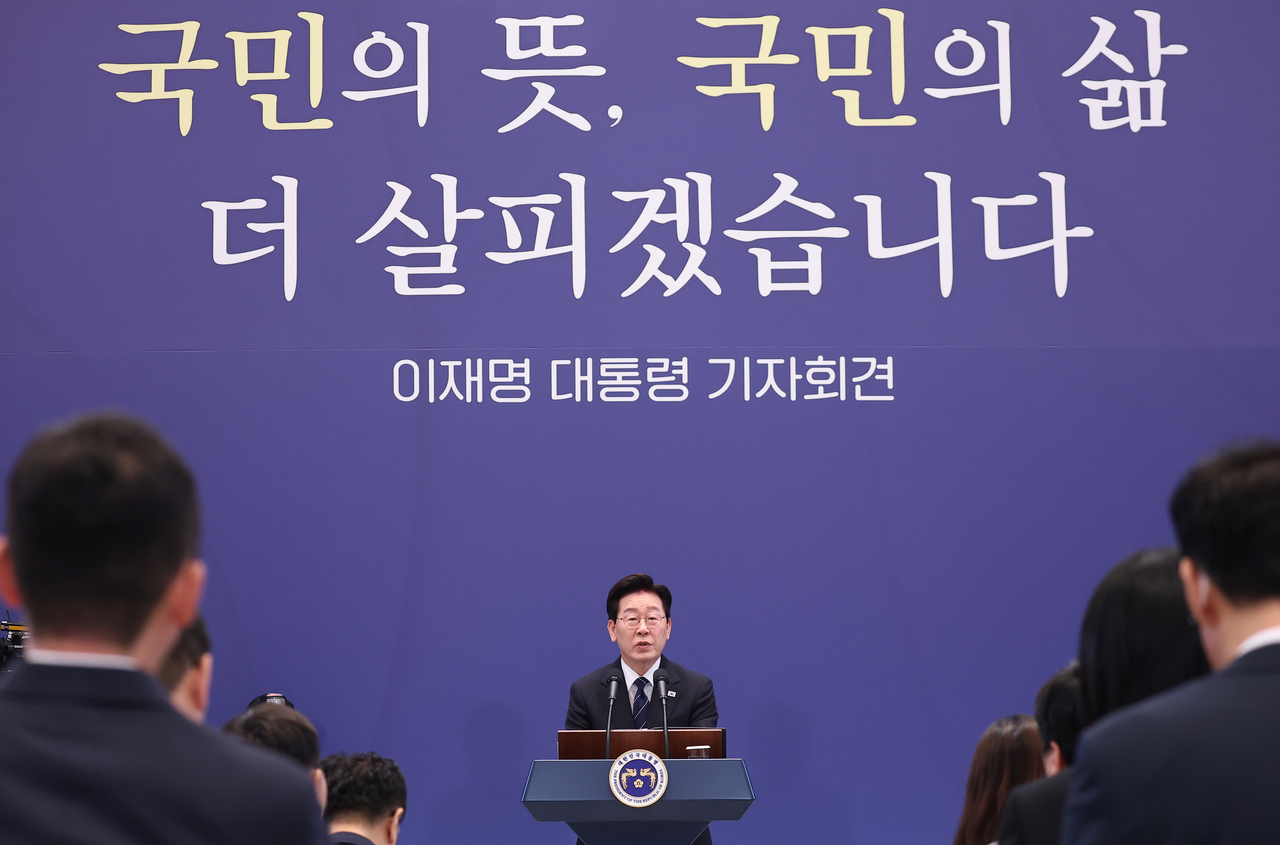
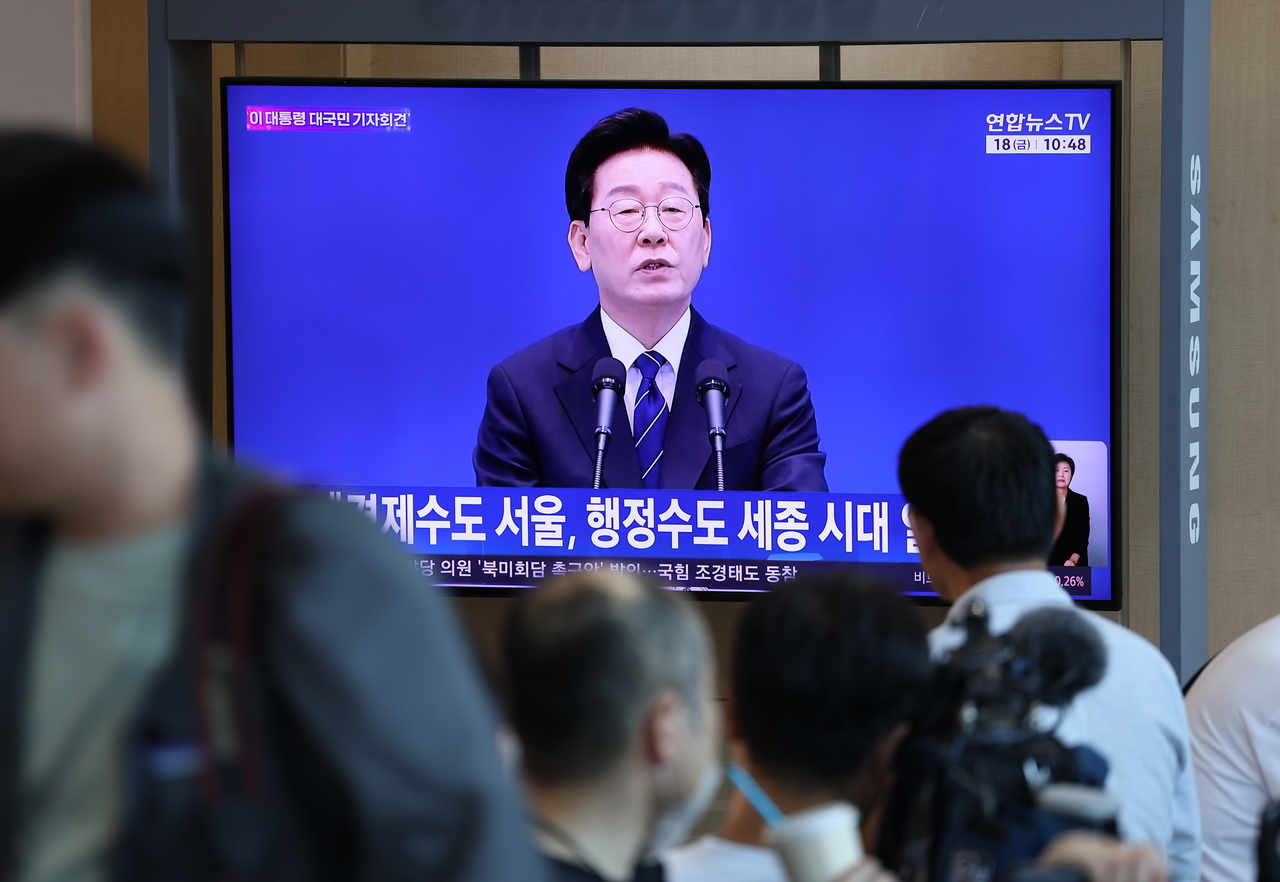
President Lee Jae Myung vowed Friday to see his reform agenda through despite falling public support, pairing a strikingly contrite assessment of his presidency with an insistence that the direction of his government would not change.
Across a wide-ranging news conference, Lee returned repeatedly to the same distinction. Lee acknowledged shortcomings in the way he had pursued reform polices while defending the substance of an agenda spanning prosecution reform, constitutional change, housing and broader institutional reform.
“The people are always right,” Lee said, acknowledging that he had failed to sufficiently empathize with the pain and alienation felt by those affected by his government’s reform efforts.
But his answer to public disapproval of some of his plans was not to retreat from them.
“My government and I fell short in the process and the methods, but I can say firmly that the direction we are heading has not changed,” Lee said.
That tension — contrition over how he had governed, but resolve over what he was trying to change — became the central thread of an appearance that came at a markedly different moment from most of Lee’s previous six news conferences.
After three days of back-to-back diplomatic engagements to host five Central Asian leaders, Lee appeared before the public not to mark an anniversary or another political milestone, nor to recap an overseas trip, but largely to address the mounting pressures facing his presidency.
The news conference even began 30 minutes later than scheduled, as Lee continued to refine his message at the last minute, according to the presidential office, which said he approached the appearance with particular “responsibility and gravity.”
The restrained mood carried through the roughly 100-minute appearance. Lee remained standing throughout, with reporters seated closer than at previous events, and largely set aside the jokes and lengthy asides that have often marked his exchanges with the press.
Lee takes blame
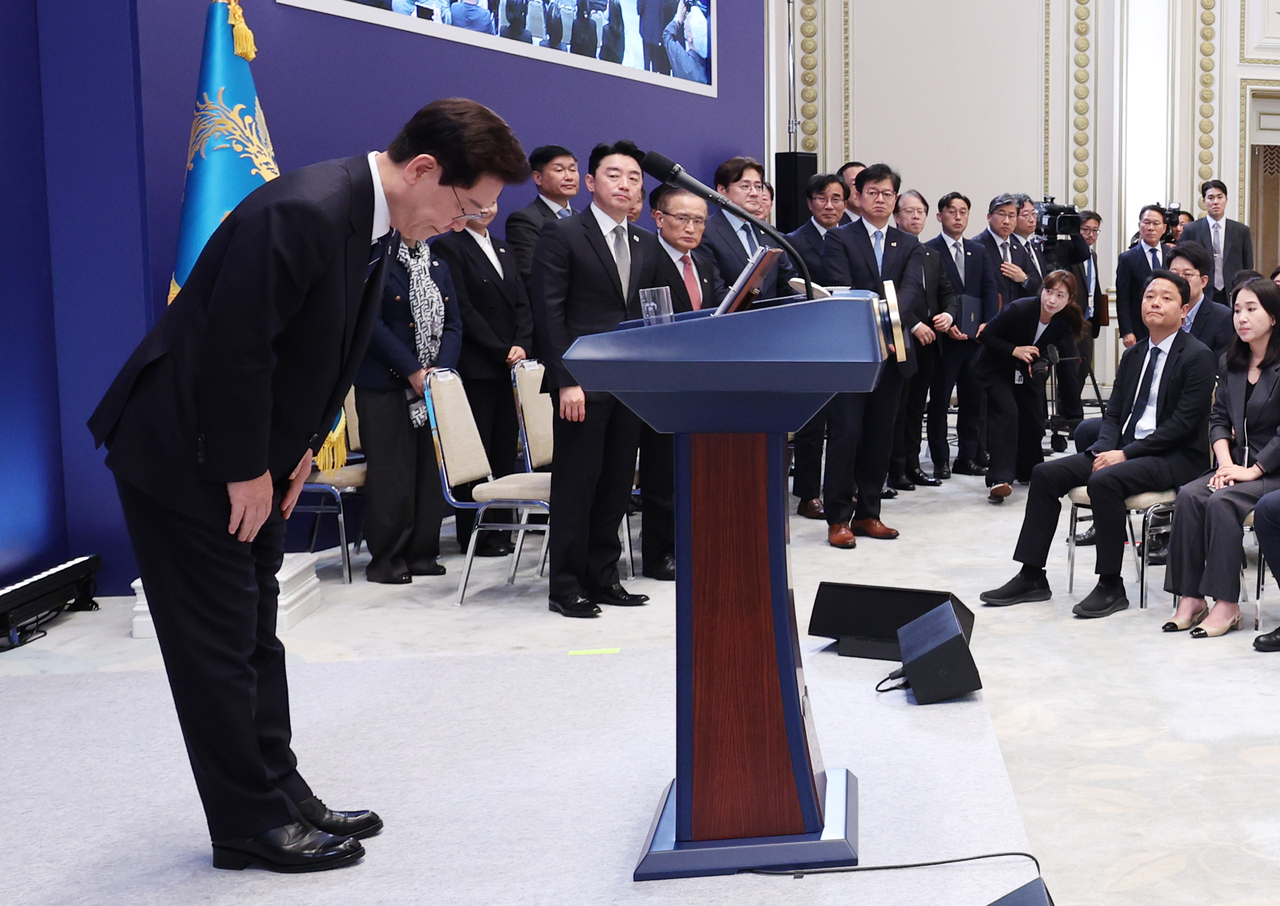
Lee opened on an apologetic note.
“I greet you with a sense of apology,” he said.
Lee said he had been caught off guard by “a sudden wave of public disappointment and concern” following the June 3 local elections.
“After much reflection and soul-searching, the conclusion I reached was that the people are always right,” Lee said. “It was all because of my shortcomings.”
The vocabulary of his opening statement underscored that emphasis.
The word “people” appeared 63 times, more than twice as often as “reform,” which appeared 29 times. “President” appeared 16 times, while “life” and “together” each appeared 12 times. “Responsibility” and “unity” appeared 10 times each.
The remarks came as Lee faced the lowest approval rating of his presidency.
A Gallup Korea survey conducted Sept. 15-17 and released shortly before the news conference found that 37 percent of respondents approved of his job performance, down one percentage point from the previous week, while 56 percent disapproved.
Asked directly about the decline, Lee said he had initially wondered whether particular controversies were responsible before arriving at a broader judgment about his own performance.
“I came to think that it was because of my own shortcomings. There must have been many things I fell short on. I lacked consideration, I lacked attentiveness, and I lacked communication,” Lee said.
“There were also times, I think, when I tried to turn away from the pain of those harmed by my policies and from their resistance, even though that resistance was only natural, asking, ‘Why are they resisting like that?’ In the end, I came to wonder whether I had lacked sufficient respect for the people.”
‘Reform is harder than revolution’
Still, Lee rejected the idea that the political backlash meant the reforms themselves were misguided.
“They say reform is harder than revolution,” Lee said.
Lee labelled organized resistance from those whose interests are affected by change as being “as strong as concrete,” while support from those whose lives stand to improve can be scattered “like grains of sand.”
“The authority entrusted to elected officials is the power that enables them to overcome resistance,” he said. “Turning grains of sand into concrete, overcoming resistance and creating a new order, and that is my capability and responsibility as president.”
The clearest test of that argument was prosecution reform, one of the Lee administration’s signature institutional projects and an issue on which some of Lee’s supporters have demanded a faster and more sweeping overhaul.
Lee pledged to “responsibly complete irreversible prosecution reform,” reiterating plans to strip prosecutors of investigative authority and separate the powers of investigation and indictment, despite polling suggesting a majority of the public want some investigative powers to remain.
Even as he defended the overhaul, Lee drew a line around a related controversy touching more directly on his own legal affairs.
The ruling Democratic Party of Korea has been pursuing a special counsel investigation into allegations that prosecutors under the previous administration engaged in politically motivated or manipulated investigations and indictments.
Lee said the allegations should be investigated independently, noting that placing the inquiry in the hands of agencies under his authority could itself raise questions about impartiality.
Lee urged the National Assembly to move swiftly to appoint an independent special counsel to investigate the alleged abuses “fairly and transparently.”
At the same time, Lee called on lawmakers to remove provisions allowing the special counsel to take over or drop cases in which indictments had already been filed.
The provisions had become politically contentious because they could extend to pending criminal cases against Lee himself, fueling a broader debate over whether charges against him could ultimately be dropped.
“Please delete the provisions concerning the transfer or disposition of cases that have already been indicted and focus solely on establishing the truth,” Lee said. “I ask that steps be taken so that an unnecessary controversy over dropping prosecutions does not arise.”
Any subsequent action on those cases, he said, should be handled according to “law, principle and common sense.”
Lee drew another explicit boundary around a constitutional revision.
He reaffirmed his longstanding position that South Korea’s 1987 Constitution should be revised, including by introducing a system under which future presidents could serve consecutive terms.
But he categorically rejected suggestions that such a change could be intended to extend his own presidency.
“I have absolutely no intention of seeking another term,” Lee said.
The same resolve was evident on housing, one of the issues weighing most heavily on his public standing.
“It is difficult. Everyone has tried and failed,” Lee said. “But I can say this clearly: This government will do it.”
Underlying those answers was Lee’s insistence that his administration should ultimately be judged by results rather than be swayed by short-term political backlash.
“Ultimately, I believe a government’s success is judged by the people on the final day of its term, based on tangible results,” Lee said.
As the news conference drew to a close, however, Lee returned once more to what he said had been missing in the pursuit of those results.
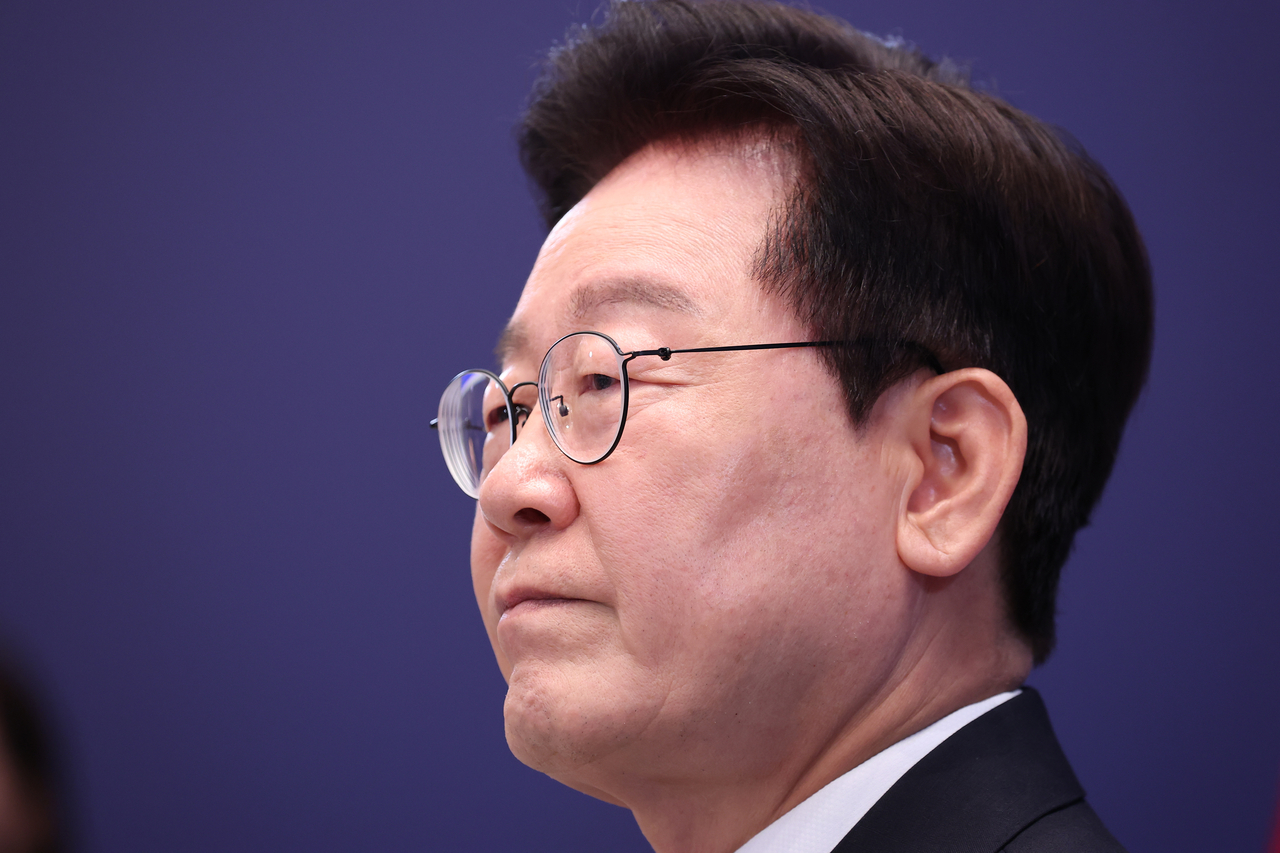
With his voice trembling, he again acknowledged his own shortcomings.
“In any case, my fellow citizens, I have many shortcomings. By focusing on the work, and focusing too much on results, I have now painfully realized that my failure to be attentive in the process was a very serious problem,” Lee said.
Lee once again pledged to "communicate more, listen more and show more respect.”
“But I will never give up on what I originally set out to do. I will keep working hard to carry it forward.”
dagyumji@heraldcorp.com