When someone leads a blessed life, Koreans often say that person must have accumulated much virtue in a previous life.
From Goguryo through Silla, Baekje and Goryeo, Buddhism stood at the center of Korean spiritual life. Royal and aristocratic families sent children into monasteries, while monks served not only as religious figures but also as scholars and social leaders.
Yet Buddhist temples in the northern half of the Korean Peninsula have endured repeated trauma over the past five centuries. The transition from Goryeo to Joseon brought systematic suppression of Buddhism, followed by Japanese colonial rule, the Korean War and division of the peninsula.
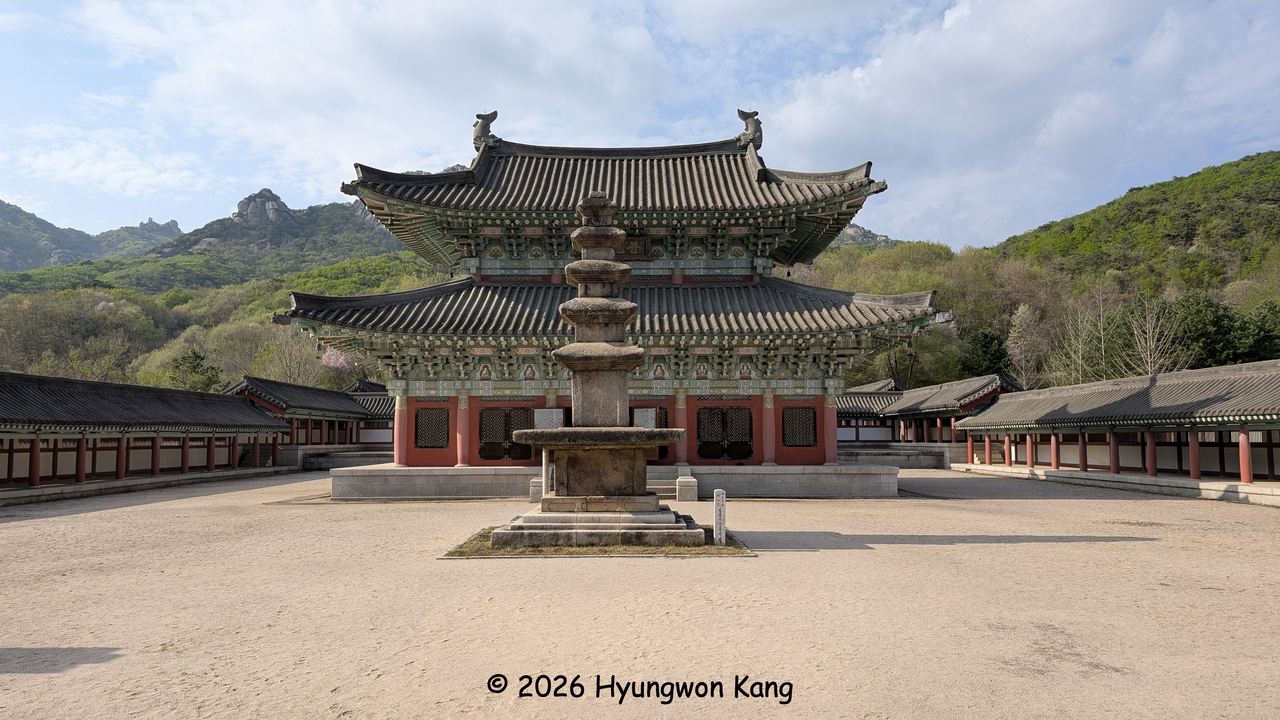
Buddhist halls burned, dynasties disappeared and borders were redrawn, yet cultural heritage survived and continues to bear witness to history.
The Joseon Kingdom stripped temples of land and property and restricted monks from entering the capital, pushing Buddhism, effectively a state religion under Goryeo, to the margins of the Neo-Confucian order.
King Sejong the Great also pursued strong anti-Buddhist policies during the first 28 years of his reign. But after Queen Soheon’s passing in 1446, he again turned toward Buddhism. The Worin Cheongang Jigok, published in 1447 in the newly created Hunminjeongeum script using metal movable type, presented the life and teachings of Shakyamuni Buddha in the new Korean writing system.
The Korean War was far more destructive. Bombing and combat destroyed countless temples in the North.
Last April, at Pohyonsa in Myohyangsan, I saw the bell from Yujomsa, a temple on Kumgangsan, one of the DPRK’s three great bronze bells.
The surviving bell was recast in 1729 from an earlier bell first made in 1469. It stands about 2.1 meters tall and weighs 7.2 tons.
Yujomsa was destroyed during the Korean War. According to a historical guide at Pohyonsa, North Korea's founder Kim Il Sung sent a 25-member special forces unit to bury and conceal the massive bell so that it would survive further bombing. It remained underground until 1985, when it was excavated and moved to Pohyonsa for safekeeping.
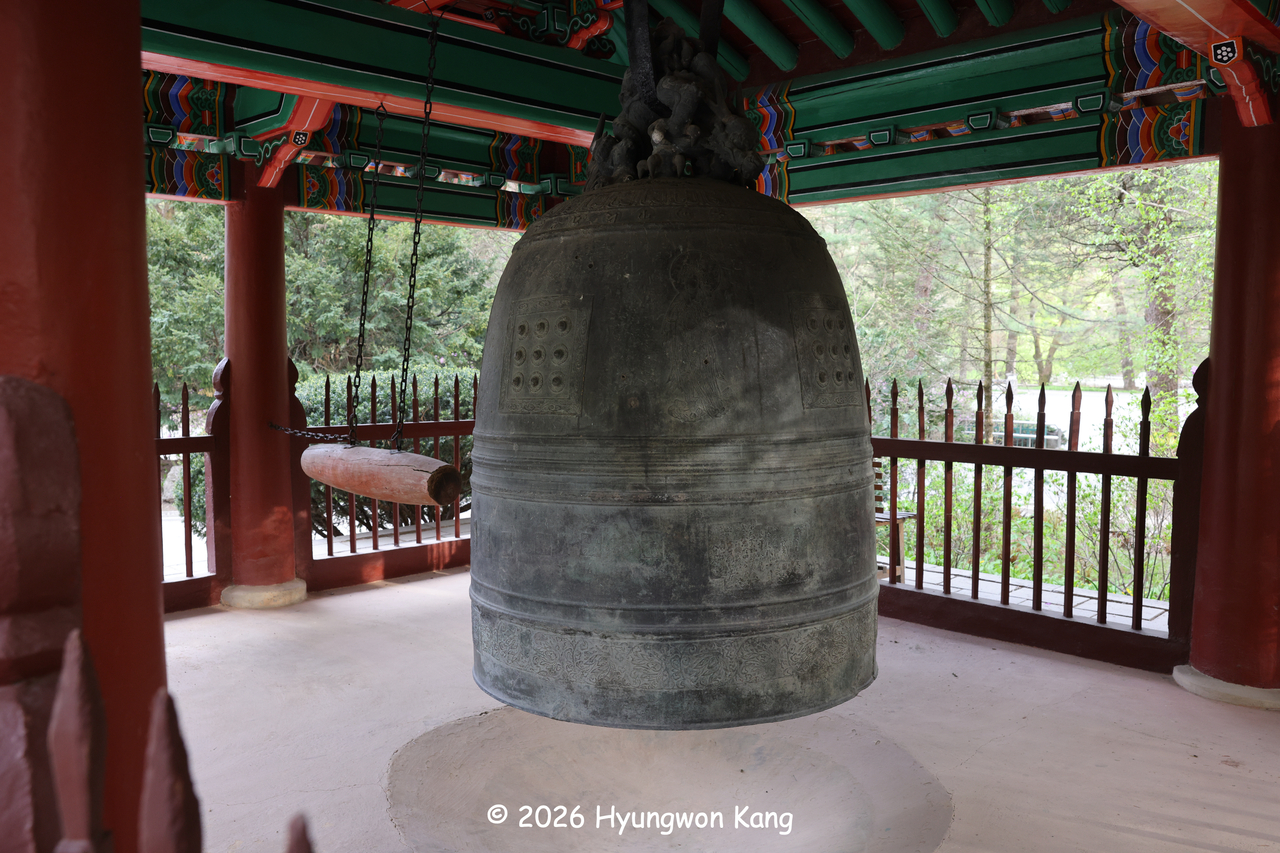
To hide such a massive bronze bell in the ground amid the chaos of war shows a powerful determination to preserve cultural heritage.
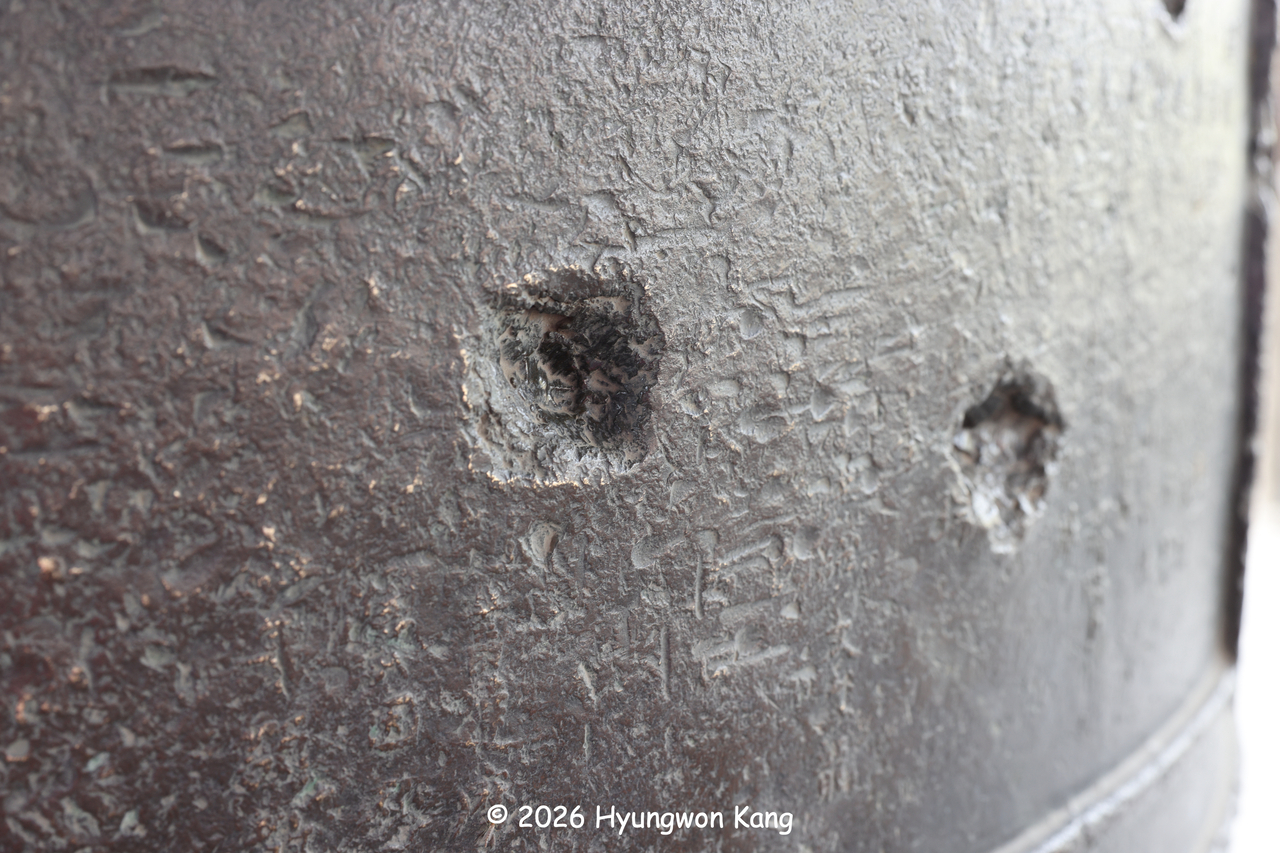
The great Bronze Bell of Yeonboksa that I saw in Kaesong was equally remarkable. More than three meters tall and weighing 14 tons, it bears the inscription “Long Live the Emperor." Bullet scars from the Korean War remain on its surface, and the eight trigrams of the Juyeok, or I Ching, are cast around the bell.
“On the surface of a seven-century-old bell, I saw inscriptions from Goryeo alongside bullet scars from a 20th-century war.”
In a single object, the language of a Goryeo age that used its own era names and honored an emperor stands beside the wounds of modern warfare.
Before liberation in 1945, more than 400 Buddhist temples were said to have existed in the northern half of Korea. Today, roughly 60 to 64 are believed to have been restored or preserved.
But the socialist system of North Korea was no friend of Buddhism.
Many years ago, a North Korean official told me:
“We were taught that religion is the opium of the mind.”
Buddhism in the South followed a different path. The Jogye, Taego, Cheontae, Jingak and other orders coexist while maintaining different doctrines and traditions.
Behind that diversity lies the longstanding Korean Buddhist spirit of hoetong — not rejecting competing ideas, but seeking to harmonize them at a higher level. It is often expressed as won-yung hoetong.
Just as many lotus blossoms make a pond more beautiful, Korean Buddhism has embraced diverse traditions.
Among the great thinkers produced by Korean Buddhism, the Venerable Tanheo, 1913–1983, cannot be overlooked. He interpreted Buddhism, Confucianism, the Juyeok and Daoist thought within a broad, integrative framework.
Tanheo regarded the 60 years from 1984 to 2044 as a period of immense civilizational transformation and predicted that Korea would emerge as an important center of the world’s spiritual culture.
I spent my professional career in mainstream English-language media in the United States. Since leaving daily journalism, I have continued my Visual History of Korea project, documenting Korean identity and cultural heritage for the English-speaking world.
As global interest in Korean culture expands, I sometimes consider this work part of the broader Korean spiritual and cultural influence that Ven. Tanheo envisioned.
Time will judge whether his predictions were right or wrong. What interests me more is the breadth of his thinking — his ability to read Buddhism, Confucianism, the Juyeok and Eastern philosophy together within a larger framework.
That, too, reflects the spirit of hoetong.
I visited five temples in North Korea: Sungbulsa, Ryongthongsa, Anhwa-sa, Kwanumsa and Kwangbopsa.
The monks I encountered had faces and arms deeply tanned from maintaining temple grounds, cutting hedges, pulling weeds and caring for buildings themselves. At large temples once associated with many monks, I usually saw only one or two.
I did not encounter a single Buddhist nun.
Yet the temples were not empty.
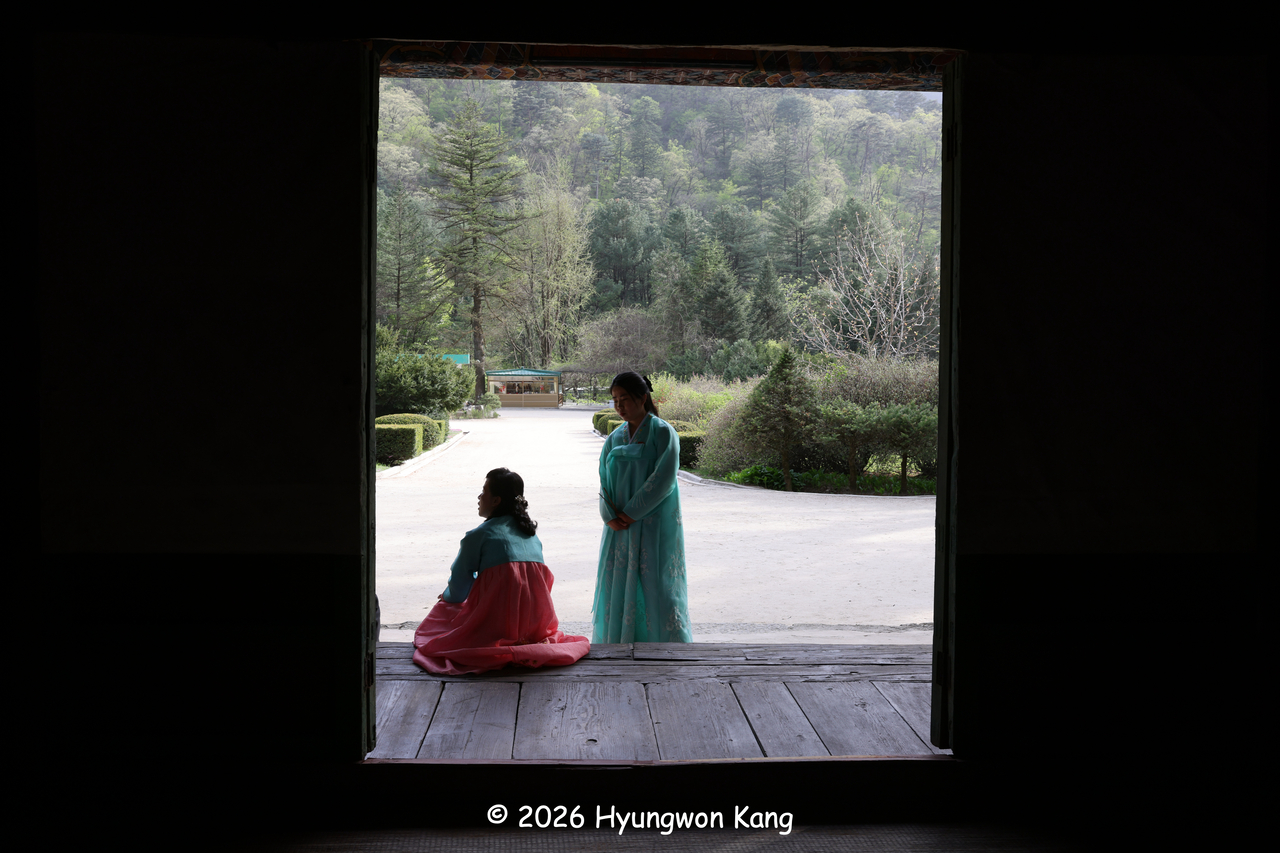
At every temple I visited, I saw ordinary visitors arriving. Some may have come to see cultural heritage, some for a walk, and some may have carried private wishes in their hearts.
There is an old Korean saying:
“You may know the depths of 10 gil of water, but you cannot know even one gil of the human heart.”
What beliefs or prayers brought those visitors to Buddhist temples in the North Korea, no one can truly know.
Perhaps only the Buddha knows.
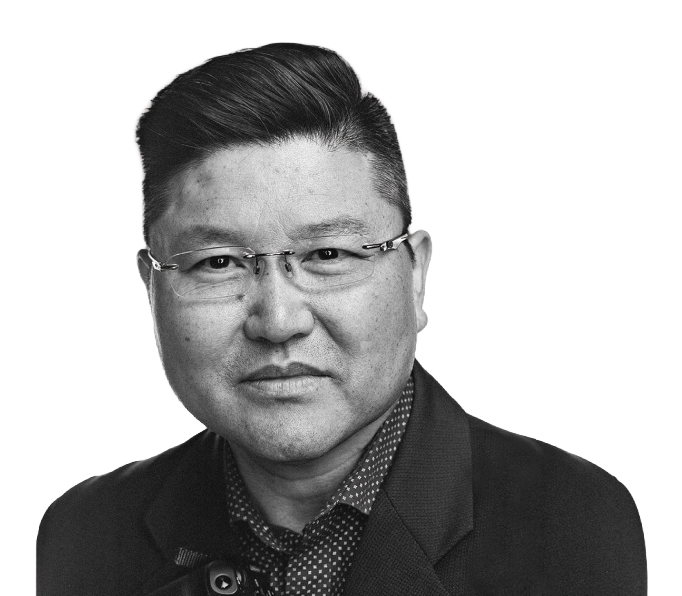
By Hyungwon Kang
Hyungwon Kang is a Korean American photojournalist, columnist, author, and two-time Pulitzer Prize winner. He reported from North Korea in 1995, 1997, and 2026. Kang is the author of Visual History of Korea and Seonbi Country Korea, Seeking Sagehood. His ongoing Visual History of Korea project documents Korean history and culture across the Korean Peninsula for global audiences. He currently teaches “Visual Literacy A to Z” at Dongguk University.
The views expressed in this article are the writer’s own. — Ed.
khnews@heraldcorp.com











