'Purgatory Funeral Cakes' creator Sanho wins Eisner Award with comic that makes mourning edible on the page
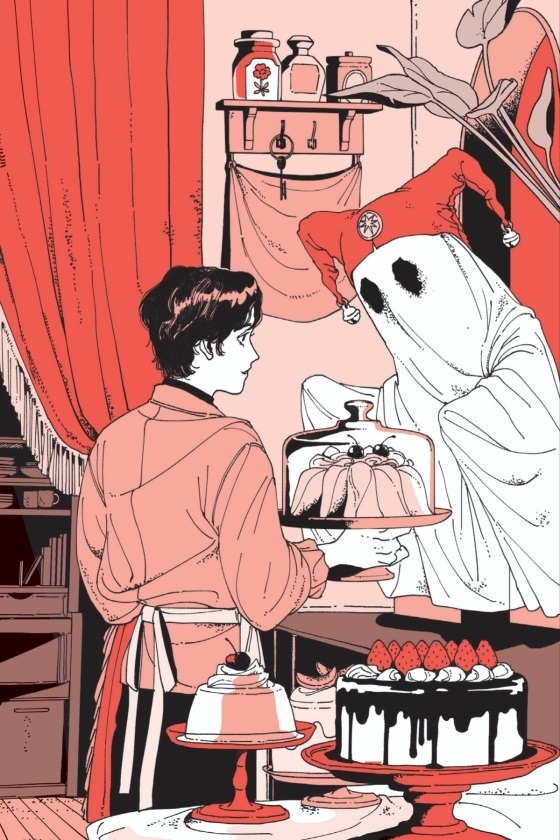
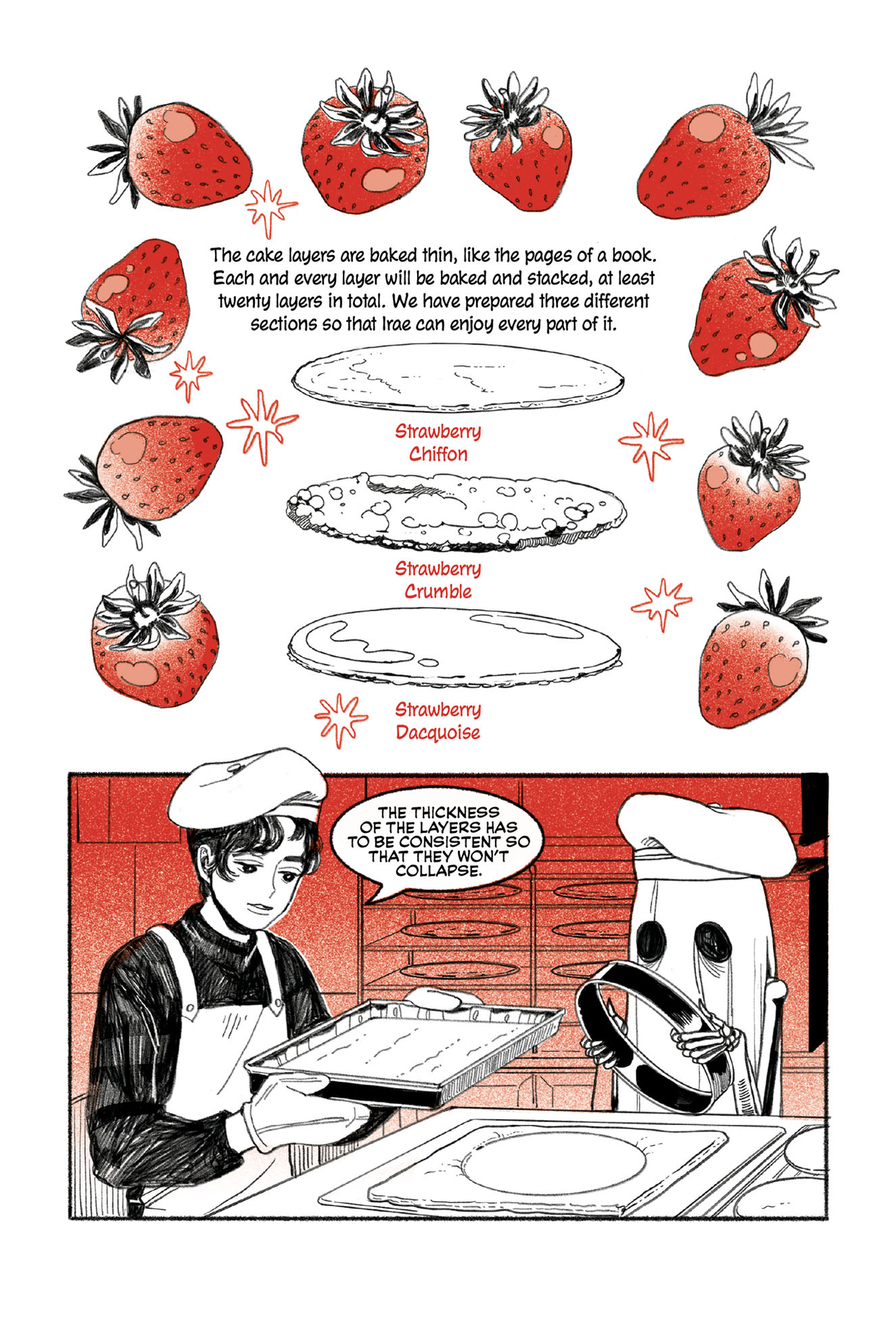
A cake begins with thin layers, baked like the pages of a book. Between them are cream and fresh strawberries. On each layer — or page — is the ending of a mystery novel Irae loved but never got to finish.
Then comes another unusual ingredient: memory. A cassette tape containing fragments of Irae's life is played through a "cakessette" player that infuses those memories into the cake.
When you take a bite, the taste of strawberries, along with the contents of the book, unfolds like an illusion.
This is no ordinary dessert. It is Margot's Mystery Novel Crepe Cake, made especially for Irae, who needs it for her 49-day journey across the plains of purgatory toward the Gate of Rebirth.
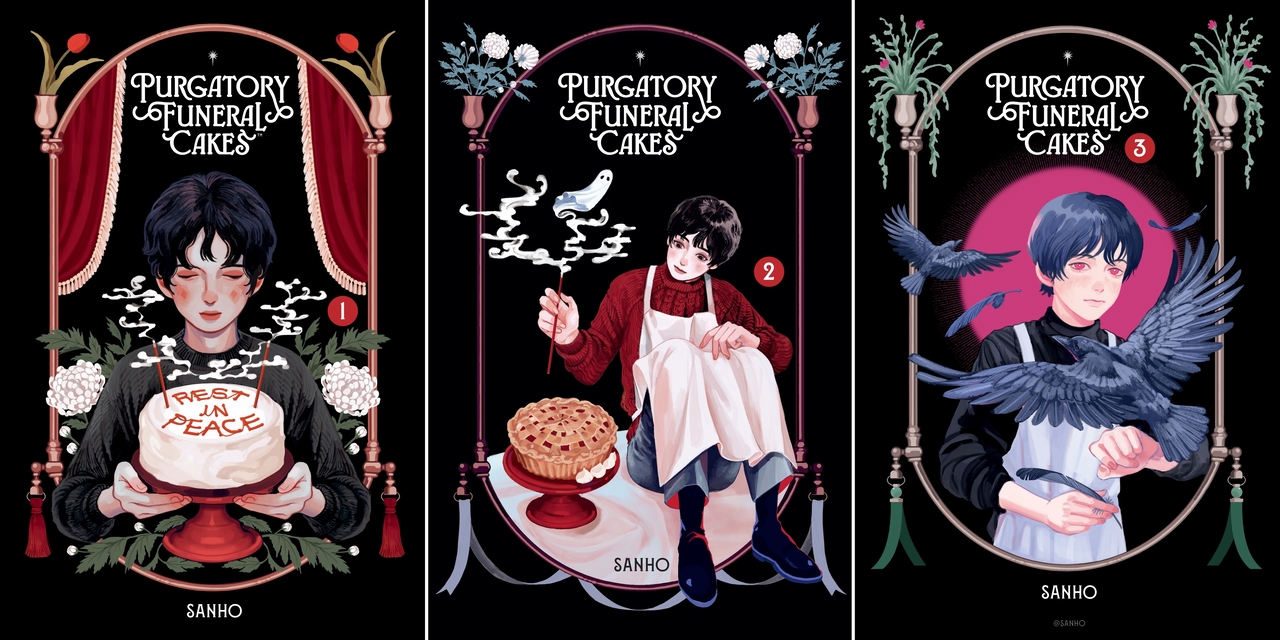
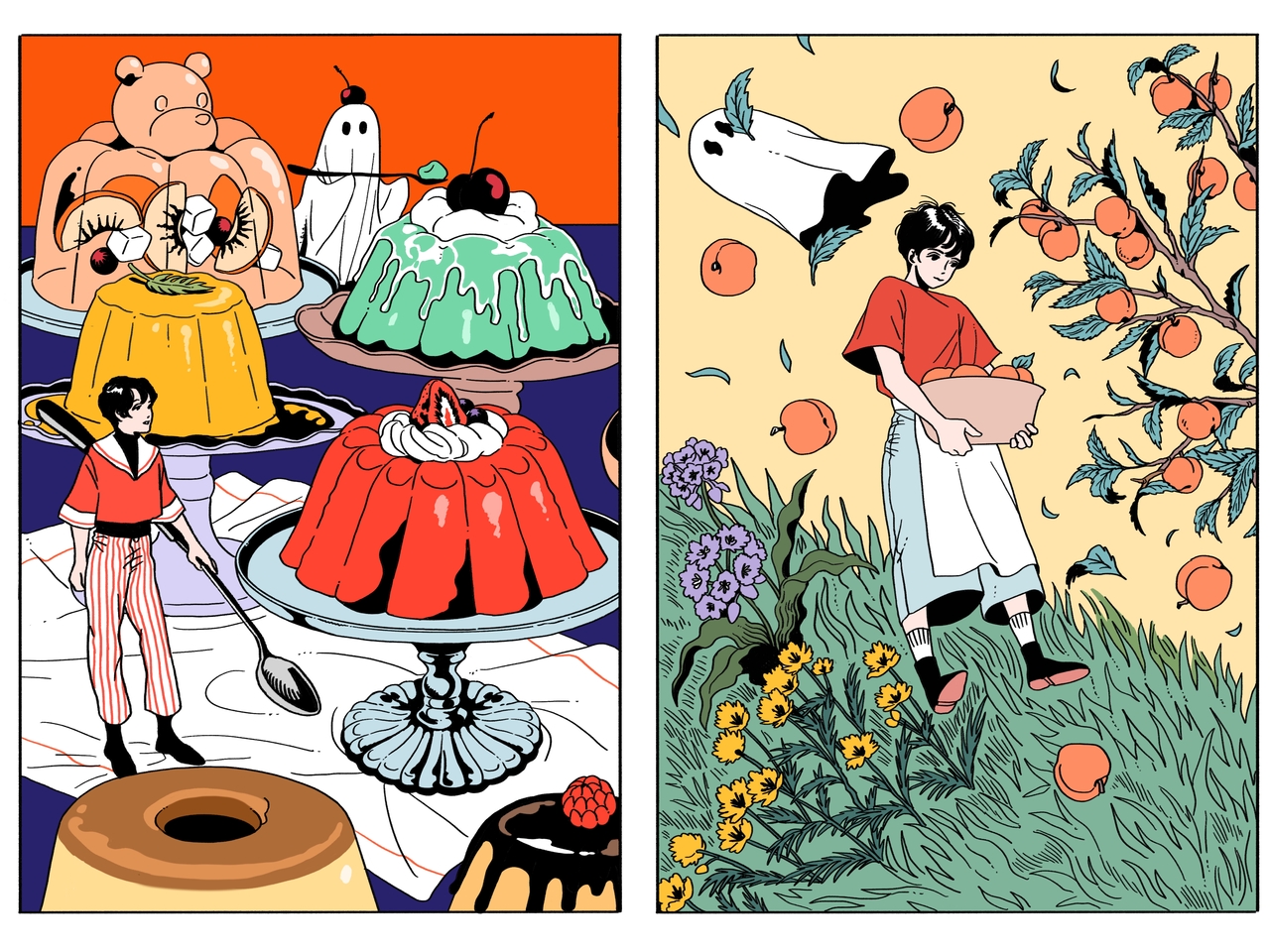
In "Purgatory Funeral Cakes," Sanho's three-volume debut comic, which became the first Korean work to win an Eisner Award, baker Margot and her ghostly assistant, Miro, make specialty cakes for the dearly departed.
Each cake is tailored to the deceased, with still-living loved ones sharing memories that have inspired its flavor, texture and design — creating a final, one-of-a-kind gift for the journey ahead.
What began as an independent publication in 2019 was picked up by Munhakdongne Publishing, won several awards in Korea and eventually traveled beyond, with editions now published in nine countries and territories, including the United States and France.
"It's amazing to see my comics cross languages and borders and reach places I've never even been," Sanho said in a recent interview with The Korea Herald.
"Above all, it was the readers who turned a writer's private monologue into a (well-received) book. I'm grateful to everyone who made that possible. There are many stories I wanted to tell in the third volume, and I hope readers will run all the way to Volume 3 without hesitation."
Cake for the dead
In Korea, where food is traditionally offered to the dead on ancestral memorial tables on days of remembrance, cake is an unusual offering. For Sanho, the idea began with a childhood memory.
When she was growing up in a rural home in Gimhae, South Gyeongsang Province, there were two unclaimed graves on the hill directly behind her house. They had no fences or gravestones, only mounds of earth. When her family moved in, she watched her parents pour soju over the graves as a simple ritual for the dead.
Years later, as the family prepared to move away, Sanho remembered the ritual. She was 8 at the time. She took a small piece of her birthday cake and left it on one of the graves.
"That memory stayed with me for a long time and became the beginning of 'Purgatory Funeral Cakes,'" she said.
The emotional engine of "Purgatory Funeral Cakes" lies in a reversal. The dead gradually surrender their memories as they make their way through purgatory. The living, however, move in the opposite direction: They revisit those memories as they try to hold on to the person they have lost.
"I think mourning starts with remembering. That person is no longer anywhere in this world, but the memories they left behind remain within us. Within those memories, they are still moving, still speaking," she said.
"You have to keep returning to the happy memories they left behind, almost obsessively, so that you remember them for more than just the sadness of losing them."
The idea also explains why Margot's cakes contain more than just flavors. Sanho wanted memories to become part of the cake.
"If you really set your mind to it, there is almost nothing that cannot become an ingredient. I've never imagined it in concrete terms, but trying to imagine it this way is incredibly fun."
Choosing page over screen
In Korea, comics exist on two different planes: the printed page and the vertical scroll. Webtoons have become the country's dominant form of comics, growing into a 2.28 trillion won ($1.68 billion) industry in 2024. They have also become a major source for film and television adaptations.
Printed comics, by comparison, have a much narrower reach. According to the Culture Ministry's 2025 white paper on the cartoon and webtoon industry, 24.6 percent of users said they read webtoons "almost every day," the most common response. For printed comics, the largest share, 31.4 percent, said they "hardly ever" read them. Among the printed comics that do sell widely in Korea, many are translated Japanese titles.
It was in this comparatively small market that Sanho chose to work on the page — and last month became the first Korean winner of the Eisner Award for the best US edition of material from Asia, a category where the past winners had mainly been Japanese titles.
Her choice had as much to do with the physical nature of comics as with the stories she wanted to tell.
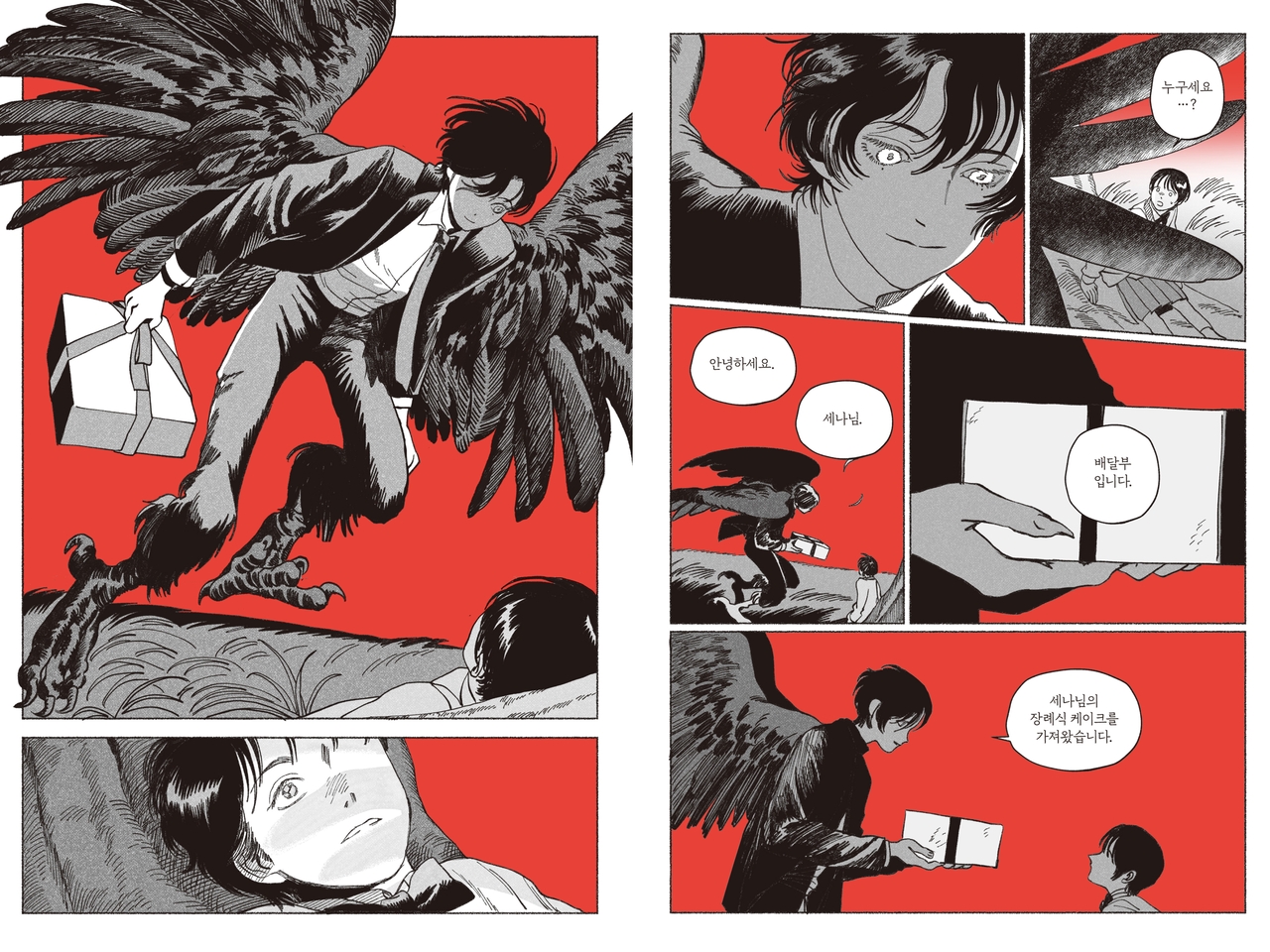
"I think the vertical scroll of webtoons is well suited to controlling the passage of time and directing a reader's gaze, while the printed page can open up expansive horizontal spaces. For my stories, the latter felt more suitable."
She is particularly fond of the effect of a two-page spread.
"I wanted to make use of the physical form of a book itself — something you have to open like a door to enter."
Sanho said she is drawn to stories about unfamiliar beings dropped into ordinary worlds, like the cat who dreams of becoming an astronaut, the rock star who sings through gills and the vampire mother who drives a truck at night in "Purgatory Funeral Cakes."
"The sense of being an outsider in a society that insists on normality — of being part of society, yet somehow feeling that you don't quite fit what it expects you to be — can be deeply painful and lonely," she said.
"I think some of the things I wanted to say through that feeling may have found their way into the unfamiliar beings in the stories."
She is now working on two new stories: one about a terminally ill man who wants to make his own grave and another about a woman who must eat the forbidden to survive.
hwangdh@heraldcorp.com