South Korea's Overseas Koreans Agency is set for its largest budget increase since its launch in 2023.
The government seeks to expand support for Korean-language schools, improve services for the diaspora and help more Sakhalin Koreans permanently resettle in their ancestral homeland.
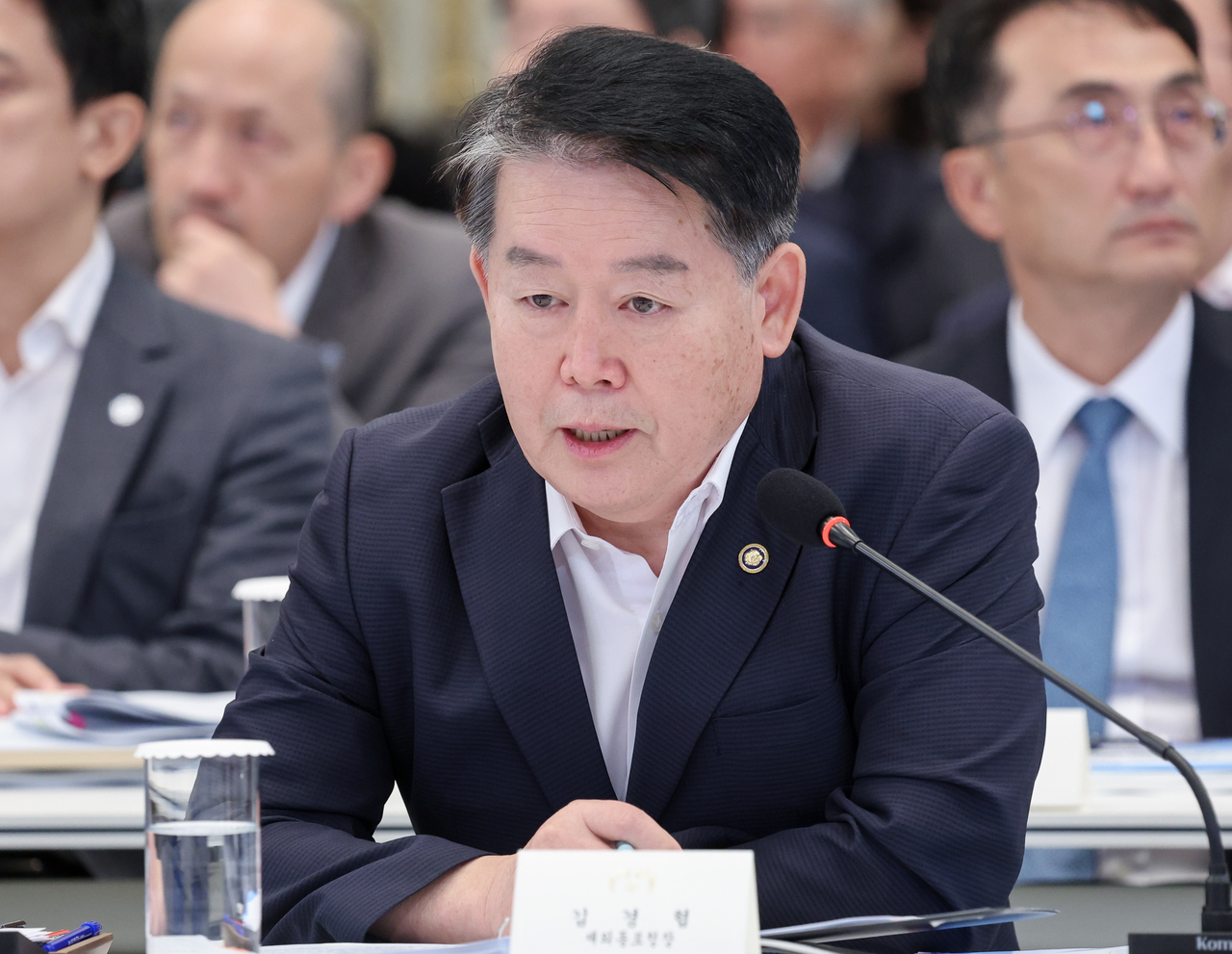
The agency's proposed budget for 2027 stands at 136.9 billion won ($101 million), up 21.4 percent from this year, Commissioner Kim Kyung-hyup said at a briefing at the Foreign Ministry in Seoul on Thursday.
Kim said the proposal was designed to address some of the most pressing concerns raised by overseas Koreans and advancing what he described as an “inclusive policy for overseas Koreans without discrimination.”
The agency has gathered about 2,800 requests and complaints through meetings with Korean communities held on the sidelines of presidential trips abroad and a broader survey conducted through South Korean diplomatic missions around the world.
About 980 of those cases have already been addressed either directly by the agency and the Foreign Ministry or through consultations with other government agencies. The remaining issues largely require additional funding or changes to existing laws and government systems, according to the agency.
A significant portion of the additional spending will go toward education and community support.
The proposal allocates 25.5 billion won to strengthening Korean-language schools and 4.5 billion won to supporting overseas Korean organizations.
Around 1,480 Korean-language schools operate worldwide, and government assistance covered about 26 percent of their operating expenses as of last year. With the proposed increase, the agency expects that figure to reach about 30 percent, with an eventual goal of covering half of their operating costs.
The agency is also seeking 3.4 billion won in new funding to build an integrated digital platform for overseas Koreans.
The platform would bring together administrative services, two-way communication and community functions that are currently scattered across different channels. By linking the system with a database of overseas Koreans, the agency also plans to use the information to develop more tailored policies.
Another major increase concerns Sakhalin Koreans, ethnic Koreans who remained on Russia's Sakhalin Island after Japan's colonial rule of Korea and the end of World War II.
Funding for their permanent return and resettlement in South Korea is set to jump 70 percent to 13.6 billion won next year. The agency aims to support the permanent return of all eligible Sakhalin Koreans who wish to resettle in South Korea within the current administration's term.
The government is also expanding its focus to people of Korean descent who live in South Korea but hold foreign citizenship.
The proposal includes 700 million won for a comprehensive survey of some 860,000 foreign nationals of Korean descent residing in the country, alongside 300 million won for a new program supporting internships for young overseas Koreans at South Korean companies.
Despite the record increase, Kim said the proposed funding still falls short of what the agency believes is necessary to fully address the concerns identified through its survey.
The agency had sought an additional 68 billion won for 2027, but only about half of that requested increase was reflected in the government's budget proposal.
To bridge the gap, the agency plans to tap programs for overseas Koreans run by other ministries and seek additional funding in the 2028 budget if necessary.
Kim pointed to what he described as a significant disparity between government spending on South Korean residents and resources allocated to the country's roughly 7 million-strong diaspora.
Average central government spending amounts to about 14 million won per person in South Korea this year, Kim said, while the Overseas Koreans Agency's budget works out to only around 16,000 won for each overseas Korean.
“It is disappointing that we were unable to fully reflect the needs raised in the field,” Kim said.
“Still, as we have secured the largest budget increase since the agency's launch, we will be able to begin addressing the most urgent issues.”
Meanwhile, the Overseas Koreans Cooperation Center, currently under the agency, is set to be folded into the Overseas Koreans Agency by the end of September.
The center was formed largely with employees who were not incorporated into the new government body when the former Overseas Koreans Foundation was replaced by the Overseas Koreans Agency in 2023. Its separate existence, however, has prompted questions over its role and institutional status.
The agency has now secured enough government positions to potentially absorb all of the center's employees and is proceeding with a competitive recruitment process in accordance with revisions to the Framework Act on Overseas Koreans.
mkjung@heraldcorp.com