English teacher-turned-runner, model and content creator, Isaiah 'Zay' Addison has run 2,000+ consecutive days, including twice from Seoul to Busan
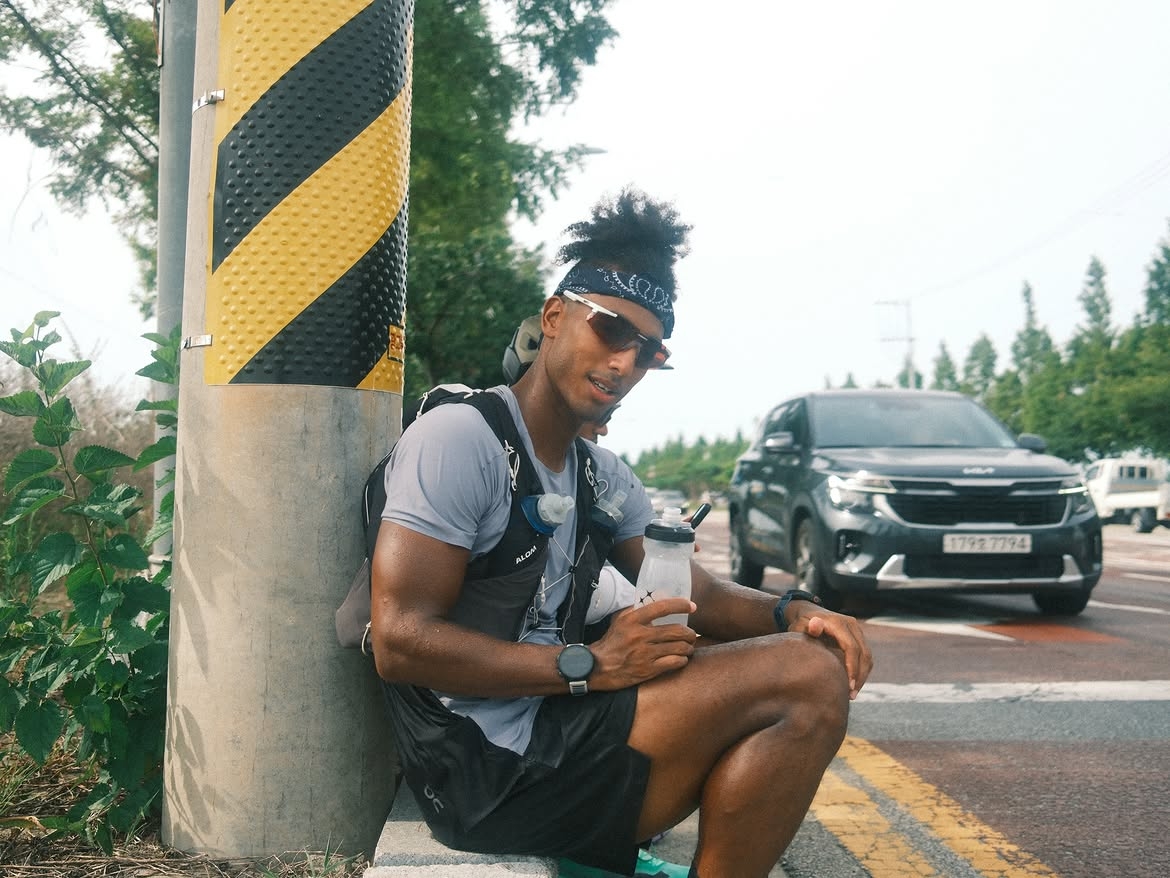
For most people, getting from Seoul to Busan means roughly 2 1/2 hours seated on the KTX.
Isaiah Addison, better known as Zay, went the long way: on foot.
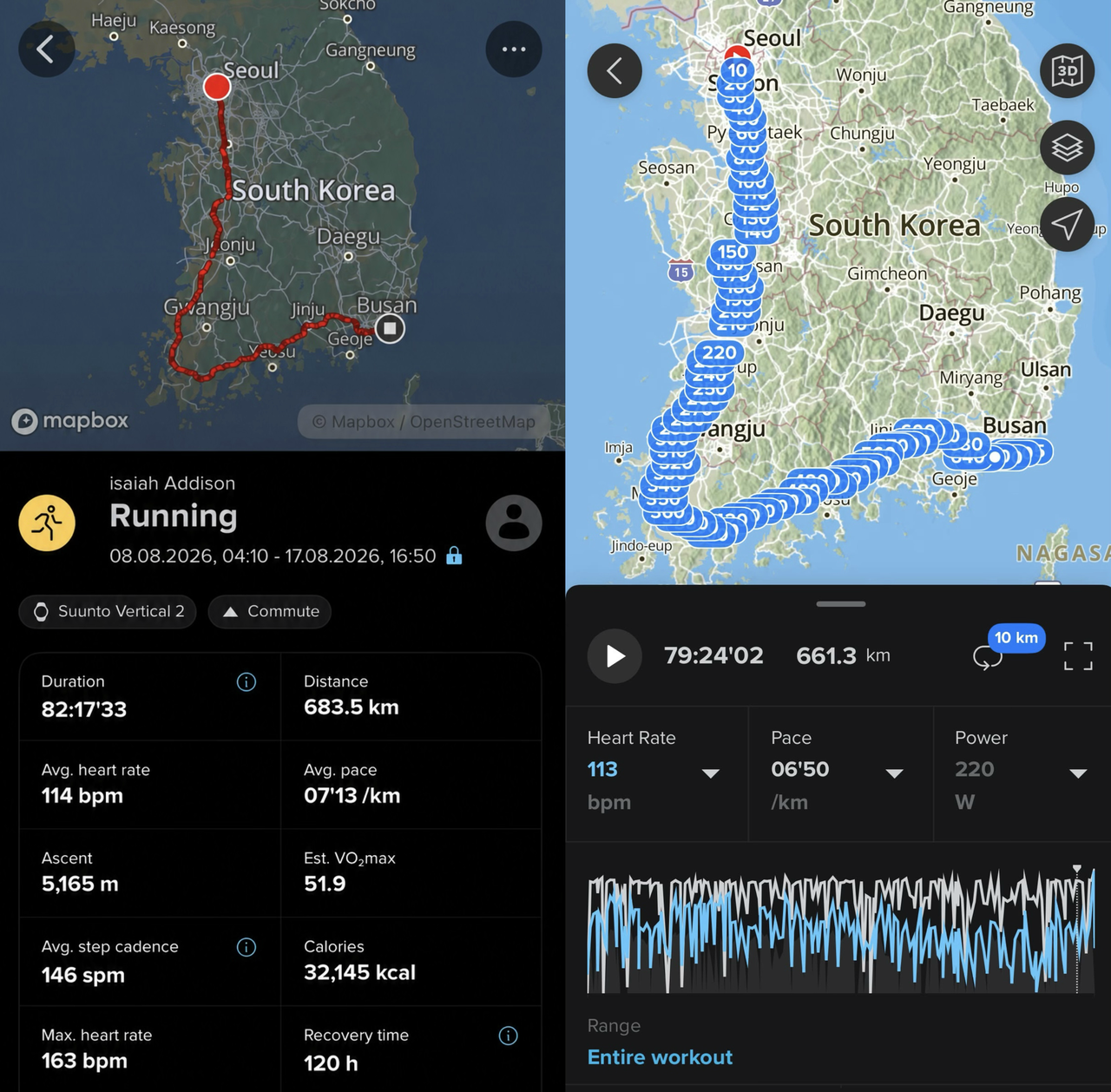
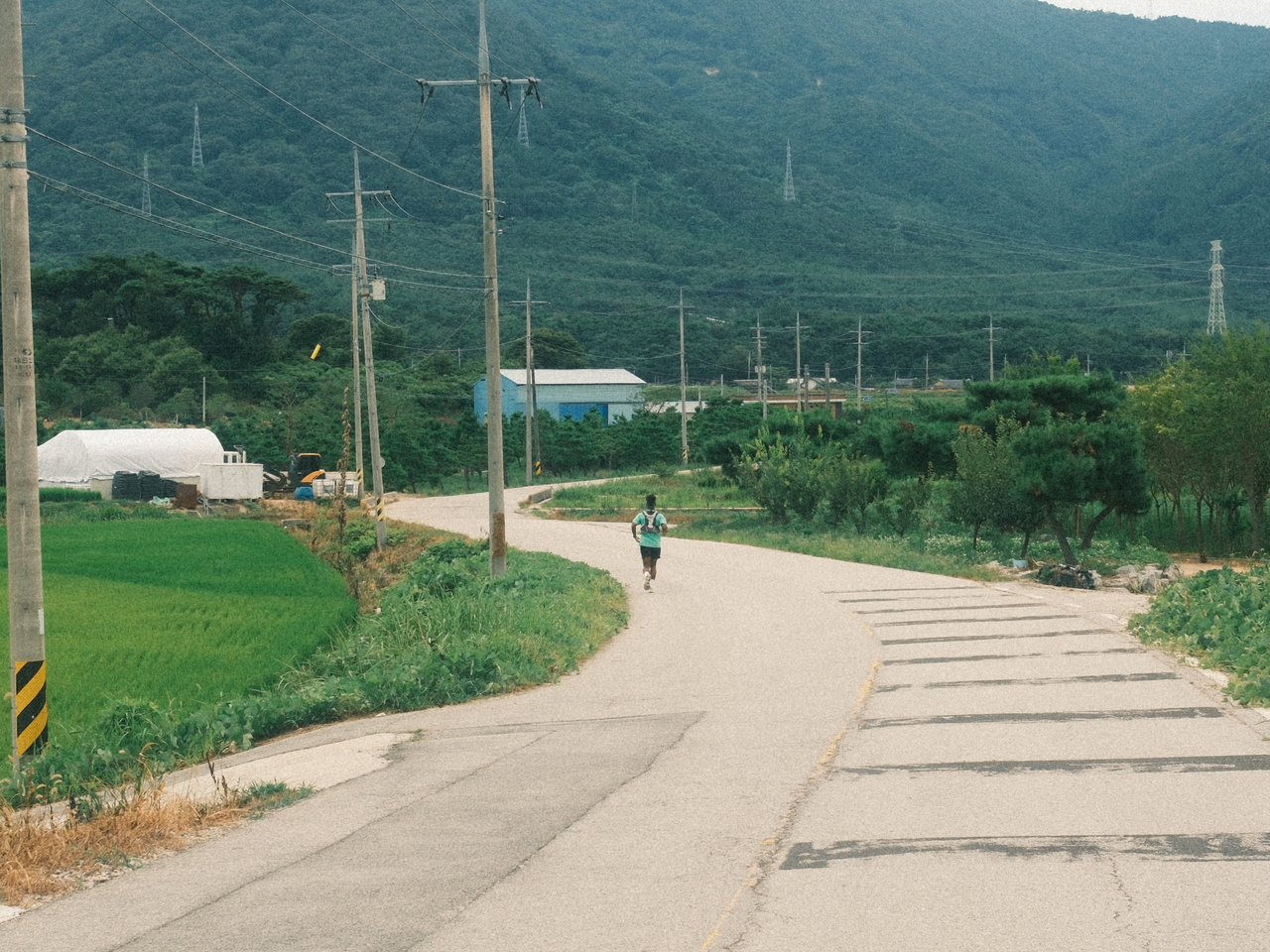
The long-distance runner, freelance model and content creator set out from Seoul on Aug. 8 and covered nearly 700 kilometers over 10 days before reaching Busan — the equivalent of more than 16 full marathons.
Data from his high-endurance sports watch with built-in GPS shows 683.5 kilometers of recorded activity between Aug. 8 and 17 over the course of 82 hours, 17 minutes and 33 seconds, with 5,165 meters of ascent. That works out to roughly eight hours of recorded activity a day.
Yet this was not Zay's first time doing it.
Two years earlier, Zay completed a more direct, nearly 500-kilometer run from Seoul to Busan. This time, he wanted to see how much further he could push himself.
"The first time I did it was kind of my own little personal challenge," Zay told The Korea Herald on Aug. 19, after returning home to Seoul from Busan. "This year I kind of woke up one day and I was like, 'I really want to challenge myself again and ... see how much I've grown and what I can do.'"
Logistics of running across Korea
Covering nearly 70 kilometers a day requires more than endurance.
Every day required planning approximately how far to run, where to stop, what to eat and drink and how long to spend for recovery before doing it all again the following morning.
On the longest days, Zay would wake at 3 to 3:30 a.m. and set off by 4 to 4:30 a.m. His crew, Kim Woo-jin and Emile Justin Appollis, would catch up with him later on e-bikes, filming his journey and carrying supplies along the way.
Zay would aim to cover his first 15 to 20 kilometers before an early checkpoint, where the team replenished his water and supplies. Depending on the day's distance, another checkpoint could follow before a longer midday break at roughly 30 to 50 kilometers.
The goal was usually to finish by 6 p.m. Some days stretched until 7 or 7:30 p.m. After showering, eating, recovering and preparing supplies for the following day, he would try to be in bed by 10 p.m. — before waking a few hours later and starting over.
Nutrition was also more carefully planned this time. Rather than simply eating when he felt hungry, Zay said the team worked out a fueling strategy involving energy gels, electrolytes, salt tablets and regular meals.

During his first Seoul-to-Busan run in 2024, Zay was accompanied only by his friend and videographer Appollis. This year's journey involved a larger team with strategies built around lessons from their previous experience. Appollis and another videographer Kim formed the core crew, keeping pace with him on e-bikes, while video editor Daniel Duquette, graphic designer Yoo Sae-rom and producer Kim Rok provided editing, design, production and sponsorship support, joining him at pit stops or checking in remotely.
Each day was built around reaching a target, with the team heading to accommodations afterward to prepare for the next leg. But even with the route carefully mapped out, things did not always go according to plan.
On Day 3, for example, the team stopped 7 to 8 kilometers short of their planned running endpoint outside Gimje, North Jeolla Province, after a crew member accompanying Zay on an e-bike suffered a flat tire. Resolving the problem took priority. As the delay ate into the evening, the team decided to call it a day rather than let the setback ripple into the rest of the schedule.
"I was a little bit upset, a little bit disappointed," Zay said in a video recorded that day, "but ultimately safety of the crew is the most important thing."
Biggest challenge wasn't heat
Before setting out, the weather was a major concern for the team and others who knew about their plans, considering such a demanding challenge at the height of Korea's harsh summer.
When Zay set off on Aug. 8, Seoul was sizzling, with temperatures marking 37 degrees Celsius. A newly introduced severe heat wave warning, which calls for an immediate halt to outdoor work barring essential activities, had been in effect for days and was lifted only at 6 p.m. the previous day — just hours before he began his journey.
During the 10-day run, however, the heat thankfully never became as extreme as it had been in the preceding week. Still, the team took extra precautions, building hydration and regular checkpoints into the schedule and starting early to cover as much distance as possible before temperatures peaked.
"I think the average was like 33 to 34 (degrees)," Zay recalled, describing the heavy humidity as particularly draining. He added the heat was less intense than during his first Seoul-to-Busan run two years earlier.
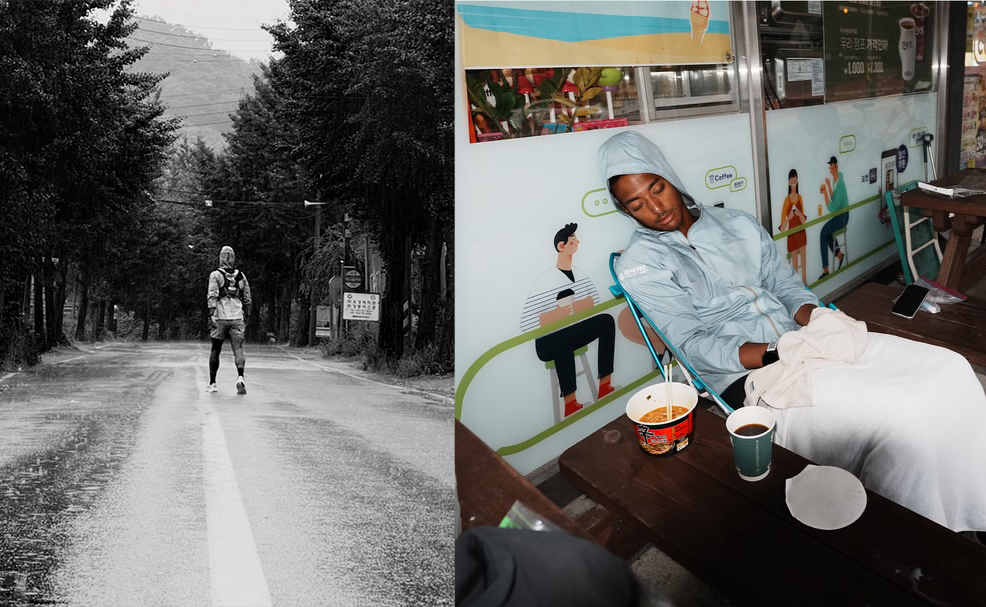
What caught him off guard instead was the cold when heavy rain set in during the final days.
"The last two days messed with me a little bit because it was actually cold," he said, explaining he had prioritized breathability in his gear. "All I had was my rain jacket."
Zay resorted to buying towels and extra clothing at convenience stores to retain heat, while turning to hot food such as cup noodles to help him warm up.
The weather was only one of the lessons Zay took away from spending 10 days on the road. He also learned that some seemingly minor items could make a big difference.
Beyond the obvious essentials — running shoes, sunglasses, a rain jacket and sunscreen — bug spray and a swatter proved especially useful.
"You don't realize how important it is to have protection from bugs when you're running," Zay told The Korea Herald with a laugh.

His choice of socks also came with experience. During his first run, regular socks left him with badly swollen toes. This time, after investing in socks designed for ultrarunning, he finished with only a few blisters.
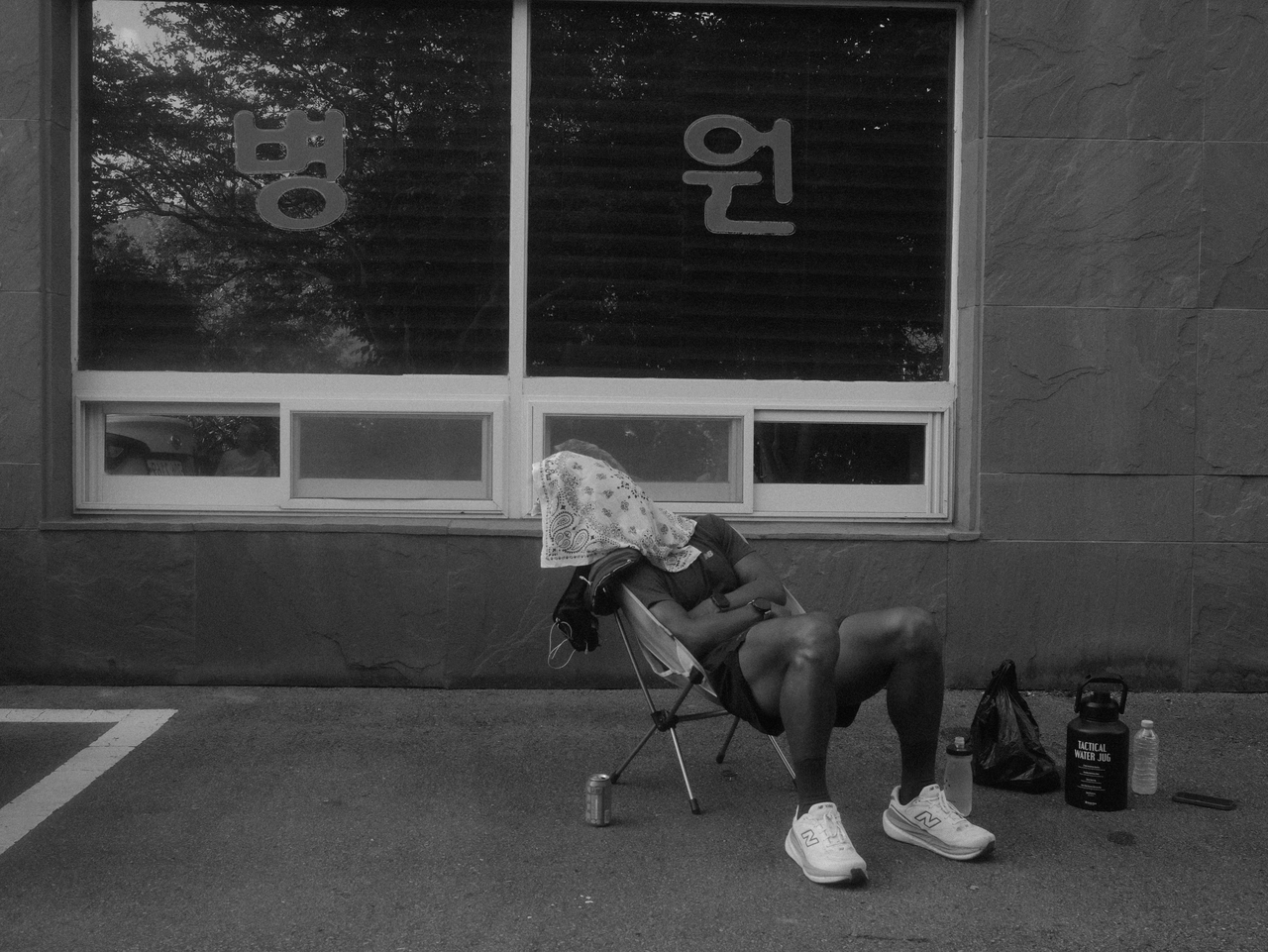
Another lesson from the first journey was even simpler: Bring something to sit on.
The crew carried collapsible chairs for rest stops, along with an insulated 3-liter container that kept ice and water cold as temperatures climbed into the upper 30s.
Seeing Korea one kilometer at a time
Rather than taking the most direct route to Busan, as had done two years prior, Zay detoured through Mokpo, Jeonnam-Gwangju, adding hundreds of kilometers to the journey before turning eastward for the long stretch to Busan.
The choice was personal.
Originally from Texas and raised in South Carolina, Zay moved to Korea in late 2016, partly hoping to learn more about his Korean heritage after the passing of his Korean grandmother.
Mokpo was his first home in the country, where he began his life in Korea as an English teacher.
"I came to Korea straight to Mokpo as a teacher and knew absolutely no one there," Zay said, "The first night (in Korea), sleeping with my backpack as my pillow and my jacket as my blanket, to where I am now ... it's very surreal. It's amazing to just be a part of this whole process of life."
Crossing Korea on foot offered Zay a view of the country few travelers experience.
Moving at running pace meant the journey was measured not by train stations or highway exits, but by bike paths, small roads, rural towns, mountains, restaurants and the strangers he encountered along the way.
Some of those encounters were fleeting but memorable.
On one particularly hot day, a truck driver spotted Zay running alone along the road and stopped to offer him a bottle of water.
"He just had a water bottle waiting for me, and I was like, 'Oh, thanks so much.' And he asked me what I was doing. I was like, 'I'm going Seoul to Busan,'" Zay recalled. "He's like, 'What?'"

After finishing the water, Zay came across a gas station and headed toward the door in search of a trash can. There, another man handed him a fresh bottle without a word.
Similar encounters followed at restaurants and in small towns along the route.
Running through the rain to Busan Station, a woman's paper bag, soaked by the rain, broke and its contents fell to the ground. Zay stopped to help her pick it all up. The woman offered him rice cakes.
"Doing this the second time ... has reminded me of the kindness that Korea has," he said. "I think it's 'jeong,' caring and kindness towards others and just kind of wanting them to do well. So it was very moving. It was just an amazing experience."
"Sometimes being in Seoul you kind of forget that a bit because it's 'ppalli-ppalli,' you know, it's very fast-paced," he continued, referring to the Korea's "hurry-hurry" culture of getting things done quickly.
Friends and family helped with accommodation, supplies and drop bags, while others joined him for sections of the run. His crew stayed alongside him through long days on the road, providing support as the kilometers piled up.
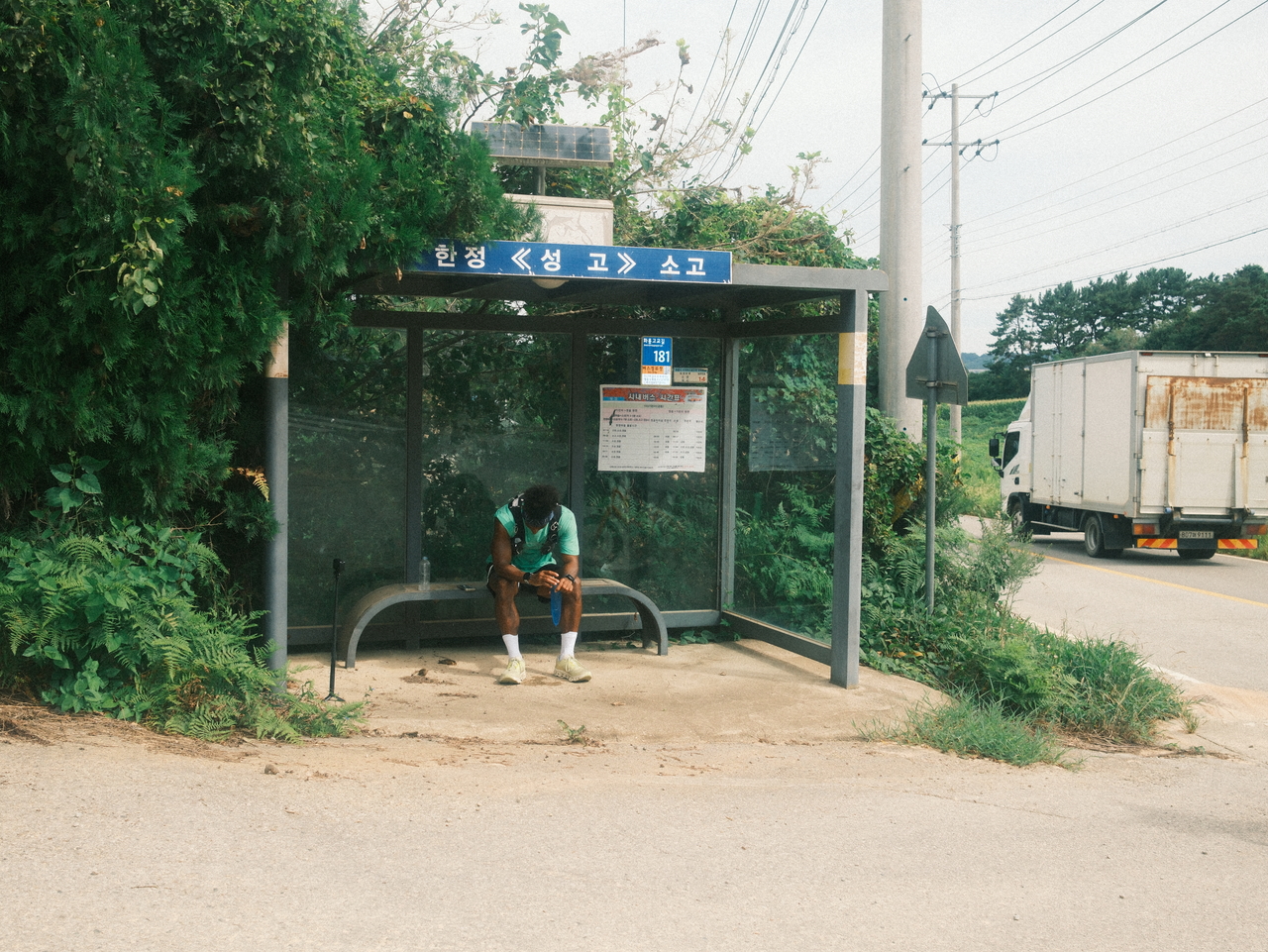
By Day 9, simply keeping moving had become a challenge in itself.
But a call with his mother, the support of his team and the thought of how far they had already come pushed him to continue.
"We didn't make it this far just to stop now," he recalled thinking. "I'm here with these amazing people, this amazing support from everyone, and I was like, we're going to see this thing through."
So he kept moving.
On the final day, that support became even more tangible, with friends surprising Zay along the final stretch and others waiting for him at Busan Station.
"It really felt like it was a community thing," he said. "It wasn't just me doing it, we all did it."
Keep moving forward
The Seoul-to-Busan runs are just part of Zay's endurance story.
On Aug. 20, he marked his 2,000th consecutive day of running — a streak he has maintained through typhoons as well as two runs across South Korea.
Asked how he keeps going, Zay mentioned that it is not easy because things go wrong every day, and the 10-day journey was no exception. There was scorching heat, pouring rain and plans that did not unfold the way the team expected.
Knowing there will eventually come a day when he can no longer run and finding fulfillment, even in the things that go wrong, is part of what keeps him moving.
"There's no trophy, no award or anything like that," he said. "But I can say right now that my cup ... is definitely full."
On plans for a third run from Seoul to Busan, Zay said simply repeating the challenge would not be enough. His experiences have left him thinking bigger.
"I can't do the same thing twice," he said, "I think if I did do it again, I would do it the full way around South Korea."

Running your own route
For those inspired to try a similar run across South Korea, Zay offers a point of advice: Make use of the country's well-established cycling routes, but be prepared to adapt.
Korea's cross-country cycling network allows cyclists to traverse long stretches of the peninsula on designated bike routes, including a route connecting the Seoul area with Busan, officially 633 kilometers from the starting point in Incheon.
Within Seoul, bicycle roads covered some 1,364 kilometers as of 2024, up from 1,290 kilometers in 2021. The capital's shared bike system, Ttareungi, has also grown from 2,000 bicycles at 150 rental stations when it launched in 2015 to about 45,000 bicycles spanning 2,800 stations in 2025, logging nearly 44 million rides in 2024 alone.
Zay pointed out that runners can follow alongside the extensive cycling paths while also having the flexibility to branch off onto mountain paths and trails that cyclists cannot access.
Traffic, however, remains a major safety concern, he said, noting that some stretches of his route took him onto busy roads or highways. He warned that runners should be especially cautious and not assume that cycling routes are always separated from heavy vehicles.
Zay described much of his route as relatively flat, with occasional climbs. He recalled encountering more elevated terrain later in the run, particularly between Boseong, Jeonnam-Gwangju, and Changwon, South Gyeongsang Province, on Days 7 to 9.
"I'd recommend running Seoul to Busan for the person who's actually ready for it," Zay warned. "There are days where you feel on cloud nine and you're having so much fun, and then there are days where you just want to quit.
"If anybody wants to do Seoul to Busan ... make sure that safety is the No. 1 thing, hydration along with that, and then just make sure you're mentally prepared, because it's a mental roller coaster out there."
tammy@heraldcorp.com