Seoul downplays chances of US tactical nuke deployment to Korean Peninsula
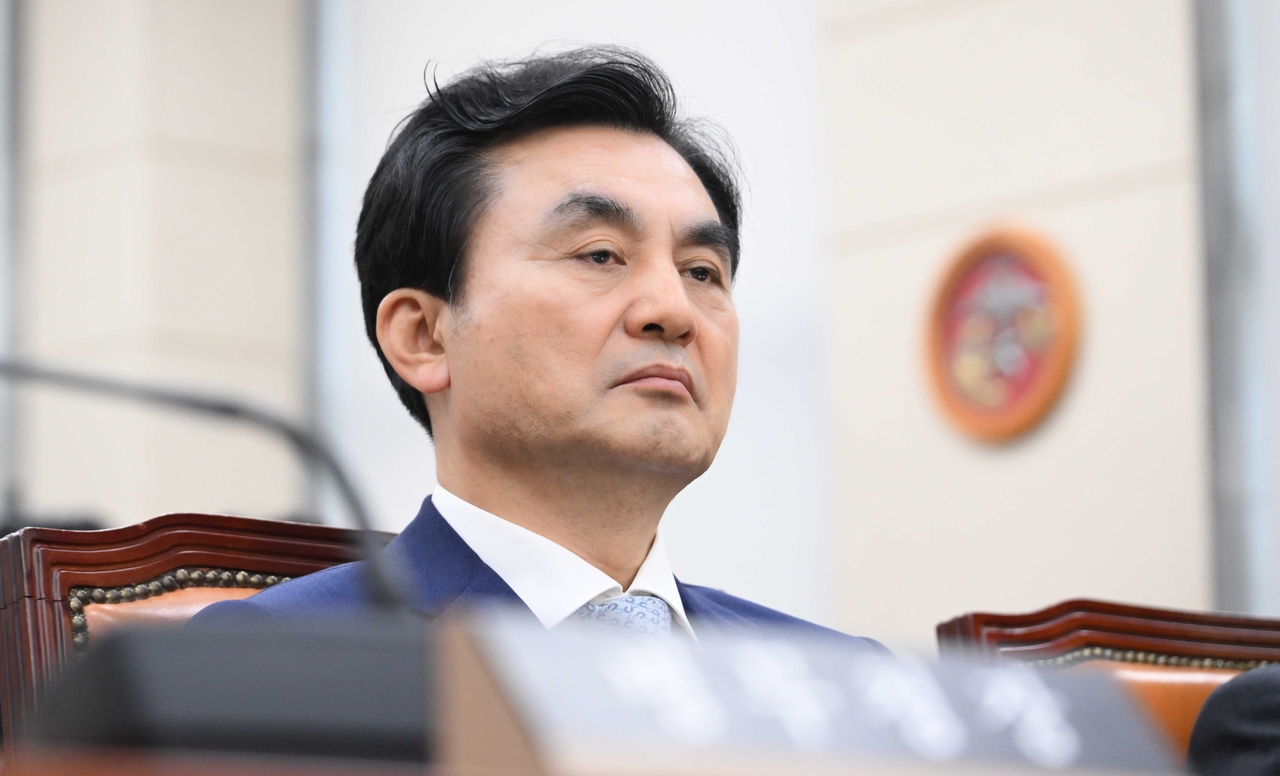
Defense Minister Ahn Gyu-back said Thursday that Seoul estimates North Korea has up to 120 nuclear warheads.
His comments drew fire from opposition lawmakers, who contended the revelation could hinder South Korea's push for denuclearization on the Korean Peninsula.
"Our estimate is between 80 and 120, but giving an accurate figure is limited," said Ahn, in response to main opposition People Power Party Rep. Sung Il-jong's inquiry on the matter, during a general meeting of the National Assembly's National Defense Committee.
Ahn also said Seoul's figure is "somewhat different" from that of Washington. Seoul's figure comes from a local research institution and was based on the amount of plutonium that North Korea is estimated to have possessed and produced, he added.
The estimate cited by Ahn far exceeds the figure of 57 suggested by US President Donald Trump in the White House on Wednesday.
While revealing the estimate, however, Ahn said Seoul "cannot officially acknowledge" that North Korea possesses nuclear weapons, and that the pursuit of denuclearization must continue.
He also said it was "inappropriate to comment" on whether Trump's citation of a specific figure could be taken as the US president acknowledging that North Korea is a nuclear-weapon state.
Sung responded to Ahn answering his own question by saying that Ahn virtually "acknowledged the existence of nuclear weapons in North Korea," adding the acknowledgment of nuclear warheads by either Trump or Ahn might require "a complete change" in Seoul's denuclearization goal.
Ahn downplayed any possibility that South Korea would develop its own nuclear warheads or that US tactical nuclear weapons could be deployed to the Korean Peninsula to counter North Korea's nuclear arsenal.
His remarks were the latest development in Seoul following Trump's recent announcement that Washington would reduce the ongoing joint military drills between the two allies. Trump's announcement came along with an overture to meet North Korean leader Kim Jong-un.
Trump and Kim officially held bilateral summits on two occasions, and met on a third, but talks between Washington and Pyongyang have been stalled since February 2019.
In the meantime, Ahn said South Korea's move to regain wartime operational control from the United States remained unaffected by changes in bilateral drills to counter North Korea.
In response to People Power Party Rep. Lim Jong-deuk's inquiry, Ahn said that, despite the recent announcement to scale back US participation in Ulchi Freedom Shield, the verification process for the new bilateral Combined Forces Command's full operational capability, including its capability for counterfire warfare, has already been completed.
Ahn also said Thursday that voluntary conscription — running alongside universal conscription — will be introduced from 2027, as the first batch of some 3,000 new conscripts will be given the chance to serve as professional noncommissioned officers in roles involving handling cybertechnology and artificial intelligence, instead of serving as rank-and-file soldiers.
consnow@heraldcorp.com