Bae Choong-sik unveils 'Global Connect,’ aiming to draw top global students and researchers to Daejeon
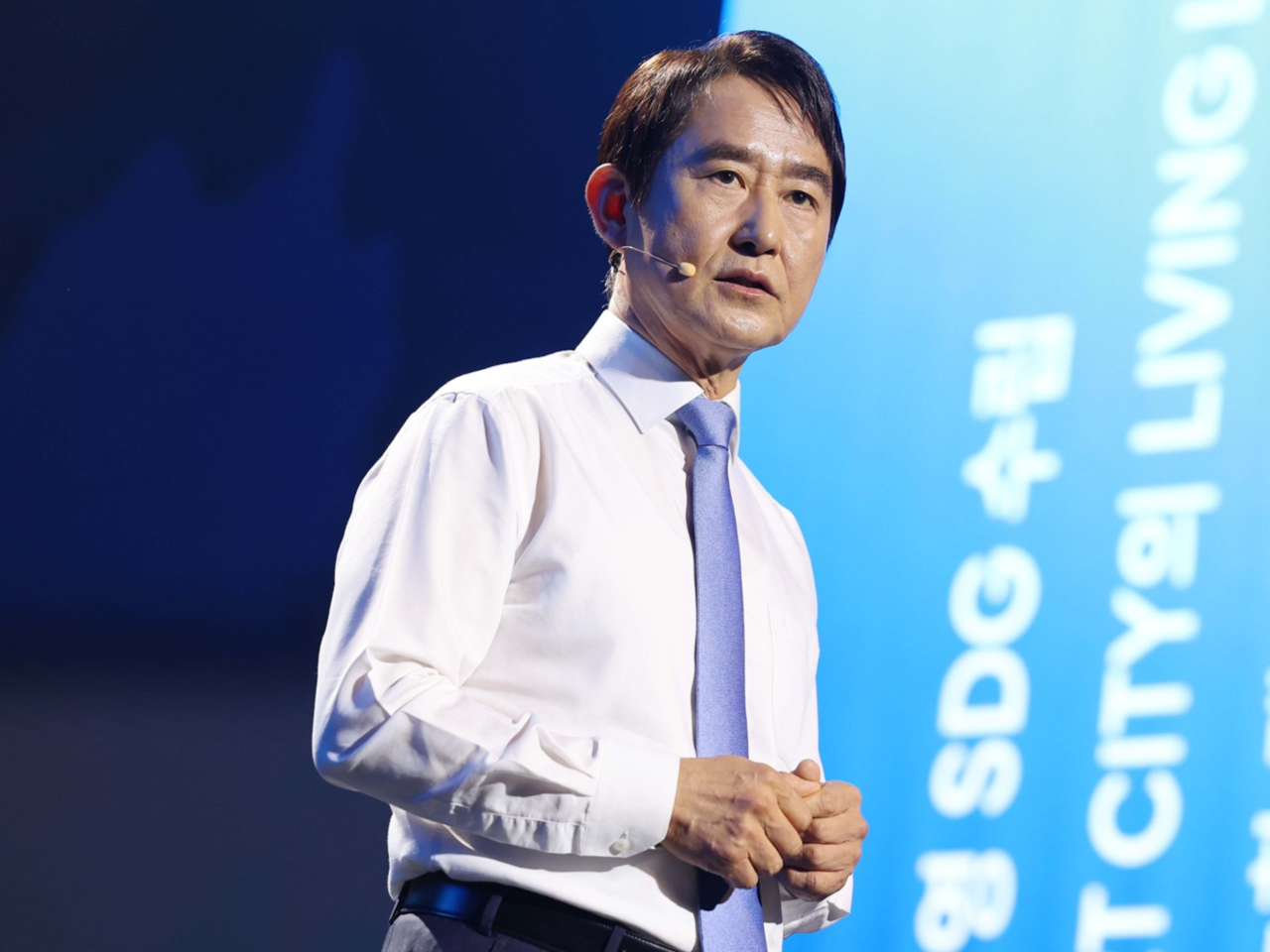
DAEJEON — KAIST President Bae Choong-sik, who took office last week, wants to double the share of international students by 2030, but says the real test of the university's global push will be whether incoming students and researchers produce meaningful work with their Korean peers.
"The current proportion of international students sits at about 10 to 15 percent," Bae said in an exclusive interview with The Korea Herald. "So the 30 percent goal is a challenging one."
Still, Bae said the target is not simply about expanding KAIST's international head count.
"We don't want to simply increase the numbers," he said. "We want students who can measure up to our outstanding students and interact with them."
Bae plans to expand pathways for international students, including dual-degree programs with overseas universities.
"Internationalization is not achieved simply by increasing the number of international students or overseas agreements," Bae said. "Going forward, what will matter more than how many people have come is how much research we have done together and how much innovation we have created."
From Global Twin to Global Connect
Bae characterized his internationalization agenda as one leg of a "relay race," not as a break from his predecessor.
"Rather than making it different, I will add measures that complement what came before and make it shine even more," he said.
KAIST will continue to build on the Global Twin initiative, which expanded overseas partnerships that were previously driven by individual researchers and departments into institution-level relationships.
Bae calls the next phase "Global Connect," with a greater emphasis on the two-way movement of students and researchers between KAIST and its overseas partners.
"I think Global Twin created key overseas footholds for us," he said. "For them to become more meaningful, and for international cooperation to be sustainable, people need to move naturally in both directions."
"We need to create a system where it is not only us going out, but people coming here as well, with exchanges continuing to flow like blood," he said.
Giving global talent a reason to come
For Bae, achieving that balance depends less on promoting KAIST overseas than on building research programs compelling enough that talent abroad decides it needs to come to Daejeon.
Asked what could give KAIST that kind of pull, Bae pointed to areas where Korea's industrial base provides an advantage.
One example is physical AI, which applies artificial intelligence to machines and systems operating in the physical world.
Bae said Korea's manufacturing strength gives it a strong foundation in the field, which brings together AI, mechanical engineering, materials, electronics and natural sciences.
He also identified semiconductors, advanced manufacturing, energy and bioscience as areas where KAIST could build internationally competitive research.
Giving them a reason to stay
Bae's ambitions extend beyond bringing international students and researchers to Daejeon. He wants KAIST to give them reasons to remain in Korea after graduation, whether as researchers, entrepreneurs or employees of technology companies.
He sees Daejeon itself as part of that proposition.
The city is home to a concentration of government-funded research institutes, corporate laboratories and deep-tech startups. Bae wants KAIST to connect more closely with those institutions while attracting more international researchers and businesses.
Bringing people to Korea, however, is only part of the challenge.
Bae said research autonomy and infrastructure, English-language administration, support for families settling in Korea and access to international research networks would all matter in recruiting and retaining top researchers.
"Salary is important, but more important is an environment where they can conduct research," he said.
"The goal of internationalization is not simply to attract outstanding students, but to grow together," Bae said.
seungku99@heraldcorp.com