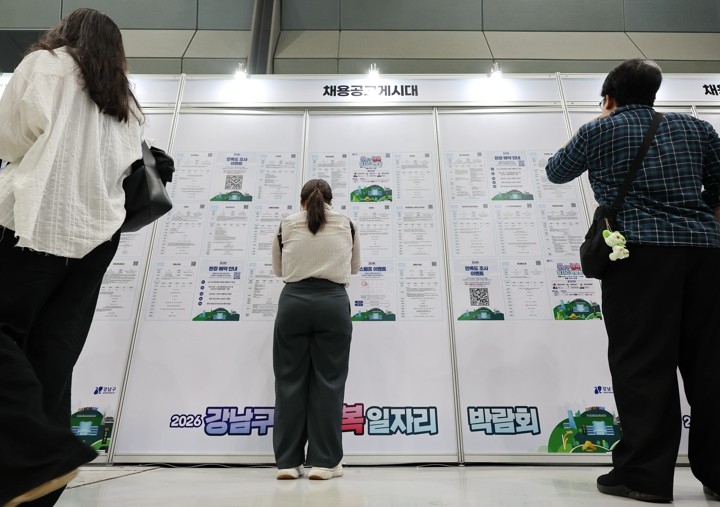
Statistics confirm the grim reality facing the younger generation.
통계는 젊은 세대가 마주한 암울한 현실을 확인시켜준다.
According to the Ministry of Data and Statistics' May 2026 Employment Trends report released on June 11, employment among young people ages 15-29 shrank by 255,000 from a year earlier.
국가데이터처가 6월 11일 발표한 5월 고용동향 보고서에 따르면 15-29세 청년 고용은 전년 동기 대비 25만5천명 감소했다.
It was the sharpest decrease since January 2021, when the country was in the midst of the COVID-19 pandemic, and marked the 43rd consecutive month of decline. The job-market woes facing young people, who will lead our society in the future, are becoming increasingly prolonged.
전국적으로 코로나19 팬데믹이 한창이었으며, 43개월 연속 하락세를 기록했던 2021년 1월 이후 가장 큰 폭으로 줄어든 것이다. 미래에 우리 사회를 이끌 청년층이 고용시장에서 마주한 어려움은 점차 장기화되고 있다.
Despite an unprecedented export boom fueled by the semiconductor industry, job opportunities for young people are vanishing. While employees at some major corporations benefiting from the semiconductor supercycle are receiving performance bonuses in the hundreds of millions of won, many young people cannot even secure jobs with annual salaries in the tens of millions of won. This is a telling illustration of the troubling reality that employment polarization is reaching alarming levels.
반도체 산업이 주도하는 전례없는 수출 호조에도 불구하고 젊은이들의 취업 기회는 사라지고 있다. 반도체 초호황으로 수혜를 입은 일부 대기업 직원들은 수억원에 달하는 성과급을 받는 반면 많은 젊은이들은 수천만원 연봉을 제공하는 일자리조차 확보하지 못한다. 고용의 양극화가 위험한 수준에 이르고 있는 우려스러운 현실을 여실히 보여주는 것이다.
A June 11 report by the Bank of Korea found that the proportion of people in their 20s and 30s among households in the bottom quintile for both net assets and income nearly doubled from 7.9 percent in 2020 to 15.2 percent in 2025.
한국은행의 6월 11일 보고서는 순자산과 소득 모두에서 5분위 최하위 가계에서 20, 30대가 차지하는 비율이 2020년의 7.9퍼센트에서 2025년 두 배에 가까운 15.2퍼센트로 늘었다고 밝혔다.
During this period, the share of every other age group either held steady or declined, while that of people in their 20s and 30s rose. This is a warning sign that many young people are falling through the cracks of the labor market into the lower-income bracket without ever having had a chance to gain a proper foothold in the workforce.
이 기간동안 다른 모든 연령대의 비중은 같거나 감소한 반면 20, 30대의 비중만이 증가했다. 많은 청년이 노동시장에 제대로 자리잡을 기회조차 갖지 못한 채 고용시장의 틈새로 떨어져 저소득층으로 전락하고 있다는 위험 신호다.
In the past, even those who found it difficult to get a job could still aspire to buy a home and build wealth through steady savings once they entered the workforce. However, today's young people feel helpless and discouraged in the face of stark inequalities that exist from the very start of their adult lives.
과거에는 취업에서 어려움을 겪은 사람들도 노동시장에 진입하면 꾸준한 저축을 통해 주택을 구입하고 부자가 될 꿈을 가질 수 있었다. 그러나 지금 젊은이들은 성인이 되자마자 이미 존재하는 심각한 불평등에 직면해 무력감과 좌절에 빠진다.
The wealth gap between these young people and the older generation has widened significantly, particularly because of rising real estate prices. The median apartment price in Seoul exceeded 1.2 billion won ($792,000) this year, climbing by more than 100 million won since the start of the year. The benefits of rising real estate prices have been concentrated among middle-aged and older people who already own homes.
특히 상승하는 부동산 가격으로 인해 청년층과 노장년층간의 부의 격차는 크게 벌어졌다. 서울 소재 아파트의 중위가격은 올해 12억을 넘어 올해초보다 1억원 이상 상승했다. 오르는 부동산 가격의 수혜는 이미 집을 소유한 중년층 이상에 집중되었다.
The older generation bears significant responsibility for this. They have monopolized stable and regular jobs, entrenched a seniority-based wage system and made layoffs difficult through powerful labor unions. Companies are reluctant to hire new workers because they must shoulder the high labor costs of existing employees.
여기에는 기성세대의 책임도 크다. 그들은 안정적인 정규직을 독점했고 연공서열 중심의 임금체계를 공고화했으며 강력한 노조를 통해 해고를 어렵게 만들었다. 기존 고용자들의 높은 노동임금을 부담해야 하기에 기업들은 새로운 인력 고용을 망설이고 있다.
It is young people who are bearing the brunt of the resulting hiring squeeze. As many as 140,000 manufacturing jobs were lost in May, marking the 23rd consecutive month of decline. If the current administration's plan to extend the mandatory retirement age to 65 is implemented, employment prospects for young people will deteriorate even further.
이에 따른 채용 축소의 직격탄을 맞는 것은 젊은이들이다. 5월에만 14만개의 생산직이 사라져 23개월 연속 하락세를 기록했다. 정년퇴직을 65세까지 연장하겠다는 현 정부의 계획이 실행된다면 청년층의 고용 전망은 더욱 악화될 것이다.
Artificial intelligence is creating a new source of job insecurity. Employment in the professional, scientific and technical services sectors fell by 89,000 in May from a year earlier. AI is rapidly replacing tasks traditionally performed by entry-level white-collar workers.
인공지능이 고용 불안의 새로운 원인이 되고 있다. 전문, 과학 및 기술 서비스업 분야에서의 취업자 수는 5월 전년 동기 대비 8만 9천명 감소했다. AI는 화이트컬러 신입 직원이 전통적으로 수행해온 업무를 빠르게 대체하고 있다.
The solution begins with youth employment. The nation must focus its resources and capabilities on creating quality jobs for young people.
해결책은 청년고용에서 시작된다. 국가는 젊은이들을 위한 양질의 일자리를 창출하는데 자원과 역량을 집중해야 한다.
First and foremost, companies must be encouraged to take the lead in job creation. To do so, the government must first remove regulations that discourage companies from hiring and investing, such as the Yellow Envelope Act. The rigid employment system that discourages companies from hiring should be reformed, and any extension of the mandatory retirement age should be pursued cautiously so as not to harm young people's employment prospects.
가장 우선적으로 기업들이 일자리 창출에서 주도권을 갖도록 독려해야 한다. 이를 위해서는 정부가 먼저 노란봉투법과 같이 기업의 고용과 투자 의지를 꺾는 규제를 없애야 한다. 기업이 고용을 망설이게 만드는 경직된 고용 제도는 개선되어야 하며 의무 정년 나이를 늘리는 것은 청년층의 고용 전망을 저해하지 않도록 신중하게 추진되어야 할 것이다.
No country has a future if its young people are falling into poverty. The most pressing challenge facing South Korea's economy today is to create a society in which young people can once again look to the future with hope.
젊은이들이 빈곤층으로 추락하는 나라에는 미래가 없다. 작금 한국 경제가 마주한 가장 시급한 과제는 젊은이들이 다시한번 희망을 가지고 미래를 바라볼 수 있는 사회를 만드는 것이다.
polarization 양극화
quintile 5분위수
bracket 괄호, 범위
bear the brunt of 가장 큰 타격을 입다
deteriorate 악화하다
khnews@heraldcorp.com