At 24, detective Oh Ji-wan is challenging old stereotypes through digital storytelling and public engagement
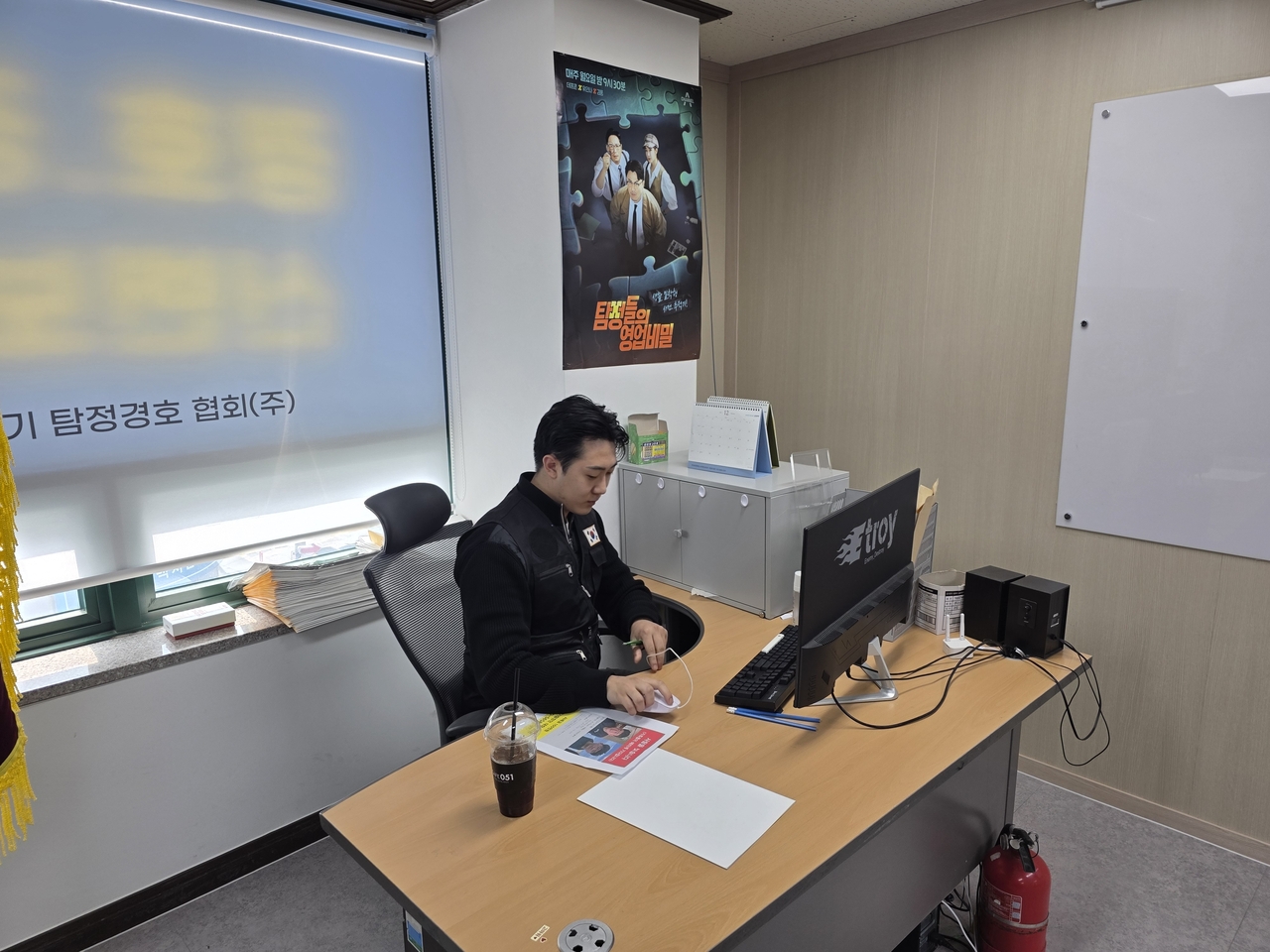
By day, Oh Ji-wan is a history major at Ajou University. By night, he tracks suspected cheaters, fraudsters and missing persons as a private investigator.
While many college students spend their evenings studying, socializing or pursuing romance, this one is more likely to be on the road or staking out restaurants or motels, hunting for leads.
"There was one time when a family asked me to find their son, who was about my age and had run away from home and cut off all contact," Oh, 24, said in an interview with The Korea Herald.
"I checked every PC bang (internet cafe) in his neighborhood and spent days searching around nearby motel districts for clues. After days of watching from my car and walking the streets, I finally found him and got him safely back to his family."
From fascination to career
What drew him to late-night stakeouts was a fascination with crime solving on screen.
"I watched private detectives on TV uncover evidence that even the police had missed and reveal the truth behind mysterious cases. It made my heart race," he said.
Having always enjoyed taking on new challenges, Oh decided not to leave detective work as a mere fascination and instead pursued it himself.

"I've always liked putting myself in new situations. I was a student council president in high school, represented my Marine Corps training unit and took on all kinds of part-time jobs after returning to school, including overnight warehouse shifts and dishwashing at restaurants," he said.
"Those experiences taught me how to endure hardship, work with people and take responsibility — qualities I think serve me well in detective work."
Earlier this year, when Seagull Detectives opened a new office in Seoul and began hiring, Oh saw an opportunity to pursue a long-held ambition. He was already familiar with the Busan-based private investigation agency from one of his favorite television programs featuring private detectives.
After completing an online training program for aspiring private investigators through the Korea Qualification Assessment Promotion Institute, he applied for an entry-level position at the agency and joined the firm in mid-March.
"Sometimes, after working through the night, I take the first subway to school and find myself sitting in a lecture hall for my major classes. In moments like that, my life feels a little surreal. On days when I don’t have classes, or on weekends, I’m usually working from morning until night," he said.
The agency is among a growing number of private investigation firms that have emerged across South Korea since 2020, when a revision to the Credit Information Act lifted a long-standing ban on the use of the term "private detective," allowing businesses to operate openly under that name.
Before, businesses offering similar services operated as "mercantile agencies" or "errand agencies."
At the time, the country was the only member of the Organization for Economic Cooperation and Development where private investigation was not legally permitted.
Since the late 1990s, Korea's private detectives had helped fill gaps left by law enforcement, gathering evidence through stakeouts, surveillance and interviews, in civil and personal matters that often remained out of reach of police investigations.
The industry, however, had long been plagued by unlawful practices, including the collection of personal information, location tracking, wiretapping and hacking.
The law revision sought to curb such activities while bringing the sector out of the shadows and under greater regulatory oversight.
Uncovering painful truths
Now just three months into the profession, Oh, the agency's youngest detective, has already worked on a range of cases, from infidelity and searches for missing persons to corporate espionage probes.
But the reality was not always as exciting as the world of Sherlock Holmes he had imagined, where baffling mysteries are unraveled through brilliant deductions and justice is served.
Instead, much of his work, he said, has taken him into the darkest corners of human nature, including betrayal, deception and greed.

"Many of our clients have gone through some of the toughest moments in life, from divorce and fraud to betrayal. As a person in my 20s, I sometimes feel I lack the life experience to fully relate to their struggles," he said.
"I've come to realize that detective work is often about uncovering painful truths within human relationships. Because those truths can have a profound impact on people's lives, the work demands a great deal of responsibility."
Oh recalled a recent case involving foreign parents who asked his team to locate a vehicle used by their child, who had died in an accident in Korea, in hopes of recovering the personal belongings they left behind.
The only clue was that the deceased had used the vehicle to travel to Incheon Airport.
Believing the car was likely somewhere near the airport, the team searched every possible location it could have been parked, from the airport's short-term and long-term parking lots to nearby private parking facilities and public parking lots.
They eventually located the vehicle and were able to return it safely to the bereaved family.
"When the family, still grieving the loss of their child, held our hands and expressed their heartfelt gratitude, I was reminded of how rewarding this job can be," he said.
As the agency's only investigator under 30, Oh has been carving out his own niche by turning investigative work into social media content.
His Instagram account features videos offering a glimpse into the realities of detective work, from stakeouts outside motels during infidelity investigations to stories about background checks and criminal record searches.
"I try to use digital platforms and communication styles that resonate with younger audiences to showcase the professionalism behind our work. My goal is to become an all around detective who combines investigative expertise with digital storytelling and public engagement," he said.
Stereotypes die hard
Six years after gaining legal status, the private investigation industry has yet to shake its shady reputation, with many still viewing the profession as unlawful.
Suspicious looks and skeptical remarks have become a familiar part of the job for Oh.
"Whenever I share stories or experiences from my work online, there are always people who doubt them or assume they were obtained through illegal means," he said.
Emphasizing that private detectives operate within strict legal boundaries, Oh argued that television portrayals of private detectives have further fueled such negative perceptions.
"On TV, detectives are often shown breaking into people's homes, hacking computers or planting wiretaps to solve cases, all of which would be illegal in real life," he said.
"If someone invades a person's privacy in the name of gathering evidence, they're not a detective. They're a potential criminal."
He added that public distrust persists in part because the industry lacks clear rules and oversight.
Although private investigation was effectively legalized, the government has yet to establish a comprehensive framework governing qualifications, licensing and investigative authority.
"The door has been opened to the industry, but the detailed institutional safeguards and legislation needed to fully support the field have yet to be established, which has contributed to the public's limited understanding of the profession," Oh said.
He expressed confidence that the industry would eventually develop through closer cooperation with public institutions, local governments and civic organizations.
"If private investigators can serve as a trusted complement in areas beyond the reach of public authorities, such as civil disputes or unresolved missing person cases, I believe the profession can make a meaningful contribution to society," he said.
cjh@heraldcorp.com