Court ruling allows ballot to proceed despite backlash from nonchip employees over widening pay gap
A Korean court on Tuesday cleared the way for a vote on Samsung Electronics’ tentative 2026 wage agreement, rejecting a last-minute injunction from employees in the company’s nonchip business and exposing deepening tensions between its semiconductor and consumer electronics divisions.
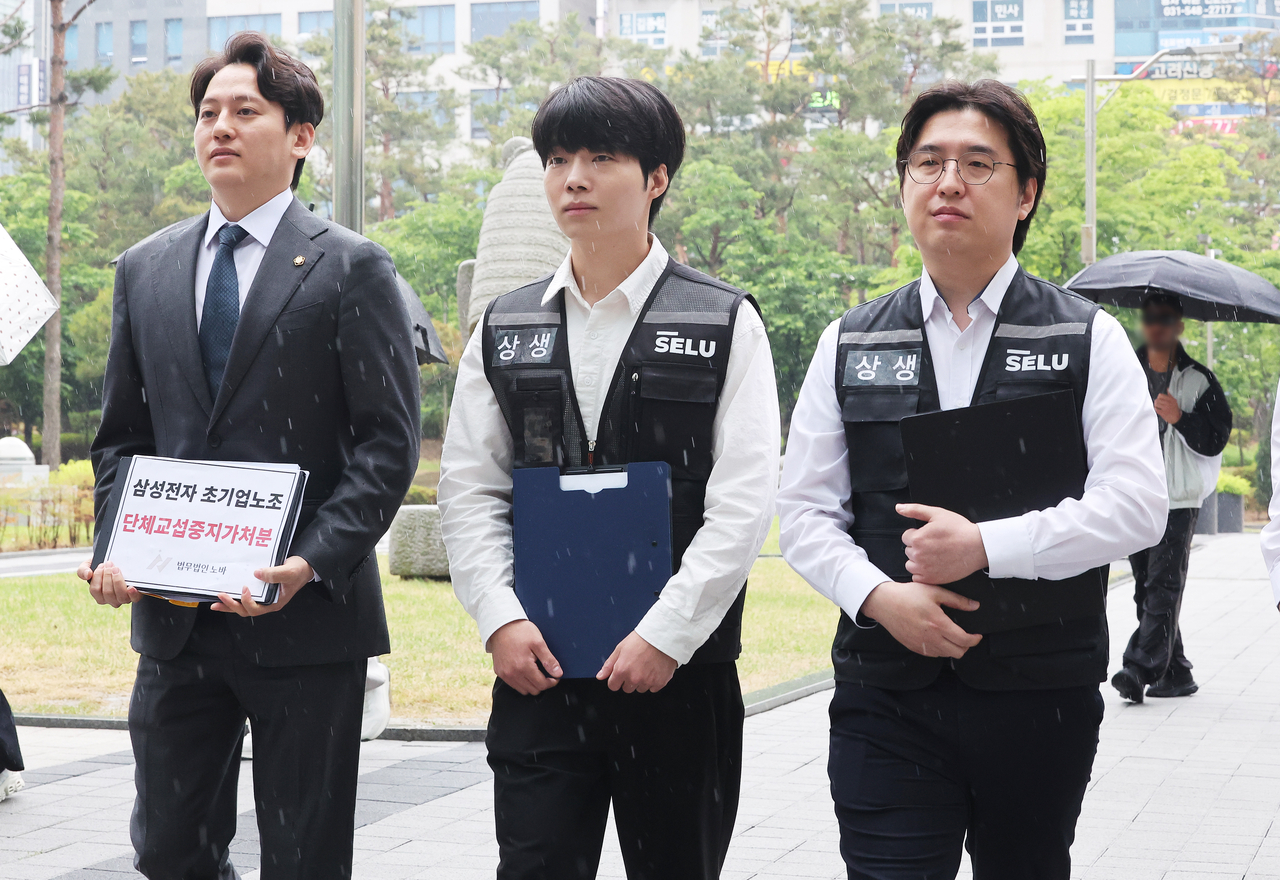
The Suwon District Court dismissed the request filed by five employees from Samsung’s Device eXperience division, which oversees smartphones, TVs and home appliances. The group, calling itself the Samsung Electronics Employees’ Rights Restoration Legal Response Coalition, had sought to suspend the collective bargaining process led by the company’s bargaining representative union.
The ruling removes one of the final obstacles to the wage agreement, which has become increasingly controversial inside Samsung as employees outside the semiconductor business complain that the deal disproportionately benefits chip workers riding the artificial intelligence boom.
In its ruling, the court said it was difficult to conclude that the bargaining proposal itself contained serious flaws or that there had been no effort to gather members’ opinions during the negotiation process. It also noted that a tentative agreement had already been reached, meaning the bargaining process could effectively be viewed as complete.
The injunction had targeted the Samsung Electronics Labor Union, the company’s largest union and the representative body for this year’s wage negotiations. Employees behind the legal challenge argued that the union’s decision-making process had become overly centered on workers in Samsung’s Device Solutions division, the semiconductor unit that has generated record profits during the AI-driven memory chip boom.
In their filing, the employees claimed the union relied on the results of a weeklong Naver Form survey conducted last November instead of holding a formal general assembly vote when preparing bargaining demands, arguing the move violated internal union procedures.
The dispute has highlighted widening frustration between Samsung employees in the chip division and workers in businesses such as smartphones and home appliances, where earnings growth has lagged far behind the semiconductor sector.
At the center of the tentative agreement is a new special management performance bonus for Samsung’s chip business, alongside changes to the formula used to calculate the company’s overall performance incentive, or OPI, which can pay up to 50 percent of an employee’s annual salary. Under the proposed deal, the OPI pool would be based on 10 percent of operating profit, replacing the current economic value added-based formula.
The compensation gap emerging under the deal has fueled resentment among nonchip employees.
Industry officials estimate that workers in Samsung’s semiconductor division could receive performance-related compensation ranging from about 210 million won to 600 million won ($139,100 to $398,800) before tax, assuming annual salaries of 100 million won. Employees in the DX division, by contrast, are expected to receive about 6 million won worth of company shares.
The tentative agreement is now being put to a vote among eligible union members.
A total of 65,492 union members are eligible to participate, with 87.5 percent belonging to the Samsung Electronics Labor Union and the remaining 12.5 percent belonging to the National Samsung Electronics Union. As of around 5:30 p.m. Tuesday, turnout among members of the Samsung Electronics Labor Union had reached about 93.5 percent. Results were scheduled to be announced Wednesday morning.
Another source of friction has emerged around the treatment of minority unions representing nonchip employees.
Donghaeng Labor Union, which represents many workers outside Samsung’s semiconductor operations, has accused the bargaining representative union of sidelining DX employees during negotiations and denying minority unions equal treatment in the voting process.
Donghaeng had initially participated in the joint bargaining group but later withdrew, saying the interests of nonchip employees were not being properly reflected. Before voting began, Samsung Electronics Labor Union chief Choi Seung-ho asked Donghaeng to conduct its own vote on the agreement and submit a membership list by May 21.
Donghaeng’s membership subsequently surged from around 2,600 to roughly 13,000 within a day, which the union said reflected growing dissatisfaction among DX employees over the tentative deal.
However, Choi later said Donghaeng members would not be entitled to vote because the agreement had already been signed after the union left the bargaining group.
Park Jae-yong, head of Donghaeng, criticized the process as unfair and accused the representative union of suppressing minority voices.
“We are not after rewards tied to performance,” Park said. “All we are asking for is fair treatment within the same company.”
Industry watchers say the agreement is still likely to pass given the dominance of semiconductor employees within the bargaining representative union, where an estimated 80 to 90 percent of voting members belong to the DS division.
yeeun@heraldcorp.com