Chip bonus plan fuels backlash as projected payouts for memory staff could be up to 100 times those for consumer electronics workers
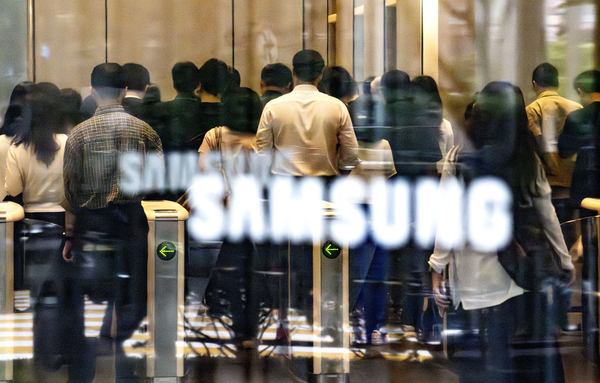
Unionized workers at Samsung Electronics began voting Friday on a tentative 2026 wage agreement that includes a new chip performance bonus scheme, as a widening compensation gap fuels discontent among employees outside the company’s core memory business.
The electronic vote runs from 2 p.m. Friday through 10 a.m. on May 27. The agreement will become binding if more than half of eligible union members take part and a majority of those voting approve it. If rejected, Samsung and the union will have to resume negotiations.
Samsung and its unions reached the tentative deal on Wednesday after months of talks. The package includes a 6.2 percent average wage increase, a new housing loan program of up to 500 million won ($330,300) and a special management performance bonus for the Device Solutions division, Samsung’s semiconductor business.
Under the deal, the special bonus pool would be equivalent to 10.5 percent of operating profit after excluding labor costs, including provisions for the company’s existing overall performance incentive. Some local brokerages expect Samsung Electronics’ annual operating profit to reach around 300 trillion won this year, driven by the memory chip upcycle.
A shareholder advocacy group challenged the plan's legality on Friday, arguing that the proposed special performance bonus should be approved by shareholders rather than solely agreed upon between labor and management.
The Korea Shareholder Action Headquarters said at a press conference outside the Supreme Court in southern Seoul that the bonus provision does not fall under wages or working conditions that can be decided through collective bargaining. The group said it would file an injunction and a lawsuit to nullify the agreement unless Samsung seeks shareholder approval at a general meeting.
The bonus structure has also drawn criticism from workers in the Device eXperience division, which oversees smartphones, home appliances and TVs. Employees in the memory business could receive up to around 600 million won in total bonuses this year when the new special bonus is combined with the existing incentive, while DX employees may receive only around 6 million won in company shares.
This gap has triggered frustration among DX employees and some nonmemory chip workers, with critics arguing that the tentative agreement disproportionately favors the memory business.
The backlash has also led to a last-minute surge in union membership. Samsung Electronics Donghaeng Labor Union, which mainly comprises DX employees, said it gained about 10,000 members in a single day, as some workers urged colleagues to secure voting rights and oppose the deal.
But the surge has raised a dispute over whether Donghaeng members are entitled to vote. Choi Seung-ho, head of Samsung Electronics Labor Union, the company’s largest union and a member of the joint bargaining group, has told Donghaeng that it is understood to have no voting rights after leaving the group.
Donghaeng has argued that all union members’ voting rights should be respected, saying the voice of DX employees risks being “erased” from the process. Samsung’s three major unions had a combined membership of 101,075 as of Friday, including overlapping memberships: 70,850 at Samsung Electronics Labor Union, 19,053 at the National Samsung Electronics Union and 11,172 at Donghaeng.
Choi told members that the tentative agreement reflected the efforts of the union and its joint struggle committee, while saying he would put his leadership to a confidence vote if the deal is rejected.
“If the agreement is approved, I will work to build a stronger union by pressing management for further improvements,” Choi said in a notice to members. “If it is rejected, I will leave the remaining negotiations to the executive leadership and proceed with a confidence vote.”
Choi said he had received more than 500 calls and messages since the tentative agreement was reached, adding that some of the responses had been difficult to take.
“I will regard the result of the members’ vote as my scorecard,” he said.
yeeun@heraldcorp.com



![[Graphic News] Seoul ranks 4th among Asia’s most revisited destinations](https://wimg.heraldcorp.com/news/cms/2026/10/01/news-p.v1.20261001.4ac504a054534238aa1997420394b832_T1.gif?type=h&h=800)